
Allocyclosa
Levi, 1999
trashline orb weaver
Species Guides
1- Allocyclosa bifurca(Bifurcate Trashline Orbweaver)
Allocyclosa is a of orb-weaver spiders in the Araneidae, containing only Allocyclosa bifurca. Originally described as Cyrtophora bifurca in 1887, it was transferred to its own genus in 1999 based on distinctive morphological features. The genus is notable for being the only Cyclosa-like north of Mexico with a forked abdominal tip, and for its unusual reproductive where males are exceptionally rare.
Pronunciation
How to pronounce Allocyclosa: //ˌæloʊsɪˈkloʊsə//
These audio files are automatically generated. While they are not always 100% accurate, they are a good starting point.
Identification
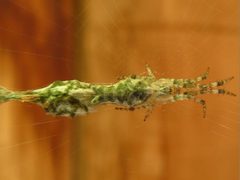
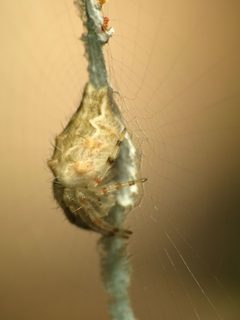
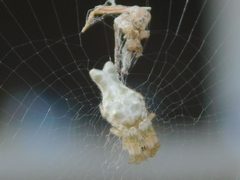
Distinguished from the closely related Cyclosa by the forked () abdominal tip with two M-shaped humps—Cyclosa have conical or spatulate projections but not forked tips. Among North American Cyclosa, Allocyclosa bifurca is the only species with this feature north of Mexico. Females may be confused with debris or bird droppings due to cryptic coloration and web decorations. The combination of small size, silvery-white coloration, vertical web orientation with central trashline, and forked confirms identification.
Images
Habitat
Builds webs most commonly among prickly pear cacti (Opuntia) close to the ground, unlike Cyclosa which typically position webs well above ground level in open woodlands and shrubs. Also found in other vegetation in southern Texas and Florida.
Distribution
Southern United States: Texas and Florida, with range extending into adjacent regions. The northernmost representative of the Cyclosa-like trashline orb weavers in North America.
Seasonality
Reaches adulthood in spring. Mature males wander without webs seeking females. Mated females produce multiple sacs.
Diet
Feeds on flying insects captured in orb webs. Prey items are incorporated into web decorations after consumption.
Host Associations
- parasitic wasp - Induces behavioral manipulation causing construction of modified 'cocoon webs' through -mediated mechanism; creates 'zombie' spider
Life Cycle
Females construct up to five sacs, arranged in vertical strings above the hub of the web. Egg sacs match spider in size and color, contributing to camouflage. Spiderlings emerge from egg sacs and disperse. Development includes larval and pupal stages of when parasitized.
Behavior
Constructs small vertical orb webs 6–8 inches in diameter. Females sit at the web hub amid a vertical line of debris including wrapped prey remains and sacs, creating protective mimicry where spider and decorations are visually indistinguishable. Trash is arranged below the hub, egg sacs above. When parasitized by , constructs modified 'cocoon webs' that serve as protective structures for wasp pupae. Females may exhibit parthenogenetic given extreme male rarity and female genitalia.
Ecological Role
of small flying insects. Serves as for that manipulate its . Web decorations may contribute to nutrient cycling through retention of organic debris.
Human Relevance
Not dangerously venomous to humans or pets due to small size. Occasionally encountered near human dwellings in southern Texas and Florida, sometimes constructing webs near doorways or in lanais. Of scientific interest for unusual reproductive and manipulation.
Similar Taxa
- CyclosaSimilar trashline web architecture and cryptic appearance, but Cyclosa have conical or spatulate (not forked) abdominal projections and lack the M-shaped humps. Cyclosa species are generally larger and more widespread across North America.
- CyrtophoraOriginally described under this ; Cyrtophora are primarily tropical and construct tent-like webs rather than vertical orbs with trashlines.
More Details
Taxonomic history
First described as Cyrtophora bifurca by McCook in 1887, transferred to new Allocyclosa by Levi in 1999 based on morphological distinctiveness.
Reproductive anomaly
Males represent less than 1% of collected specimens (2 of ~350 in one study). Hypotheses include extreme sexual size dimorphism causing males to be overlooked, or enabled by reduced female external genitalia lacking external openings.
Camouflage mechanism
Combines morphological (bird-dropping mimicry in color and shape) with behavioral camouflage (positioning amid matching debris) and extended phenotype manipulation ( sacs matching body size and color).
Sources and further reading
- BugGuide
- Wikipedia
- GBIF taxonomy match
- iNaturalist taxon
- Catalogue of Life
- Bug Eric: Spider Sunday: Trashline Orb Weavers
- Bug Eric: June 2012
- Zombie spiders and ecdysone: manipulation of Allocyclosa bifurca (Araneae: Araneidae) behavior by a parasitic wasp
- A suite of behavioural and morphological traits camouflage Allocyclosa bifurca (McCook, 1887) (Araneae: Araneidae)