
Cybaeopsis euopla
(Bishop & Crosby, 1935)
hacklemesh weaver
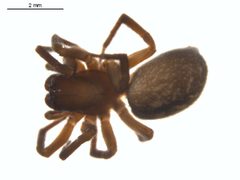
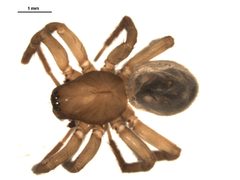
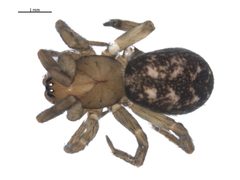
Cybaeopsis euopla is a of hacklemesh weaver spider in the Amaurobiidae. It was originally described as Callioplus euoplus by Bishop and Crosby in 1935. The species is documented from western and central Canada and the United States. Like other Amaurobiidae, it is presumed to construct irregular, tangled webs.
Pronunciation
How to pronounce Cybaeopsis euopla: //saɪˈbiː.əˌpɪs juˈɒplə//
These audio files are automatically generated. While they are not always 100% accurate, they are a good starting point.
Identification
The Cybaeopsis can be distinguished from related amaurobiids by arrangement and genitalic structure, though specific diagnostic features for C. euopla require examination of . The epithet 'euopla' (Greek: 'eu-' well, 'oplos' armed) may refer to well-developed spines or sclerotized structures. Definitive identification relies on microscopic examination of in males or in females.
Images
Distribution
Documented from Canada (Alberta, British Columbia, Manitoba) and the United States. GBIF records indicate presence in western and central Canadian provinces.
Similar Taxa
- Other Cybaeopsis speciesCongeneric share general body plan and web architecture; require genitalic examination for separation.
- Amaurobius speciesAlso hacklemesh weavers with similar web structure; differ in arrangement and geographic distribution (Amaurobius primarily Palearctic).
- Callobius speciesNorth American amaurobiids with comparable size and preferences; distinguished by detailed morphological characters including arrangement and genitalic .
More Details
Original Description
First described by Bishop and Crosby in 1935 as Callioplus euoplus, later transferred to Cybaeopsis.
Nomenclatural Note
The gender agreement of the specific epithet changed from masculine (-us) to feminine (-a) when transferred from Callioplus (masculine) to Cybaeopsis (feminine).