
Callobius nomeus
(Chamberlin, 1919)
hacklemesh weaver
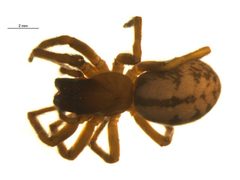
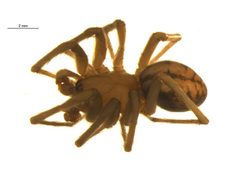
Callobius nomeus is a of hacklemesh weaver spider in the Amaurobiidae. It occurs in the United States and Canada, where it has been observed in association with tree bark. As a member of Amaurobiidae, it likely constructs tangled, mesh-like webs typical of the family. The species was first described by Chamberlin in 1919.
Pronunciation
How to pronounce Callobius nomeus: //kəˈloʊbiəs ˈnoʊmiəs//
These audio files are automatically generated. While they are not always 100% accurate, they are a good starting point.
Identification
May be confused with crevice weavers (Kukulcania, Filistatidae), which also build lacy, sprawling webs issuing from retreats. However, Callobius nomeus lacks the cribellum and calamistrum characteristic of cribellate Filistatidae. Unlike Kukulcania, amaurobiids do not have . Identification to level requires examination of genitalia and other subtle morphological features.
Images
Habitat
Associated with tree bark. The specific microhabitat preferences beyond this association have not been documented.
Distribution
United States and Canada. A single GBIF record indicates presence in Belgium, though this may represent an introduction or misidentification.
Behavior
As an amaurobiid, likely constructs tangled, irregular mesh webs. activity has been observed in related but not specifically documented for C. nomeus.
Similar Taxa
- Kukulcania species (Filistatidae)Both build lacy, sprawling webs from retreats and are associated with crevices and structures. Kukulcania are cribellate spiders with and distinct calamistrum on leg IV, features absent in Amaurobiidae.
- Amaurobius speciesCongeneric or closely related hacklemesh weavers with similar web architecture and preferences. Distinguishable by genital and geographic distribution.
More Details
Taxonomic note
Originally described as Amaurobius nomeus Chamberlin, 1919, later transferred to Callobius.
Observation data
iNaturalist records indicate this is rarely observed, with only 6 observations documented.