
Callobius bennetti
(Blackwall, 1846)
Bennett's Laceweaver, Hackled Mesh Weaver, hacklemesh weaver, night spider, tangled nest spider
Callobius bennetti is a cribellate spider in the Amaurobiidae, known by multiple including Bennett's Laceweaver, Hackled Mesh Weaver, night spider, and tangled nest spider. The is native to North America, with documented occurrences in Canada and the United States. It is sometimes mistaken for hobo spiders due to superficial similarities in appearance and preferences. Like other amaurobiids, it constructs tangled, mesh-like webs and exhibits the characteristic cribellate silk production method using a calamistrum to comb silk from the cribellum.
Pronunciation
How to pronounce Callobius bennetti: /kæˈloʊbiəs bəˈnɛti/
These audio files are automatically generated. While they are not always 100% accurate, they are a good starting point.
Identification
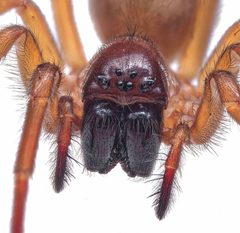
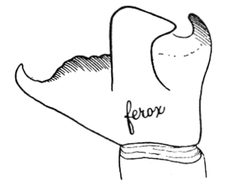
May be confused with hobo spiders (Eratigena agrestis), but can be distinguished by its cribellate characteristics and web structure. The reddish-brown coloration of and legs, combined with grey and light markings, provides visual differentiation from similar-sized agelenids.
Images
Appearance
The has a reddish-brown and legs, with a grey bearing light markings on the surface. As a cribellate spider, it possesses a cribellum (an additional silk-spinning organ) and a calamistrum (a comb of curved hairs on the fourth leg ) used to card silk.
Habitat
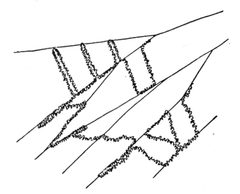
Constructs tangled, lacy, mesh-like webs in sheltered locations such as under eaves, in window frames, and other crevice-like situations on building exteriors. The web issues from a retreat or funnel-like opening.
Distribution
Native to North America. Documented in Canada (Manitoba, Saskatchewan) and the United States (Vermont and presumably other regions).
Behavior
activity pattern; females venture to web edges at night to capture prey, while males wander in search of mates. Constructs characteristic hackled mesh webs using cribellate silk production, where the calamistrum combs silk from the cribellum to create non-sticky but highly entangling threads.
Ecological Role
Predatory spider occupying sheltered microhabitats on human structures; contributes to insect control in urban and suburban environments.
Human Relevance
Frequently encountered in domestic settings due to its habit of building webs on building exteriors. Sometimes mistaken for medically significant spiders such as hobo spiders, causing unnecessary concern. Not considered dangerous to humans.
Similar Taxa
- Eratigena agrestis (hobo spider)Superficially similar size and preference; distinguished by lack of cribellate apparatus, different arrangement, and funnel web structure
- Other AmaurobiidaeShared characteristics including cribellate silk production and mesh web architecture; -level identification requires detailed examination
Misconceptions
Frequently misidentified as hobo spiders due to similar use and general appearance, though the two belong to different with distinct biological characteristics.
More Details
Taxonomic history
Originally described as Ciniflo bennetti by Blackwall in 1846, later transferred to Callobius.
Silk production
As a cribellate spider, C. bennetti produces silk through a unique mechanism involving the cribellum (a plate-like spinning organ) and calamistrum (a leg comb), creating hackled silk that entangles prey without adhesive stickiness.