
Phrynus operculatus
Pocock, 1902
tailless whipscorpion
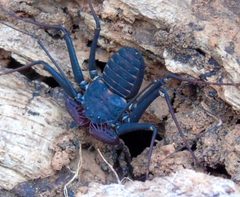
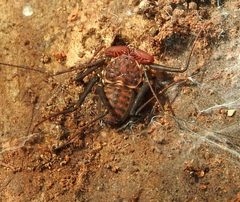
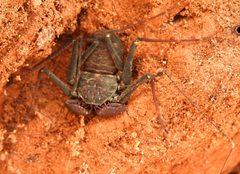
A medium-sized tailless whipscorpion (18–22 mm total length) found across much of Mexico. Distinguished by chestnut coloration with reddish tones on the and , four spines on the pedipalp , and specific female . The shows considerable morphological variation across its range, suggesting it may represent a .
Pronunciation
How to pronounce Phrynus operculatus: /ˈfɾɪnʊs oʊˌpɜrkjuˈleɪtəs/
These audio files are automatically generated. While they are not always 100% accurate, they are a good starting point.
Identification
Distinguished from by the combination of: four spines on the ; external tooth on the basal segment of the ; and female with short, wide-based with narrow curved apex. The Texas formerly assigned to this has been separated as Phrynus abstrusus based on morphological differences and geographic isolation. The species shows substantial morphological variation across its Mexican range, complicating identification and suggesting possible cryptic diversity.
Images
Habitat
Found under stones, under semi-shed tree bark, and under dry cacti in xerophilous forests. Shows ecological plasticity across a wide geographic range.
Distribution
Mexico: states of Nuevo León, Sinaloa, Nayarit, Jalisco, Guanajuato, Colima, Michoacán, Guerrero, Morelos, Oaxaca, and Chiapas. Formerly reported from Texas, USA, but this is now recognized as a distinct , Phrynus abstrusus.
Similar Taxa
- Phrynus abstrususFormerly considered part of P. operculatus; separated based on morphological differences and geographic isolation from the Mexican .
- Phrynus jaliscoAnother Mexican Phrynus showing similar morphological variation patterns; part of the same with overlapping distribution.
Sources and further reading
- BugGuide
- Wikipedia
- GBIF taxonomy match
- iNaturalist taxon
- NCBI Taxonomy
- Catalogue of Life
- An Arachnid Kind of Day | Bug Squad
- Wicked spines and long legs spell trouble at night for creatures in the rainforest: Whip spider, Paraphrynus spp. — Bug of the Week
- Eight weird and wonderful species to celebrate World Animal Day
- Amblipygi | Beetles In The Bush
- Whips in Xibalba: Whip spiders, Amblypygi — Bug of the Week
- At night in the rainforest: Whip spiders, Amblypygi — Bug of the Week
- Four new species of Phrynus, Lamarck (Arachnida: Amblypygi) from Mexico