
Macrocheles
Latreille, 1829
Species Guides
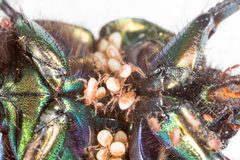
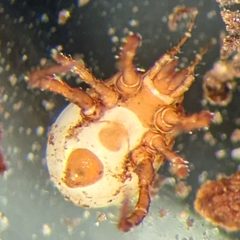
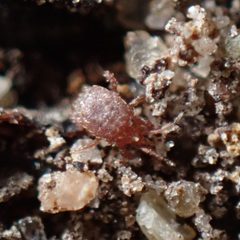
1Macrocheles is a of mites in the Macrochelidae, containing over 80 described . Members of this genus are primarily known for their phoretic associations with insects, particularly flies and beetles, though some species exhibit facultative or obligate . Research on Macrocheles muscaedomesticae has provided important insights into the evolutionary origins of parasitism from free-living ancestors. Species in this genus occupy diverse including carrion, , decaying plant matter, and necrotic cacti, often following their insect to these ephemeral resources.
Pronunciation
How to pronounce Macrocheles: /ˌma.kroʊˈkiː.liːz/
These audio files are automatically generated. While they are not always 100% accurate, they are a good starting point.
Identification
Macrocheles are mesostigmatid mites characterized by features of the Macrochelidae . The includes species groups defined by morphological characters such as the pattern of ornamentation on the sternal shield in females (e.g., the M. glaber group). Accurate species identification typically requires examination of multiple life stages and detailed morphological analysis; the genus has been subject to taxonomic revision with new species described as recently as 2017.
Images
Habitat
are closely tied to insect and include carrion-feeding environments associated with burying beetles, and manure where filth flies develop, necrotic cacti in desert , decaying wood and bark, and temporary cattle corrals in wooded areas. These habitats share characteristics of being ephemeral, nutrient-rich, and supporting of potential insect hosts.
Distribution
Documented from multiple continents including North America, South America (Colombia), Australia, and Europe (distribution records from Denmark, Norway, Sweden). Specific have more restricted ranges; for example, Macrocheles subbadius is described as , while species associated with burying beetles in North America show distinct geographic patterns.
Diet
Feeding habits vary by and life stage. Some species are predatory on small in their environment; Macrocheles subbadius pierces and ingests haemolymph while attached to Drosophila, functioning as an . Macrocheles muscaedomesticae is described as facultatively parasitic. Free-living stages likely consume microorganisms, detritus, or small prey in substrate .
Host Associations
- Drosophila - Multiple including D. nigrospiracula and D. hydei; M. subbadius is ectoparasitic, piercing to feed on haemolymph
- Stomoxys calcitrans - Stable fly; first report of Macrocheles muscaedomesticae association in Colombia
- Nicrophorus - phoretic Burying beetles (Silphidae); nine documented, with 1659 macrochelids representing seven Macrocheles species collected from 112 beetles in North America survey
- Cerambycidae - phoretic Longhorned beetles; documented though specific Macrocheles not always identified
Life Cycle
vary by . Macrocheles muscaedomesticae has been experimentally shown to exhibit heritable attachment to . Some species require two seasons to complete development, with strategies varying; phoretic stages arrest feeding and development during transport. Multiple life stages (female, male, deutonymph) have been described for several species. Developmental timing is often synchronized with host availability and seasonal activity patterns.
Behavior
The defining behavioral characteristic of Macrocheles is : attachment to the outer surface of insects for to new . This is heritable and has been artificially selected for in laboratory of M. muscaedomesticae. Individual mites show variation in attachment consistency, with some individuals repeatedly attaching to while others never attach. During phoresy, mites cease feeding and ontogenesis. Some exhibit defensive behaviors or site preferences on host bodies; for example, pseudoscorpions (not Macrocheles) on harlequin beetles defend abdominal attachment sites, suggesting similar strategic behaviors may occur in Macrocheles.
Ecological Role
Macrocheles mites function as -dependent commensals or that track ephemeral resources through insect-mediated transport. As , they can significantly reduce : M. subbadius decreases host , reduces through resorption, and lengthens pre-oviposition periods in Drosophila. Effects on host may be comparable to starvation under natural intensities. In carrion and , they likely contribute to nutrient cycling and may regulate populations of filth-breeding flies through .
Human Relevance
Research on Macrocheles has contributed fundamental understanding of evolution, specifically demonstrating that -attachment is heritable and can respond to artificial selection. This provides empirical support for the hypothesis that intermediate host associations serve as evolutionary stepping stones to . Macrocheles muscaedomesticae has become a model system for studying the evolution of infectious behavior and facultative parasitism. Some are associated with flies in agricultural settings, such as stable flies in cattle facilities.
Similar Taxa
- Glaber group mitesThe Macrocheles glaber group is characterized by specific sternal shield ornamentation patterns in females; these were historically confused or grouped together before detailed morphological analysis distinguished them
- Other Macrochelidae generaMacrocheles is distinguished from related within Macrochelidae by specific morphological features of the idiosoma and appendages; detailed examination of coxal and sternal structures required for separation
Misconceptions
A widespread belief held that macrochelid mites form only phoretic associations with flies, without feeding on . Research on Macrocheles subbadius demonstrated this is incorrect: this is an that pierces host and ingests haemolymph, with measurable negative effects on host survival and . The term '' itself has been debated; some researchers have proposed alternative explanations including accidental boarding, obligate , or phagophily (preying on other associates), though evidence supports the hypothesis for most Macrocheles associations.
More Details
Evolutionary research significance
Macrocheles muscaedomesticae was the first facultative for which heritability of infectious was estimated, providing evidence that can act upon facultative strategies and supporting models for the evolution of from free-living ancestors.
Taxonomic activity
The remains taxonomically active with new described in 2017 from North American burying beetle associations; using COI region has been applied to phylogenetic analysis of new species.
Research methodology
Studies of Macrocheles attachment require careful tracking of individual mites across experiments, with researchers accounting for expected mortality and using larger-than-needed due to the ease of losing or accidentally killing specimens.
Sources and further reading
- BugGuide
- Wikipedia
- GBIF taxonomy match
- iNaturalist taxon
- NCBI Taxonomy
- Catalogue of Life
- Parasite Evolution: Why One Entomologist Studies Mites That Hitchhike on Flies
- How an Evolutionary Biologist Found Her Place in Entomology
- Hitchin’ A Ride | Beetles In The Bush
- Macrocheles dolichosternus
- Figure 6 from: Knee W (2017) New Macrocheles species (Acari, Mesostigmata, Macrochelidae) associated with burying beetles (Silphidae, Nicrophorus) in North America. ZooKeys 721: 1-32. https://doi.org/10.3897/zookeys.721.21747
- Macrocheles muscaedomesticae (Acari: Macrochelidae) asociados a Stomoxys calcitrans (Diptera: Muscidae) en el municipio de Sabanalarga, Antioquia Macrocheles muscaedomesticae (Acari: Macrochelidae) associated with Stomoxys calcitrans (Diptera: Muscidae) in the municipality of Sabanalarga, Antioquia
- Figure 9 from: Knee W (2017) New Macrocheles species (Acari, Mesostigmata, Macrochelidae) associated with burying beetles (Silphidae, Nicrophorus) in North America. ZooKeys 721: 1-32. https://doi.org/10.3897/zookeys.721.21747
- Figure 5 from: Knee W (2017) New Macrocheles species (Acari, Mesostigmata, Macrochelidae) associated with burying beetles (Silphidae, Nicrophorus) in North America. ZooKeys 721: 1-32. https://doi.org/10.3897/zookeys.721.21747
- Figure 1 from: Knee W (2017) New Macrocheles species (Acari, Mesostigmata, Macrochelidae) associated with burying beetles (Silphidae, Nicrophorus) in North America. ZooKeys 721: 1-32. https://doi.org/10.3897/zookeys.721.21747
- Figure 2 from: Knee W (2017) New Macrocheles species (Acari, Mesostigmata, Macrochelidae) associated with burying beetles (Silphidae, Nicrophorus) in North America. ZooKeys 721: 1-32. https://doi.org/10.3897/zookeys.721.21747
- Figure 10 from: Knee W (2017) New Macrocheles species (Acari, Mesostigmata, Macrochelidae) associated with burying beetles (Silphidae, Nicrophorus) in North America. ZooKeys 721: 1-32. https://doi.org/10.3897/zookeys.721.21747
- Figure 7 from: Knee W (2017) New Macrocheles species (Acari, Mesostigmata, Macrochelidae) associated with burying beetles (Silphidae, Nicrophorus) in North America. ZooKeys 721: 1-32. https://doi.org/10.3897/zookeys.721.21747
- Figure 12 from: Knee W (2017) New Macrocheles species (Acari, Mesostigmata, Macrochelidae) associated with burying beetles (Silphidae, Nicrophorus) in North America. ZooKeys 721: 1-32. https://doi.org/10.3897/zookeys.721.21747
- Figure 13 from: Knee W (2017) New Macrocheles species (Acari, Mesostigmata, Macrochelidae) associated with burying beetles (Silphidae, Nicrophorus) in North America. ZooKeys 721: 1-32. https://doi.org/10.3897/zookeys.721.21747
- Figure 4 from: Knee W (2017) New Macrocheles species (Acari, Mesostigmata, Macrochelidae) associated with burying beetles (Silphidae, Nicrophorus) in North America. ZooKeys 721: 1-32. https://doi.org/10.3897/zookeys.721.21747
- Ectoparasitic Effects on Host Survival and Reproduction: The Drosophila‐‐ Macrocheles Association
- Figure 8 from: Knee W (2017) New Macrocheles species (Acari, Mesostigmata, Macrochelidae) associated with burying beetles (Silphidae, Nicrophorus) in North America. ZooKeys 721: 1-32. https://doi.org/10.3897/zookeys.721.21747
- Mites of the Macrocheles-Glaber Group in Australia (Acarina, Macrochelidae)