
Ixodes marxi
Banks, 1908
Squirrel Tick
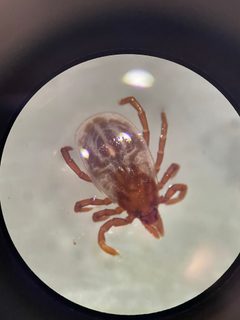
Ixodes marxi, commonly known as the squirrel , is a hard tick in the Ixodidae. It is a documented of Powassan virus and has been observed to transmit this to humans. The species is distributed across multiple U.S. states and Canadian provinces. Nymphal stages have been recorded questing on vegetation.
Pronunciation
How to pronounce Ixodes marxi: /ɪkˈsoʊdiːz ˈmɑrksi/
These audio files are automatically generated. While they are not always 100% accurate, they are a good starting point.
Images
Habitat
Nymphs have been found on vegetation, suggesting questing in vegetated environments.
Distribution
Recorded from numerous states in the United States and numerous Canadian provinces. Specific jurisdictions not detailed in available sources.
Diet
Obligate blood-feeding . include eastern chipmunk (Tamias striatus), American red squirrel (Tamiasciurus hudsonicus), Eastern gray squirrel (Sciurus carolinensis), flying squirrels (Glaucomys spp.), snowshoe hare (Lepus americanus), foxes (Vulpes spp.), and raccoons (Procyon lotor).
Host Associations
- eastern chipmunk - Tamias striatus
- American red squirrel - Tamiasciurus hudsonicus
- Eastern gray squirrel - Sciurus carolinensis
- flying squirrels - Glaucomys spp.
- snowshoe hare - Lepus americanus
- foxes - Vulpes spp.
- raccoons - Procyon lotor
Life Cycle
Three- with larval, nymphal, and stages. Nymphs have been documented questing on vegetation. Specific duration of developmental stages not reported.
Behavior
Nymphs exhibit questing on vegetation, extending forelegs to detect and attach to passing .
Human Relevance
Known of Powassan virus; documented capacity to transmit this virus to human beings. Public health significance due to transmission potential.
More Details
Vector Status
Confirmed of Powassan virus, a -borne flavivirus that can cause severe neuroinvasive in humans.
Sources and further reading
- BugGuide
- Wikipedia
- GBIF taxonomy match
- iNaturalist taxon
- NCBI Taxonomy
- Catalogue of Life
- Managing External Parasites of Texas Cattle - AgriLife Extension Entomology
- Just in the tick of time: American dog tick, Dermacentor variabilis, and Black-legged tick, Ixodes scapularis — Bug of the Week
- Lost, Hidden, and Found: The Herpetofauna of Samar’s Karst Labyrinth | Blog
- CDC Study Shares County Maps of 7 Diseases Spread by Blacklegged Ticks
- New Study Reveals Emerging Cases of Babesiosis in the Mid-Atlantic Region
- A Tick that Feeds on Birds May Increase the Range of Lyme Disease