
Carios
Latreille, 1796
Species Guides
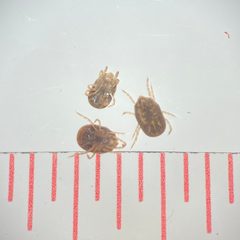
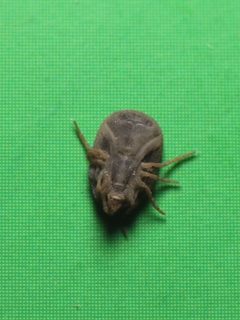
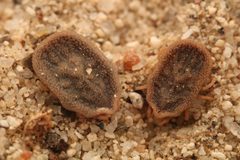
1Carios is a of soft ticks in the Argasidae, comprising eight recognized . Members of this genus are primarily associated with bats, with a distribution spanning the Palearctic, Nearctic, and other regions. The genus is distinguished by morphological and ecological adaptations for life in bat roosts. Several species have documented medical significance due to aggressive biting and potential transmission.
Pronunciation
How to pronounce Carios: /ˈkæɹi.oʊs/
These audio files are automatically generated. While they are not always 100% accurate, they are a good starting point.
Identification
Carios are soft ticks ( Argasidae) lacking the hard characteristic of ixodid ticks. The is distinguished from other genera by morphological features including mouthpart structure and body shape, though specific diagnostic characters require examination by acarologists. Species-level identification relies on subtle morphological differences in , tarsal structures, and body proportions. Carios vespertilionis, the type species, serves as a reference for comparisons with .
Images
Habitat
in this inhabit bat roosts in attics, burrows, hollow trees, and caves. Transient bat colonies, including maternal colonies, provide suitable . Some species occupy lowland and low mountain regions, with documented occurrences up to moderate elevations.
Distribution
distribution with confirmed records across the Palearctic (including Germany, Poland, and extending to South Africa), Nearctic (Canada, Montana), and potentially China. The occurs in central Germany across six federal states (Lower Saxony, Brandenburg, Saxony, North Rhine-Westphalia, Hesse, Rhineland-Palatinate), with new records in eastern Saxony connecting to Polish .
Seasonality
Winter activity documented for Carios vespertilionis, with collections made December through February. This pattern reflects the association with hibernating bats and the sheltered nature of roost .
Diet
Blood-feeding of bats. Larvae feed for extended periods (few days to 31 days), while nymphs and feed rapidly (less than one hour).
Host Associations
- Eptesicus nilssonii - northern bat
- Eptesicus serotinus - serotine bat
- Myotis daubentonii - Daubenton's bat
- Myotis myotis - greater mouse-eared bat
- Nyctalus leisleri - Leisler's bat
- Pipistrellus nathusii - Nathusius's pipistrelle
- Pipistrellus pygmaeus - soprano pipistrelle
- Pipistrellus pipistrellus - common pipistrelle
- Vespertilio murinus - parti-coloured bat
- Myotis lucifugus - little brown bat; C. kelleyi
- Myotis volans - long-legged bat; C. kelleyi
- Myotis californicus - California myotis; C. kelleyi
- Myotis evotis - long-eared myotis; C. kelleyi
- Myotis ciliolabrum - western small-footed myotis; C. kelleyi
- Lasionycteris noctivagans - silver-haired bat; C. kelleyi
- Eptesicus fuscus - big brown bat; C. kelleyi
- Pipistrellus hesperus - western pipistrelle; C. kelleyi
Life Cycle
Development includes larval, nymphal, and stages. Larvae remain attached to for prolonged feeding periods (days to weeks), while nymphs and adults feed rapidly off-host. This dichotomy in feeding duration represents a distinctive trait within the .
Behavior
Carios vespertilionis has been observed attacking humans and is characterized as highly aggressive. Bites cause severe skin reactions including fever, ulceration, erythema, and edema. rates on individual bats are typically low (1–5 larvae), though exceptional cases of 72–97 larvae on single have been documented. High infestations may induce physiological stress and inflammatory responses in bats.
Ecological Role
Potential for multiple including virus, Issyk-Kul virus, Coxiella burnetii, Ehrlichia, , Borrelia , and spp. A Swedish study detected Borrelia in 24% of specimens. The may serve as a bridge for pathogen transmission between bat and, in some cases, to humans.
Human Relevance
Medical significance due to aggressive biting and severe cutaneous reactions. Potential public health concern as a for zoonotic . Carios kelleyi has been documented in New Jersey with implications for public health surveillance.
Similar Taxa
- ArgasBoth are of soft ticks in Argasidae; Carios is distinguished by association with bats and morphological characters including structure
- OrnithodorosBoth belong to Ornithodorinae; Carios is separated by morphological features and primarily chiropteran associations
More Details
Species diversity
The currently contains eight recognized : C. australiensis, C. daviesi, C. dewae, C. macrodermae, C. pusillus, C. quadridentatus, C. sinensis, and C. vespertilionis (type species).
Taxonomic history
Carios is one of nine in the Ornithodorinae. The genus was established by Latreille in 1796 with C. vespertilionis as the type .
Sources and further reading
- BugGuide
- Wikipedia
- GBIF taxonomy match
- iNaturalist taxon
- NCBI Taxonomy
- Catalogue of Life
- The Best of 2020 on Entomology Today
- Distribution of the soft tick Carios vespertilionis in lowlands and low mountain regions of Germany
- Predicting the potential habitat for Argas japonicus, Argas persicus, Argas reflexus, Argas vulgaris and Carios vespertilionis tick species in China
- First Record of Hosts for TickCarios kelleyi(Acari: Ixodida: Argasidae) in Canada and Montana : Table 1
- First Record of Hosts for Tick <I>Carios kelleyi</I> (Acari: Ixodida: Argasidae) in Canada and Montana