Cunaxidae
cunaxid mites, snout mites
Subfamily Guides
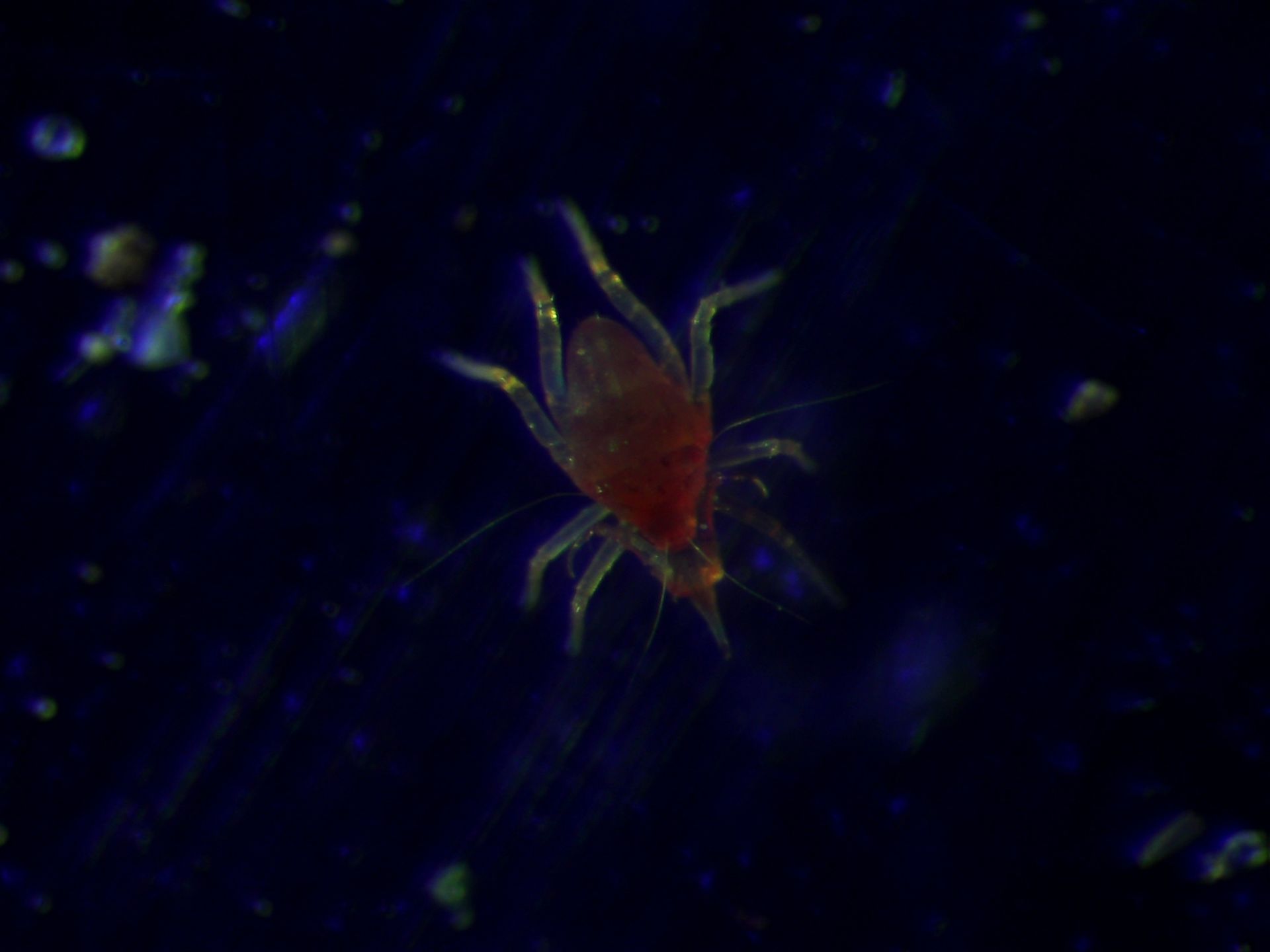
2Cunaxidae is a of predatory mites in the order Trombidiformes, commonly known as snout mites due to their prominent gnathosoma. The family contains at least 20 and over 390 described , with some estimates exceeding 450 species across 32 genera. These mites occupy diverse terrestrial worldwide except Antarctica, where they function as opportunistic of small arthropods and other . They exhibit two distinct foraging strategies: ambush and active hunting.
Pronunciation
How to pronounce Cunaxidae: //kjuːˈnæksɪdiː//
These audio files are automatically generated. While they are not always 100% accurate, they are a good starting point.
Identification
Distinguished from other trombidiform mites by the combination of diamond-shaped body, striated around reduced shielding, and coxal plates. The prominent gnathosoma with clawed separates them from many other predatory mite . Specific identification requires examination of setal patterns on the , palp segmentation and chaetotaxy, tarsal shape, dorsal setal counts, and leg chaetotaxy. Some exhibit distinctive morphological specializations; for example, Armascirus and Dactyloscirus are associated with ambush , while Allocunaxa shows adaptations for active hunting.
Images
Appearance
Diamond-shaped body with striated surrounding shields and platelets. and nymphs possess 4 pairs of 7-segmented legs; larvae have 3 pairs of 6-segmented legs. Dorsally bears 1 proterosomal shield (typically with 2 pairs of setae and 2 pairs of setose ), 0-2 hysterosomal shields, and 0-4 pairs of hysterosomal platelets. Ventrally, leg are to the body forming plates; in adults, coxae of first two leg pairs often fused together, as are coxae of last two leg pairs. gnathosoma bears usually terminating in strong claws, paired , and wedge-shaped subcapitulum.
Habitat
Occurs in most terrestrial including soil, leaf litter, decaying vegetation, tree cavities, vertebrate nests, animal debris, house dust, and stored food products. Individual typically restricted to specific habitat types. In agroecosystems, found on vegetation including citrus and other crops. Collected from forest floor litter at elevations ranging from lowlands to at least 102 m.
Distribution
distribution recorded from all continents except Antarctica. Documented from North America (including Florida), Central and South America, Europe, Asia (China, Thailand, Saudi Arabia, Israel), Africa, and Australia. Specific regional records include central Thailand (33 ), Florida citrus groves, Chinese provinces (Liaoning, Guizhou, Sichuan, Yunnan, Xizang/Tibet, Shanghai, Fujian, Jiangsu, Beijing, Taiwan), and Scandinavian countries (Denmark, Norway, Sweden).
Seasonality
Appears active year-round in suitable conditions. Neocunaxoides has been collected throughout the year in regions with hot humid summers and cold dry winters, suggesting continuous activity where microhabitat conditions permit.
Diet
Opportunistic that cannot survive on plant material alone. Prey includes bark lice (), springtails (Collembola), , scale insects, , and other mites. Some may supplement diet with honeydew. Specific prey spectrum varies by hunting strategy: ambush predators such as Armascirus and Dactyloscirus likely target mobile prey that triggers attack, while hunters like Allocunaxa may capture wider prey range through active search.
Life Cycle
Development includes , larva (6-legged), nymph (8-legged), and stages. Larvae have 3 pairs of 6-segmented legs; nymphs and adults have 4 pairs of 7-segmented legs. Silk spinning observed for egg protection, construction of molting chambers, and prey capture.
Behavior
Exhibits two distinct predatory strategies: ambush (e.g., Armascirus, Dactyloscirus) and active hunting (e.g., Allocunaxa). Produces silk for multiple functions including protection, molting chamber construction, and prey capture. An undescribed Rubroscirus has been observed drinking honeydew in addition to consuming live prey.
Ecological Role
Functions as ecological regulator in terrestrial through on microarthropods and other small soil organisms. In agricultural systems, feeds on crop pests including , scale insects, and other mites. potential recognized but effects on prey remain inadequately studied.
Human Relevance
Identified as potential agent for agricultural pests, though rigorous studies of -level impacts on prey are lacking. Occurs in house dust and stored food products, where it may contribute to control of other pests. Presence in citrus groves and other crops suggests incidental value as natural enemy, but deliberate management protocols are not established.
Similar Taxa
- PhytoseiidaeBoth contain predatory mites used in , but Phytoseiidae lack the diamond-shaped body, coxal plates, and prominent gnathosoma with clawed characteristic of Cunaxidae. Phytoseiidae are also typically associated with leaf surfaces rather than soil and litter .
- BdellidaeAnother of predatory snout mites in Trombidiformes, but Bdellidae possess elongated bodies and distinctive snout-like rostrum with different cheliceral structure; they also lack the specific shield and platelet arrangement of Cunaxidae.
More Details
Taxonomic Complexity
comprises four : Bonziinae, Coleoscirinae, Cunaxiinae, and Cunaxoidinae. Generic and specific limits rely heavily on female morphological characters including hypostomal setae, palp segmentation and chaetotaxy, tarsal shape, setal counts, idiosomal shield details, and leg chaetotaxy.
Silk Production
Silk spinning capability is relatively unusual among mites and serves multiple ecological functions: protecting from desiccation and , creating protected chambers for molting, and constructing capture structures for prey. This trait likely contributes to their success across diverse terrestrial microhabitats.
Sources and further reading
- BugGuide
- Wikipedia
- GBIF taxonomy match
- iNaturalist taxon
- NCBI Taxonomy
- Catalogue of Life
- Tassel to hard dough state insect control - AgriLife Extension Entomology
- Litaneutria minor – agile ground mantid | Beetles In The Bush
- Mitey troubles for house plants: Twospotted spider mite, Tetranychus urticae — Bug of the Week
- Can Honey Bees Survive Varroa Mites? The Challenges, the Tactics, the Future
- This Predatory Mite is a Rising Star in Pest Management
- How the Mighty Mite Conquered the Heart of One Entomologist
- Taxonomy of the predatory mite family cunaxidae (Acari) in central Thailand
- Predatory Mites of the Family Cunaxidae Associated with Citrus in Florida1
- Two new mites of Armascirus Den Heyer, 1978 (Trombidiformes, Cunaxidae) from Chinese fauna.
- A new species and a new record of the genus Cunaxa von Heyden (Prostigmata, Cunaxidae) from Saudi Arabia, with a key to the world species.
- The Unique Cauda-Liked Structure Represents a New Subfamily of Cunaxidae: Description of New Taxa and Discussion on Functional Morphology.