
Uenoidae
Iwata, 1927
Stonecase Caddisflies
Genus Guides
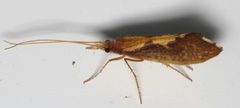
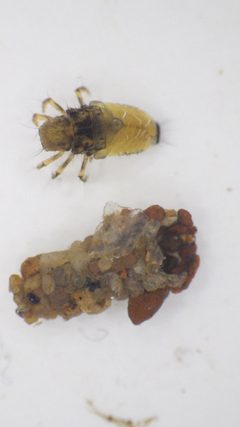
2is a of caddisflies (Trichoptera) commonly known as stonecase caddisflies. The family comprises approximately 7 and at least 80 described , distributed across North America, Asia, and Europe. Larvae construct portable cases using mineral materials, hence the . The family was revised taxonomically in 1988 to include the Uenoinae and Thremmatinae, incorporating genera formerly placed in separate families. Studies of Neophylax species demonstrate with temporal segregation between co-occurring species.
Pronunciation
How to pronounce Uenoidae: /juˈɛnɔaɪdiː/
These audio files are automatically generated. While they are not always 100% accurate, they are a good starting point.
Identification
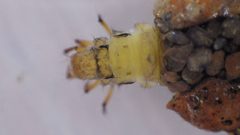
Larvae identified by their mineral-constructed cases. distinguished from other caddisfly by genitalic characters, particularly structures of segment X and sternum IX. Keys exist for adults of Farula and Neothremma incorporating diagnostic characters.
Images
Habitat
Larvae inhabit running water environments, primarily streams and rivers. Specific microhabitat preferences vary by : some occupy faster-flowing, deeper microhabitats while others prefer slower-flowing, shallower areas. Co-occurring species may partition longitudinally along stream gradients.
Distribution
Holarctic distribution spanning North America, Asia (Japan, China), and Europe. Documented from Japan (Akigawa River, Tama River system), northern California streams, Tennessee (USA), Vermont (USA), and southeastern Europe.
Seasonality
timing varies by and latitude. In Japanese streams, Neophylax japonicus adults emerge in October, while N. koizumii emerges one month later. Where species co-occur, emergence periods may be separated by 6 months.
Life Cycle
() documented in multiple . Larval development spans most of the year with temporal segregation between co-occurring . Pre-pupal and pupal stages together occupy more than half of the total life cycle in some species. First-instar larvae appear in late autumn to winter depending on species.
Behavior
Larvae exhibit gregarious during pre-pupal and pupal stages. Temporal segregation in larval, pupal, and periods occurs between co-occurring , with partial overlap in larval and pre-pupal stages.
Similar Taxa
- LimnephilidaeHistorically, some were classified as Neophylacinae within Limnephilidae; revised phylogenetic analysis supports separate status for Uenoidae.
- ThremmatidaeFormerly recognized as separate ; now included within as Thremmatinae based on cladistic analysis.
More Details
Taxonomic revision
The was revised by Weaver (1988) to include two : Uenoinae (Uenoa, Sericostriata, Neothremma, Farula) and Thremmatinae (Thremma, Neophylax, Oligophlebodes). This classification has predictive value for and .
Sources and further reading
- BugGuide
- Wikipedia
- GBIF taxonomy match
- iNaturalist taxon
- NCBI Taxonomy
- Catalogue of Life
- ADDITIONS TO THE SYSTEMATICS AND BIOLOGY OF THE CADDISFLY FAMILY UENOIDAE (TRICHOPTERA)
- Longitudinal distribution, life-history and microhabitat of two Neophylax (Trichoptera: Uenoidae) species in a Japanese stream.
- Further revision of the caddisfly family Uenoidae (Trichoptera): evidence for inclusion of Neophylacinae and Thremmatidae
- New Records ofThremma anomalum(Trichoptera: Uenoidae) from Southeastern Europe with Notes on its Ecology
- New Distribution Records forNeophylax toshioiVineyard and Wiggins (Trichoptera: Uenoidae) from Tennessee, USA
- Description de la larve et considérations sur l'habitat, la biologie et la répartition de Thremma tellae (Trichoptera : Uenoidae : Thremmatinae)
- Life History of <I>Neophylax rickeri</I> (Trichoptera: Uenoidae) in Two Northern California Streams