
Thremmatidae
Martynov, 1935
Genus Guides
2- Neophylax(autumn mottled sedges)
- Oligophlebodes
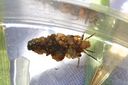
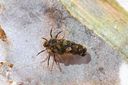
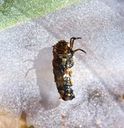
Thremmatidae is a of caddisflies (Trichoptera) currently classified within the family Uenoidae as Thremmatinae. The family includes such as Thremma, Neophylax, and Oligophlebodes. Larvae are case-building and can be identified by distinctive morphological features including mesonotal shape, foretrochantins, forefemora, sclerites on abdominal segment I, coloration patterns, and case . At least one , Neophylax splendens, exhibits an extended pre-pupal lasting approximately three months.
Pronunciation
How to pronounce Thremmatidae: /θrɛmˈmæ.tɪˌdiː/
These audio files are automatically generated. While they are not always 100% accurate, they are a good starting point.
Identification
Larvae distinguished from other caddisfly by combination of: shape of mesonotal , foretrochantins, forefemora, and sclerites on abdominal segment I; coloration patterns; and case . European Thremma specifically require examination of these characters for differentiation.
Images
Habitat
Streams, particularly in montane regions. Documented from streams draining the Cypress Hills in Saskatchewan, Canada.
Distribution
Europe (at least four Thremma ); North America including montane regions of British Columbia, Canada; Utah, United States; and Saskatchewan, Canada.
Seasonality
Larval activity begins by early May in Saskatchewan ; pre-pupal occurs mid-June to mid-September.
Life Cycle
Larvae construct cases; pre-pupal of approximately three months has been documented in Neophylax splendens (mid-June to mid-September).
Behavior
Larvae construct portable cases; pre-pupal observed as a seasonal survival strategy.
Similar Taxa
- LimnephilidaeThremmatidae was historically classified as Neophylacinae within Limnephilidae; separated based on phylogenetic analysis of morphological characters linking Thremmatidae with Uenoidae instead.
- Uenoidae (sensu stricto)Now classified together within expanded Uenoidae ; Uenoinae (Uenoa, Sericostriata, Neothremma, Farula) distinguished from Thremmatinae (Thremma, Neophylax, Oligophlebodes) by morphological characters with predictive value for and .
Sources and further reading
- BugGuide
- GBIF taxonomy match
- Discriminatory matrix for the larvae of the European Thremma species (Trichoptera: Thremmatidae)
- Further revision of the caddisfly family Uenoidae (Trichoptera): evidence for inclusion of Neophylacinae and Thremmatidae
- Extended family: a caddisfly new to Saskatchewan, Canada with notes on the life history ofNeophylax splendens(Trichoptera: Thremmatidae)