
Neophylax
McLachlan, 1871
autumn mottled sedges
Species Guides
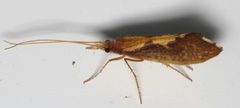
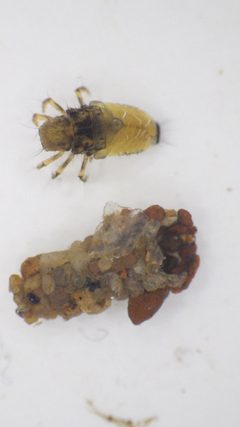
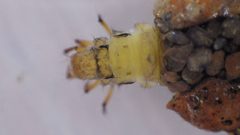
9Neophylax is a of commonly known as autumn mottled sedges, containing more than 30 described . Larvae are aquatic case-builders that construct protective cases using silk and materials gathered from streambeds, including sand, stones, shells, and plant material. The genus exhibits notable diversity, with species showing temporal and spatial segregation in stream systems. typically emerge in autumn, giving rise to the .
Pronunciation
How to pronounce Neophylax: /ˌniː.oʊˈfaɪlæks/
These audio files are automatically generated. While they are not always 100% accurate, they are a good starting point.
Identification
Larvae distinguished by their case-building , constructing portable cases from silk and gathered mineral or organic materials. Cases vary in appearance based on available materials; some create striking multicolored cases when stones of varying hues are used. emerge in autumn, consistent with the 'autumn mottled sedges.' Species-level identification requires examination of adult genitalia and other morphological characters; genetic analysis has been used to confirm identifications in some studies.
Images
Habitat
Freshwater streams and rivers; larvae occupy benthic on streambeds. Within stream systems, show longitudinal zonation—some species occupy headwaters while others occur downstream, with overlap zones. Larval microhabitat preferences vary by species: some occupy faster-flowing, deeper areas while others prefer slower-flowing sections.
Distribution
Holarctic distribution including North America (Canada: Ontario, Saskatchewan; USA: Tennessee, Vermont, California, Utah) and Asia (Japan: Akigawa River, Tama River system, Tokyo). show distinct geographic ranges with some restricted to specific regions.
Seasonality
emerge primarily in autumn (September–November for most ), though some species emerge in June. Larval development timing varies: some species grow from late autumn through spring with summer pre-pupal ; others grow in late summer and autumn with winter diapause.
Diet
Larvae graze on and fine organic particles from exposed surfaces of rocks.
Life Cycle
(one-year ) for studied. Larval development timing varies by species: some begin growth in late autumn, others in late summer. Pre-pupal and pupal stages together occupy more than half the life cycle in some species. duration and timing varies: summer pre-pupal diapause ( emerge autumn) or winter diapause (adults emerge following spring/summer). Larvae enter pre-pupal diapause in mid-June until mid-September in at least one species.
Behavior
Gregarious observed during pre-pupal and pupal stages. Case construction behavior: larvae build and inhabit portable cases throughout larval development, rebuilding as they grow. exhibit temporal and spatial segregation when co-occurring, reducing competition.
Ecological Role
Larvae function as grazers on periphyton and processors of fine organic matter in stream . Case-building activity may influence streambed geomorphology at level through bioturbation and substrate modification.
Human Relevance
Used as indicator organisms for stream health and water quality assessments. Larval cases valued for their aesthetic qualities when constructed from colorful materials; some ' cases have been featured in educational and popular science contexts.
Sources and further reading
- BugGuide
- Wikipedia
- GBIF taxonomy match
- iNaturalist taxon
- NCBI Taxonomy
- Catalogue of Life
- These Insect Costume Designers are Dressed to Impress
- Caddisfly larva - Entomology Today
- Longitudinal distribution, life-history and microhabitat of two Neophylax (Trichoptera: Uenoidae) species in a Japanese stream.
- New Distribution Records forNeophylax toshioiVineyard and Wiggins (Trichoptera: Uenoidae) from Tennessee, USA
- A comparative study of the biology of five species of Neophylax (Trichoptera: Limnephilidae) in southern Ontario
- Life History of <I>Neophylax rickeri</I> (Trichoptera: Uenoidae) in Two Northern California Streams
- Extended family: a caddisfly new to Saskatchewan, Canada with notes on the life history ofNeophylax splendens(Trichoptera: Thremmatidae)