
Odontoceridae
Wallengren, 1891
Mortarjoint Casemaker Caddisflies
Genus Guides
4- Marilia
- Namamyia(mortarjoint casemakers)
- Nerophilus(mortarjoint casemakers)
- Psilotreta(mortarjoint casemakers)
is a of caddisflies (order Trichoptera) commonly known as mortarjoint casemakers. The family contains approximately 12 and at least 100 described . Larvae are aquatic case-builders that typically construct cases from mineral particles such as sand and small stones. The family has a distribution with representatives in North America, Europe, South America, and other regions. are generally active during spring and summer months.

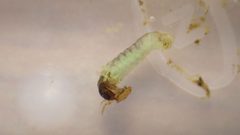
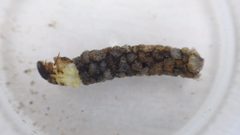
Pronunciation
How to pronounce Odontoceridae: /oʊˌdɒntoʊˈsɛrɪdiː/
These audio files are automatically generated. While they are not always 100% accurate, they are a good starting point.
Identification
larvae can be distinguished from other caddisfly by their stony, cylindrical cases and specific capsule and characters used in dichotomous keys. are identified by wing venation patterns and male genitalia structures. The family is grouped with other small families in taxonomic revisions due to limited . Specific identification to and level requires examination of adult genitalia and wing characters.
Images
Habitat
Aquatic environments including streams and rivers with stony or sandy substrates. Larvae inhabit benthic zones of freshwater systems. In Brazil, recorded from Atlantic Forest and Central Amazon regions, including 'kinon'—floating masses of roots, logs, fruits and leaves drifting along Amazonian rivers. In North America, found in lotic systems across Canada and adjacent United States.
Distribution
distribution including: North America (Canada, United States, including Michigan), Europe (United Kingdom, Scandinavia including Norway and Sweden, Denmark), South America (Brazil—Atlantic Forest and Central Amazon regions, Colombia—Meta department), and other regions. GBIF records indicate presence in Puerto Rico.
Seasonality
active from spring through late summer. Odontocerum albicorne adults present from May to August or June to September depending on year and locality. Larvae present year-round in aquatic , with typically in later instars.
Life Cycle
requiring approximately one year to complete. Odontocerum albicorne has five larval instars. Most laid in July and August. Larvae typically overwinter in instar III or V; some third instars enter resting state in sealed cases. Fifth instars typically become male pupae in spring; third instars that grow rapidly to instar V in spring typically become female pupae. Pupal stage brief, requiring approximately 87.5 above threshold temperature of 6.7°C. High mortality in egg stage and early instars (approximately 99%). About 30% of instars III–V do not reach pupal stage; approximately 25% of pupae die. Sex ratio approximately 63% male, 37% female among emerging .
Behavior
Larvae are case-builders that construct portable shelters from mineral particles. Some exhibit opportunistic case-occupation , though this is uncommon in compared to other . Marilia larvae have been recorded occupying cases of other Trichoptera , particularly Grumicha, but this behavior is constrained by interior wall roughness and case material color mismatch with natural substrate, which may disturb camouflage. Larvae normally add stones to front opening of occupied cases. Larval movement within cases involves undulation facilitated by smooth, silk-lined interior walls.
Ecological Role
Aquatic insects contributing to benthic in freshwater systems. Case-building activity contributes to structure and sediment dynamics. Larvae function as primary consumers, though specific trophic role is not well documented. production estimates for Odontocerum albicorne range from 160 to 257 mg dry weight per square meter. Production-to- ratio averages 3.9. Population densities remain relatively constant for approximately 9 months between end of hatching and start of .
Human Relevance
Used as indicator organisms for freshwater health and water quality assessment. Subject of ecological research on strategies, production , and case-building . No significant documented economic importance as pests or beneficial .
Similar Taxa
- LeptoceridaeBoth contain case-building larvae; Triplectides (Leptoceridae) exhibits frequent opportunistic case-occupation compared to the rare occurrence in . Leptoceridae typically have more slender, elongated cases and different capsule .
- SericostomatidaeBoth are stony case-building caddisfly with similar ecological roles in benthic . Distinguished by larval case construction details and genitalia characters.
- GoeridaeAnother of mineral case-building caddisflies grouped with in some taxonomic revisions due to small family size, though not closely related. Distinguished by specific larval and morphological characters in dichotomous keys.
More Details
Taxonomic History
Type is Odontocerum W.E. Leach, 1815. authorship attributed to Wallengren, 1891. Included in superfamily Leptoceroidea according to Catalogue of Life classification.
Research Methods
Study of Odontocerum albicorne employed quantitative sampling, modeling for pupal development, and analysis demonstrating high early mortality and variable growth rates between year-classes.
Growth Patterns
Mean instantaneous growth rate highest (3.9–8.0% dry weight per day) in first three months of (August–October), near zero in winter (November–February), and slightly above 1% per day (1.1–1.7%) for remainder of life cycle (March–August).
Sources and further reading
- BugGuide
- Wikipedia
- GBIF taxonomy match
- iNaturalist taxon
- NCBI Taxonomy
- Catalogue of Life
- Aspects of Modern Methods of Odontoceridae
- REVISION DES TRICHOPTèRES CANADIENS : III. Les Hyalopsychidae, Psychomyiidae, Goeridae, Brachycentridae, Sericostomatidae, Helicopsychidae, Beraeidae, Odontoceridae, Calamoceratidae et Molannidae
- The grass is always greener on the other side: Triplectides Kolenati, 1859 (Leptoceridae) and Marilia Müller, 1880 (Odontoceridae) occupying cases of other Trichoptera species
- A quantitative study of the life cycle of the case‐building caddis Odontocerum albicorne (Trichoptera: Odontoceridae) in a Lake District stream
- <i>Psilotreta Indecisa</i> and <i>Agarodes Distinctus</i> (Trichoptera: Odontoceridae, Sericostomatidae): New State Records and Notes on the Habitat of These Species in Michigan