
Psilotreta
Banks, 1899
mortarjoint casemakers
Species Guides
4- Psilotreta frontalis(mortarjoint casemaker)
- Psilotreta indecisa(mortarjoint casemaker)
- Psilotreta labida(mortarjoint casemaker)
- Psilotreta rufa(mortarjoint casemaker)
Psilotreta is a of in the Odontoceridae, commonly known as mortarjoint casemakers. The genus contains more than 30 described . These insects are aquatic in their larval stage and are found in freshwater . are terrestrial and short-lived.
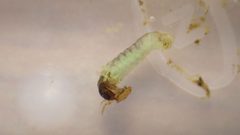
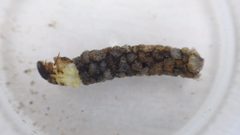
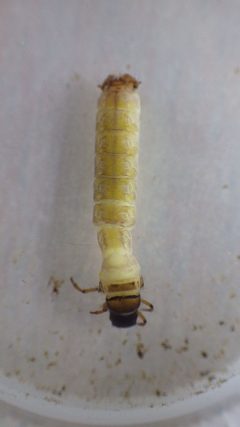
Pronunciation
How to pronounce Psilotreta: /ˌpsɪloʊˈtriːtə/
These audio files are automatically generated. While they are not always 100% accurate, they are a good starting point.
Identification
Distinguished from other Odontoceridae by larval case construction: Psilotreta larvae use silk to cement mineral particles into a rigid, mortar-like case, unlike some relatives that use plant material. require genitalia examination for -level identification; -level identification relies on wing venation and antennal characteristics typical of Odontoceridae.
Images
Appearance
Larvae construct distinctive cases from sand grains and small particles cemented together with silk, giving a mortar-like appearance. Cases are typically cylindrical or slightly curved. have hairy wings held roof-like over the body, long , and reduced mouthparts.
Habitat
Freshwater lotic environments including streams and rivers. Larvae inhabit areas where mineral substrate is available for case construction. Specific microhabitat preferences vary by .
Distribution
North America; records include Michigan, Vermont, and other US states. Individual show varying ranges within the continent.
Life Cycle
Complete with aquatic larval and pupal stages, terrestrial stage. Larvae are case-bearing and develop through multiple instars. occurs within the larval case or in a constructed pupal chamber.
Behavior
Larvae are sedentary case-bearers that move by dragging their constructed cases. Cases provide protection and camouflage. are weak fliers, primarily active at dusk or night, and do not feed.
Ecological Role
Larvae function as or scrapers in freshwater , processing organic matter and biofilm. They serve as prey for fish and aquatic . provide food for terrestrial including birds and bats.
Human Relevance
Bioindicators of water quality in freshwater . Used in aquatic biomonitoring programs. No direct economic importance.
Similar Taxa
- AgarodesAlso in Odontoceridae with case-making larvae; distinguished by larval case materials and genitalia structure
- OdontocerumCongeneric member; Psilotreta distinguished by specific wing venation patterns and larval case
More Details
Species diversity
More than 30 described ; exact number varies by source with at least 39 species documented. Taxonomic revision may alter species count.