
Nannaria cingulata
Means, Hennen & Marek, 2021
Swamp-Dwelling Twisted-Claw Millipede
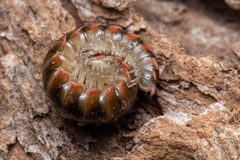
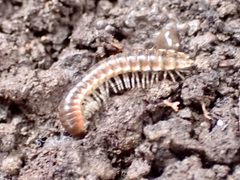
Nannaria cingulata is a of twisted-claw in the Xystodesmidae, described in 2021 from the Appalachian Mountains of the eastern United States. The species belongs to a of small, soil-dwelling millipedes that are cryptic and difficult to collect. Like other members of its genus, it plays a role as a decomposer in forest . The specific epithet refers to a banded or girdled appearance.
Pronunciation
How to pronounce Nannaria cingulata: /nænˈnɑːriə sɪŋɡjuˈlɑːtə/
These audio files are automatically generated. While they are not always 100% accurate, they are a good starting point.
Identification
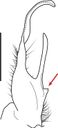
Nannaria cingulata can be distinguished from other Nannaria by morphological features examined during formal description, including details of structure in males. Males possess the characteristic twisted and flattened claws on their legs that give the 'twisted-claw' group its . The species has a shiny body with coloration in the caramel-brown to black range, potentially with pale markings. Positive identification requires examination of male gonopods under microscopy.
Images
Habitat
Nannaria cingulata inhabits forested near streams in the Appalachian Mountains. Like other members of the wilsoni group, it prefers moist woodland environments where it remains buried in soil and leaf litter.
Distribution
Eastern United States, specifically within the Appalachian Mountain region. The was described from specimens collected in the eastern U.S. as part of a broader revision of the Nannaria wilsoni species group.
Diet
Feeds on decaying leaves and other plant matter.
Behavior
Nannaria cingulata exhibits cryptic , remaining buried in soil and sometimes staying completely beneath the surface. This makes the difficult to detect and collect.
Ecological Role
Serves as a decomposer in forest , breaking down leaf litter and releasing nutrients into the soil.
Similar Taxa
- Nannaria swiftaeBoth are twisted-claw millipedes in the wilsoni group described in the same 2021 revision from the Appalachian region; distinguished by specific morphological features and geographic distribution
- Other Nannaria species in the wilsoni groupShare the same general body plan, preferences, and male twisted-claw ; require detailed examination for definitive identification