
Apheloria tigana
Chamberlin, 1939
Yellow-and-black Flat Millipede
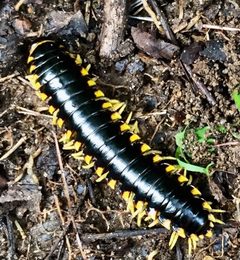
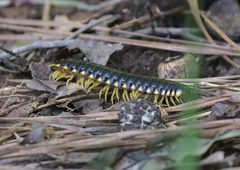
Apheloria tigana is a large North American flat-backed millipede distinguished by its bold yellow and black coloration. It possesses lateral segmental expansions called paranota that give it a flattened appearance characteristic of the order Polydesmida. The is notable for its chemical defense mechanism, secreting hydrogen cyanide compounds when threatened. Taxonomic status remains contested: treated as a junior synonym of A. virginiensis by some authorities based on morphological and molecular evidence, while other sources maintain it as a valid species.

Pronunciation
How to pronounce Apheloria tigana: /æfɪˈlɔːriə tɪˈɡɑːnə/
These audio files are automatically generated. While they are not always 100% accurate, they are a good starting point.
Identification
Distinguished from other Apheloria by the specific pattern of yellow markings: paranota yellow throughout, single yellow mid- spot on collum margin, and yellow spots restricted to last 3-5 segments rather than extending across most segments. South of Cape Fear River basin, an undescribed Apheloria species with yellow marks on most segments occurs, potentially causing confusion. The combination of large size, flat-backed shape, and specific yellow-black pattern separates it from other xystodesmid millipedes.
Images
Habitat
Found in forested environments across its range, including both coastal plain and montane regions. Occurs in areas with suitable decaying wood and leaf litter for feeding and shelter.
Distribution
Coastal southeastern North Carolina northward through the Blue Ridge Mountains to Franklin and Floyd counties, Virginia. Records concentrated in the eastern United States with core range in the Carolinas and southern Virginia.
Diet
Feeds on decaying plant matter including leaf litter and decaying wood, typical of xystodesmid millipedes.
Behavior
When threatened, secretes hydrogen cyanide compounds from specialized glands as a chemical defense. Slow-moving, typical of large millipedes.
Ecological Role
Decomposer contributing to nutrient cycling through consumption and processing of decaying plant material. Aposematic coloration serves as warning signal to .
Human Relevance
Secreted cyanide compounds are toxic and can cause skin irritation; authorities recommend washing hands after handling to avoid irritation from transferred secretions. Not considered medically significant with proper precautions.
Similar Taxa
- Apheloria virginiensisTreated as by some authorities; morphological and molecular data support synonymy
- Undescribed Apheloria species (south of Cape Fear River)Similar appearance but with yellow marks on most segments rather than restricted pattern
- Pleuroloma flavipesSimilar yellow-black aposematic coloration and flat-backed in same , but differs in specific marking pattern and geographic range
More Details
Taxonomic Status
A. tigana was synonymized with A. virginiensis in 2017 based on , and this synonymy was supported by a 2025 phylogenetic analysis using molecular data. However, some sources including GBIF and iNaturalist continue to list it as accepted, reflecting ongoing taxonomic debate.