Orthomorpha coarctata
(Saussure, 1860)
Long-flange Millipede
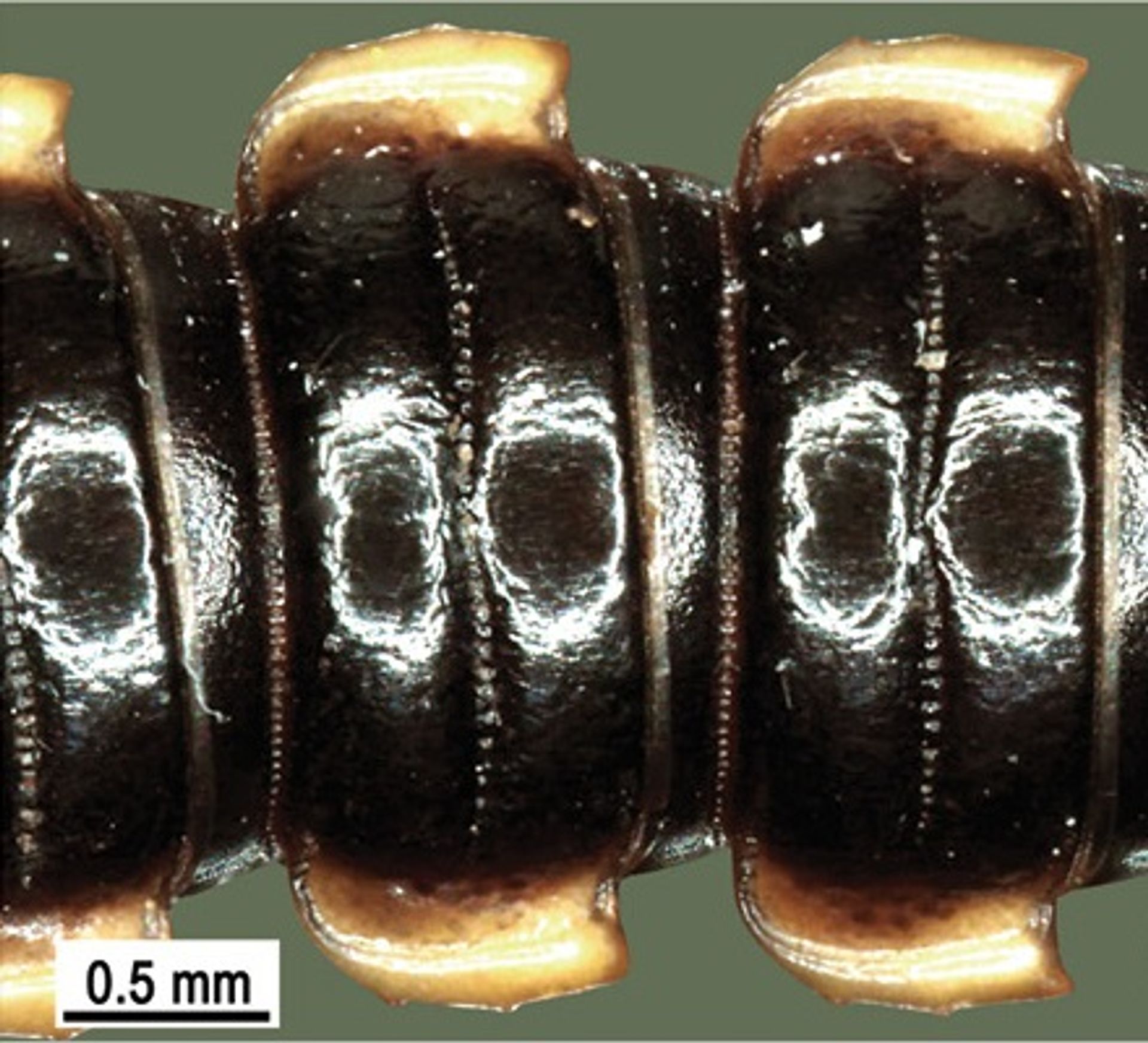
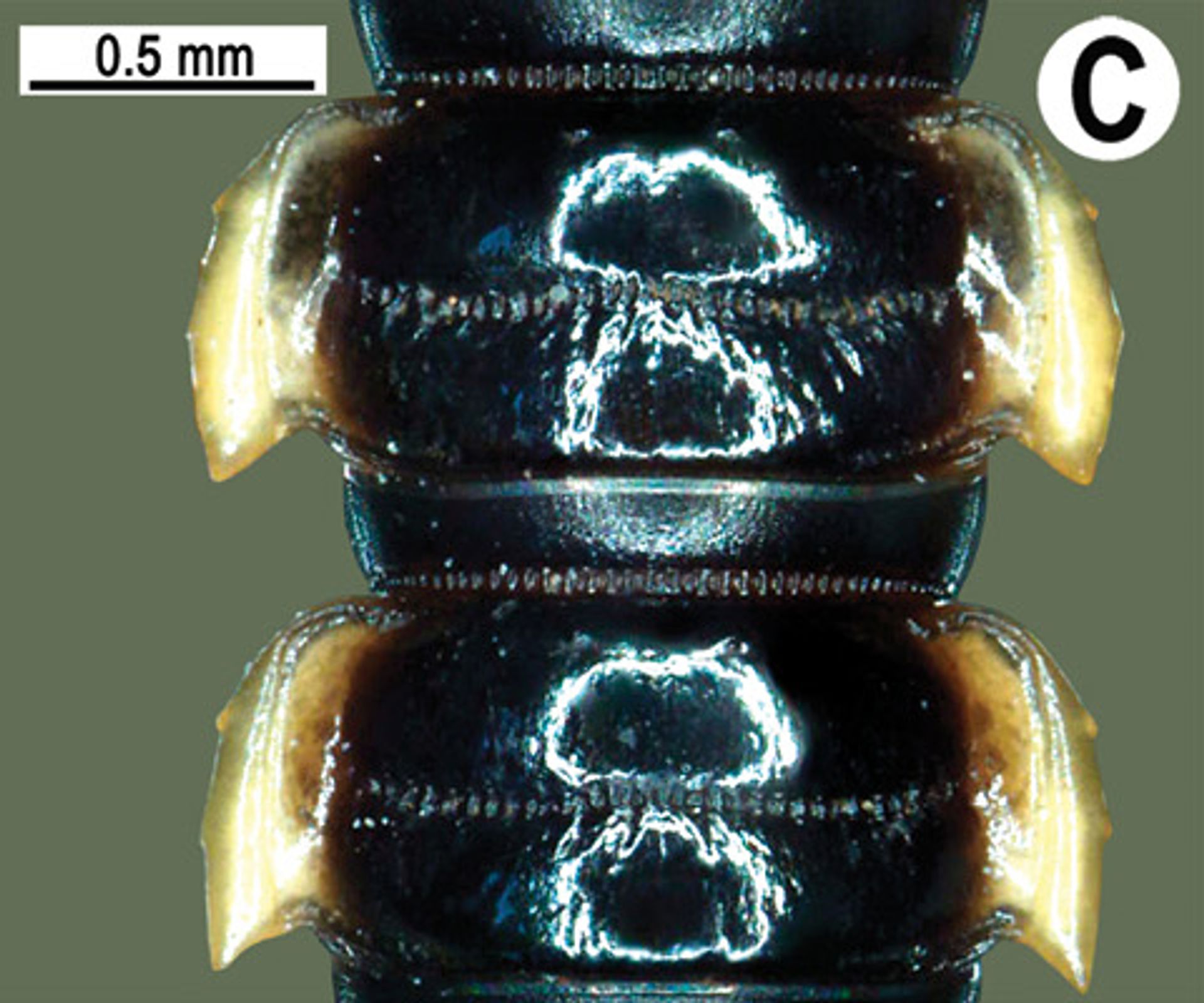
Orthomorpha coarctata is a widely introduced in the Paradoxosomatidae, commonly known as the long-flange millipede. Presumed native to Southeast Asia, it has established in tropical and subtropical regions worldwide through human-mediated transport. The species is notable for its distinctive elongated paranota (lateral keels) and unique male . Some taxonomists have placed it in the Asiomorpha based on these reproductive structures.

Pronunciation
How to pronounce Orthomorpha coarctata: /ɔrˈθoʊmɔrfə koʊˈɑrkˌteɪtə/
These audio files are automatically generated. While they are not always 100% accurate, they are a good starting point.
Identification
Distinguished from the similarly widespread introduced Oxidus gracilis by its proportionally longer and more pointed paranota on mid-body segments. Males can be identified by with a single simple tip, whereas other Orthomorpha species have gonopods with two or three lobes. This gonopod characteristic has led some authors to classify this species in the separate Asiomorpha.
Images
Habitat
Decaying wood and leaf litter; also recorded from grassland . Occupies moist terrestrial microhabitats in tropical and subtropical environments.
Distribution
Presumed native to Southeast Asia; introduced and established in tropical and subtropical regions worldwide including the Hawaiian Islands, West Indies, Gulf Coast of North America, and Galápagos Islands.
Behavior
Sexual has been documented in natural .
Human Relevance
Widely dispersed globally through human transport; established in numerous regions outside native range. No documented agricultural or medical significance provided in sources.
Similar Taxa
- Oxidus gracilisAnother widely introduced Asian ; distinguished by proportionally shorter, less pointed paranota on mid-body segments
- Other Orthomorpha speciesDistinguished by male : O. coarctata has single simple tip versus two or three lobes in
More Details
Taxonomic Note
Some authors have placed this in the Asiomorpha based on its unique , though it is widely accepted as Orthomorpha coarctata.
Sources and further reading
- BugGuide
- Wikipedia
- GBIF taxonomy match
- iNaturalist taxon
- NCBI Taxonomy
- Catalogue of Life
- Meloidae Holdings | Entomology Research Museum
- The population ecology of Orthomorpha coarctata (Diplopoda : Polydesmidae)
- Distribution of 2 species of Polydesmid millipedes Orthomorpha coarctata and Streptogonopus phipsoni in the grasslands and Taylor’s Power Law
- Observations on the natural population and sexual behaviour of Orthomorpha coarctata (Polydesmida, Paradoxosomatidae)j a millipede of decaying wood and litters