
Euryuridae
Pocock, 1909
Genus Guides
1- Euryurus(flat-backed millipede)
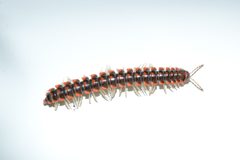
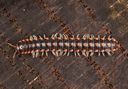
Euryuridae is a of flat-backed millipedes in the order Polydesmida. The family includes at least four and approximately 14 described . Members are to the Nearctic region. One well-studied species, Euryurus leachii, has been used to investigate thermal in detritivorous arthropods.
Pronunciation
How to pronounce Euryuridae: /jʊəˈraɪjʊəbədeɪ/
These audio files are automatically generated. While they are not always 100% accurate, they are a good starting point.
Identification
Euryuridae are flat-backed millipedes (order Polydesmida), characterized by a dorsoventrally flattened body form. Specific diagnostic features distinguishing Euryuridae from other polydesmidan require examination of and other internal characters.
Images
Habitat
Euryurus leachii occupies dead wood of varying decay classes. Exposed dry logs represent a common microhabitat, though these can warm to temperatures exceeding the ' critical thermal maximum.
Distribution
Nearctic region. The is to North America.
Seasonality
Euryurus leachii has been collected in both spring and fall. Critical thermal maximum (CTmax) is seasonally plastic, with fall-collected individuals showing a mean CTmax 0.6°C higher than spring-collected individuals.
Diet
Detritivorous. Feeds on decaying wood and associated organic matter.
Ecological Role
. Contributes to decomposition of dead wood and nutrient cycling in forest .
Human Relevance
Understanding responses of euryurid millipedes to fragmentation and climate change may help predict shifts in forest composition and processes.
Similar Taxa
- Other Polydesmida familiesEuryuridae shares the flat-backed body form with all members of Polydesmida; differentiation requires examination of male and other taxonomic characters.
More Details
Thermal physiology
Euryurus leachii has a mean critical thermal maximum of approximately 40.5°C. Mass and sex do not affect CTmax in this .
Taxonomic composition
include Auturus Chamberlin, 1942; Euryurus Koch, 1847; Eutheatus; and Illiniurus Shear, 1968.