
Aniulus
Chamberlin, 1940
Species Guides
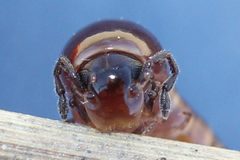
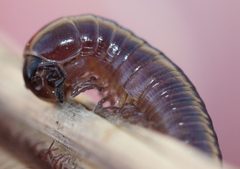
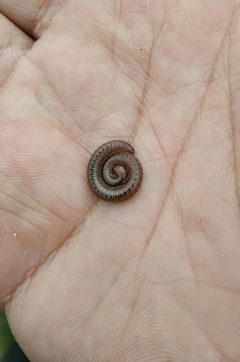
2Aniulus is a of North American millipedes in the Parajulidae, comprising at least 20 described . The genus belongs to the order Julida, characterized by cylindrical bodies and typically inhabiting forest floor . Detailed behavioral studies exist for at least one species, Aniulus bollmani, documenting complex courtship and mating .
Pronunciation
How to pronounce Aniulus: /ænˈjuːləs/
These audio files are automatically generated. While they are not always 100% accurate, they are a good starting point.
Identification
Members of Aniulus can be distinguished from other parajulid by tribal and subtribal classification (Aniulini, Aniulina). Males possess enlarged first leg pairs used in grasping females during mating, and articulated and for sperm transfer. Specific diagnostic morphological features for the genus require examination of gonopod structure and body segment characteristics.
Images
Habitat
Forest floor environments, specifically woodland with leaf litter and decaying organic matter.
Distribution
North America.
Seasonality
Multiple mating seasons observed in Aniulus bollmani, with activity spanning at least 10 months based on sampling data.
Life Cycle
Long maturation times indicated by age distribution data; multiple cohorts present across extended sampling periods suggesting overlapping .
Behavior
Males exhibit courtship tapping on female body segments prior to copulation. Copulation involves venter-to-venter positioning with males using enlarged first legs to grasp females. Post-copulatory mate guarding has been observed. Sperm transfer occurs via coordinated movement of and .