
Glomerida
Northern Pill Millipedes, Pill Millipedes
Family Guides
2- Glomeridae(pill millipedes)
- Protoglomeridae
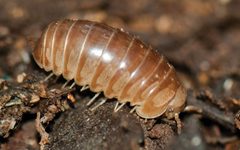
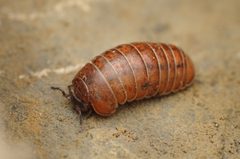
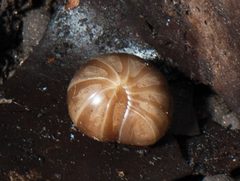
Glomerida is an order of short-bodied millipedes commonly known as northern pill millipedes, characterized by their ability to enroll into a protective ball (volvation). possess 12 body segments and exhibit in leg number: females have 17 pairs while males have 19 pairs, with the terminal pair in males modified into clasping telopods for mating. The order comprises approximately 30 and 280–450 distributed primarily in the Northern Hemisphere, with representatives in Europe, North Africa, Central and Southeast Asia, and disjunct in eastern and western North America. Historically grouped with Sphaerotheriida in the Oniscomorpha based on convergent enrolling , molecular evidence suggests a closer relationship to the non-enrolling order Glomeridesmida.
Pronunciation
How to pronounce Glomerida: /ɡloʊˈmɛrɪdə/
These audio files are automatically generated. While they are not always 100% accurate, they are a good starting point.
Identification
Distinguished from the superficially similar order Sphaerotheriida (giant pill millipedes) by smaller size (under 20 mm vs. often exceeding 30 mm), presence of 12 body segments (vs. 13 in Sphaerotheriida), and restriction to the Northern Hemisphere. Distinguished from pill bugs (Oniscidea, Crustacea) by greater number of legs (17–19 pairs vs. seven pairs) and with numerous articles. Distinguished from non-enrolling millipedes by short body, compact form, and ozopore position. Males identifiable by 19 leg pairs with terminal pair modified as telopods; females have 17 leg pairs.
Images
Appearance
Small, oval-shaped millipedes reaching up to 20 mm in length. Body compact with 12 segments in ; the second and third tergites are often , and the 11th tergite may be reduced or partially hidden, giving an apparent count of 11 segments. The last tergite is enlarged and shield-like. relatively large and rounded with long, slender and horseshoe-shaped Tömösváry organs. present or absent. Collum (first segment behind head) small; second tergite greatly enlarged. Ozopores (defensive glands) positioned dorsally, unlike the lateral placement in most other millipedes. Coloration variable, often dark with contrasting patterns.
Habitat
Predominantly terrestrial, inhabiting leaf litter, soil, and decaying wood in forested environments. Some occupy caves as troglobionts or troglophiles. One species, Glomeris aurita, is restricted to high-altitude mountain in the Alps, representing the only known high-altitude in the order. Epigean (surface-dwelling) species found in protected forest patches; some show affinity for deciduous or coniferous forests.
Distribution
Primarily Holarctic distribution. Present in Europe (including British Isles), North Africa, Central and Southeast Asia (extending south to Indonesia, the only region crossing the equator). In the Americas: three disjunct areas—eastern Appalachian region from Kentucky to northern Florida and Mississippi; California region from San Francisco Bay to Monterey Bay; and neotropical region from eastern Mexico (Nuevo León) to central Guatemala. Fossil records from Cenomanian-aged Burmese amber represent the oldest known occurrence.
Seasonality
Glomeris hexasticha in Bulgaria has been observed active from May to August, with peak abundance in June. Glomeris aurita has a very short active period, restricted to cooler conditions at high altitudes. Specific seasonality data for most is poorly documented.
Life Cycle
Development occurs through hemianamorphosis, a mode of anamorphic development where segments are added gradually but fewer than the number of segments are present at hatching.
Behavior
Capable of volvation (enrolling into a protective ball), a defensive convergent with Sphaerotheriida and pill bugs. When disturbed, individuals curl tightly with the surface enclosed and the hardened tergites forming an external shield. The defensive secretion from ozopores likely serves as chemical defense when enrollment is insufficient.
Ecological Role
Decomposers in forest , processing leaf litter and contributing to nutrient cycling. Specific ecological functions and interactions remain poorly studied.
Human Relevance
Glomeris marginata serves as a familiar example of pill millipedes in European natural history education. Some are subjects of taxonomic and phylogenetic research due to their biogeographic patterns and disputed evolutionary relationships. No significant economic importance documented.
Similar Taxa
- SphaerotheriidaSuperficially similar giant pill millipedes also capable of volvation, but distinguished by larger size, 13 body segments, and Southern Hemisphere distribution.
- Oniscidea (pill bugs/woodlice)Convergent crustacean enrollers with seven pairs of legs, two pairs of (one ), and aquatic larval stages; distinguished by fewer legs and different antennae structure.
- GlomeridesmidaPutative sister group based on molecular evidence, but lacks enrolling ability and has different body proportions; historically grouped with Glomerida in Pentazonia.
More Details
Phylogenetic Uncertainty
Traditional classification placed Glomerida with Sphaerotheriida in the Oniscomorpha based on shared volvation. However, sequence comparisons suggest Glomerida may be more closely related to Glomeridesmida, implying that enrollment evolved twice independently or was lost in Glomeridesmida ancestors.
Taxonomic Structure
-level classification remains disputed: some authorities recognize three families (Glomeridae, Glomeridellidae, Trachysphaeridae), while others use a more elaborate system of and tribes, or recognize Protoglomeridae as distinct. The family Glomeridellidae, previously considered strictly Euro-Mediterranean, has been discovered in China and Indochina, indicating a relict Oriental origin.
Sources and further reading
- BugGuide
- Wikipedia
- GBIF taxonomy match
- iNaturalist taxon
- NCBI Taxonomy
- ID Challenge #18 | Beetles In The Bush
- Pill-millipedes (Glomerida, Diplopoda) in Taiwan
- The first representatives of the millipede family Glomeridellidae (Diplopoda, Glomerida) recorded from China and Indochina
- Macedomeris, a new monotypic doderiinine genus (Diplopoda, Glomerida) from a cave in North Macedonia, Balkan Peninsula
- Five new species of the pill millipede genus Rhopalomeris Verhoeff, 1906 (Diplopoda, Glomerida) from Thailand
- Revision of the American Pill Millipedes I: Onomeris and Trichomeris (Diplopoda, Glomerida, Glomeridae)
- A new Rhopalomeris species (Diplopoda: Glomerida: Glomeridae), and notes on the phylogenetic relationships between glomeridans in Vietnam
- A checklist of millipede genus Hyleoglomeris Verhoeff, 1910 in mainland China, with descriptions of seven new species (Diplopoda, Glomerida, Glomeridae)
- Three new species of the pill millipede genus Hyleoglomeris Verhoeff, 1910, from northern Thailand (Diplopoda, Glomerida, Glomeridae)
- New record of Glomeris hexasticha Brandt, 1833 (Diplopoda: Glomerida: Glomeridae) from the Lilyaksko Plateau, North-Eastern Bulgaria
- A New Species of the Pill Millipede Genus Rhopalomeris Verhoeff, 1906 (Diplopoda, Glomerida) from Southern Thailand
- Natural history collections help resurrecting Glomeris herzogowinensis Verhoeff, 1898 and further clarify the nomenclature of two Onychoglomeris subspecies of Attems (Diplopoda, Glomerida, Glomeridae)
- An integrative and citizen science based approach to the rediscovery and redescription of the only known high-altitude endemic Pill Millipede, Glomeris aurita Koch (Diplopoda, Glomerida)