
Pachymerium
C.L. Koch, 1847
Species Guides
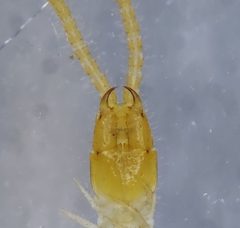
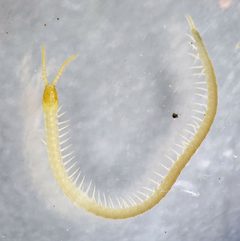
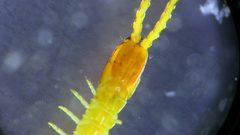
1- Pachymerium ferrugineum(Earth Centipede)
Pachymerium is a of soil centipedes in the Geophilidae, containing more than 20 . These range from 2 cm to 8 cm in length and possess 37 to 79 pairs of legs. The genus is distributed primarily in the western Palearctic region and southern Africa, with some species extending to the Caribbean. Size and leg number vary considerably among species, with some of the smallest and largest geophilid representatives occurring in this genus.
Pronunciation
How to pronounce Pachymerium: //ˌpækɪˈmɪəriəm//
These audio files are automatically generated. While they are not always 100% accurate, they are a good starting point.
Identification
Distinguished from other Geophilidae by the combination of: elongated with intermediate labral part; forcipular tergite narrower than following tergite; broad forcipular coxosternite; elongated first forcipular article with denticle; prominent basal denticle on ultimate forcipular article; pore fields on sternites in paired anterior groups plus posterior transverse band; ultimate leg-bearing sternite as long as wide or longer; scattered pores on basal element of ultimate legs. Closest relative is Schendyloides, which shares -level characters but differs in specific details of head and forcipular structure.
Images
Appearance
Elongated with an intermediate part of the separating the side pieces. Second each end in a claw. Forcipular tergite distinctly narrower than the following tergite; part of forcipular coxosternite broad. First article of forcipule elongated with a denticle; ultimate article with a prominent basal denticle. Fields of pores present on at least sternites, arranged in paired anterior groups and a posterior transverse band. Sternite of last leg-bearing segment about as long as wide or longer. Basal element of each ultimate leg with scattered pores; each ultimate leg ends in a claw. Body length ranges from 17 mm to 85 mm; leg pairs range from 37 to 79.
Habitat
Soil-dwelling; specific microhabitat preferences not documented beyond general soil .
Distribution
Western Palearctic region (Europe, North Africa, Middle East); southern Africa; Cuba. Records include Denmark, Norway, Sweden, Russia, Portugal, Turkey, Chile, and Cuba.
Ecological Role
Soil-dwelling ; specific ecological functions not documented.
Similar Taxa
- SchendyloidesClosest phylogenetic relative within Geophilidae; forms sister clade with Pachymerium. Distinguished by differences in and forcipular .
- ArctogeophilusNext closest relative in phylogenetic analysis; more distantly related than Schendyloides.
- AlloschizotaeniaGroups with Arctogeophilus as sister clade to the Pachymerium-Schendyloides clade.
More Details
Phylogenetic relationships
Molecular and morphological phylogenetic analysis places P. ferrugineum in a clade with Schendyloides as sister group to a clade containing Arctogeophilus and Alloschizotaenia, supporting close relationship between Pachymerium and Schendyloides within Geophilidae.
Size extremes
The exhibits exceptional size variation: P. minutum (17 mm, 39 leg pairs) and P. armatum (20 mm, 37 leg pairs) are among the smallest geophilids, while P. coiffaiti females (up to 85 mm, 73-75 leg pairs) and P. serratum (78 mm, up to 79 leg pairs) are among the largest.