
Geophilus varians
McNeill, 1887
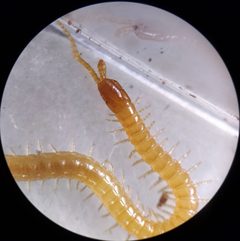
Geophilus varians is a small soil native to eastern North America. It is characterized by its variable coloration, ranging from light faded orange to yellow or whitish yellow, with a distinctly brighter . The exhibits in leg pair counts, with males possessing 53–59 pairs and females 55–61 pairs. It reaches maximum lengths of 40 mm, though typically averages 30–35 mm.
Pronunciation
How to pronounce Geophilus varians: /ˈdʒiː.əˌfaɪ.ləs ˈvæɹ.i.ənz/
These audio files are automatically generated. While they are not always 100% accurate, they are a good starting point.
Identification
Distinguished from by the combination of: (1) complete lack of consolidated paxilli and sacculi on the ; (2) concealed prebasal plate; (3) unusually long ultimate legs; (4) specific leg pair count ranges differing between sexes; and (5) distinctive color pattern of pale trunk with contrasting brighter . The in leg number (males 53–59, females 55–61) is a key diagnostic feature.
Images
Habitat
Soil-dwelling; specific microhabitat preferences not documented in available sources.
Distribution
Eastern North America, specifically recorded from South Carolina, Indiana, Ohio, Pennsylvania, and Virginia.
Similar Taxa
- Other Geophilus speciesMay share general body form and , but distinguished by the unique combination of antennal sensory organ reduction, concealed prebasal plate, long ultimate legs, and specific leg pair counts with .
More Details
Antennal morphology
The complete absence of consolidated paxilli and sacculi represents a notable morphological reduction compared to many related geophilid , which typically possess these chemosensory structures on their .
Sources and further reading
- BugGuide
- Wikipedia
- GBIF taxonomy match
- iNaturalist taxon
- Catalogue of Life
- Holiday meals served by an alien plant and its cosmopolitan guest: Peach-clematis aphid, Myzus varians — Bug of the Week
- A tortoise beetle gift | Beetles In The Bush
- conservation | Blog - Part 18
- A decade of ZooKeys: Publishing and communicating knowledge & love for zoology | Blog