Zorotypus
Silvestri, 1913
angel insects
Species Guides
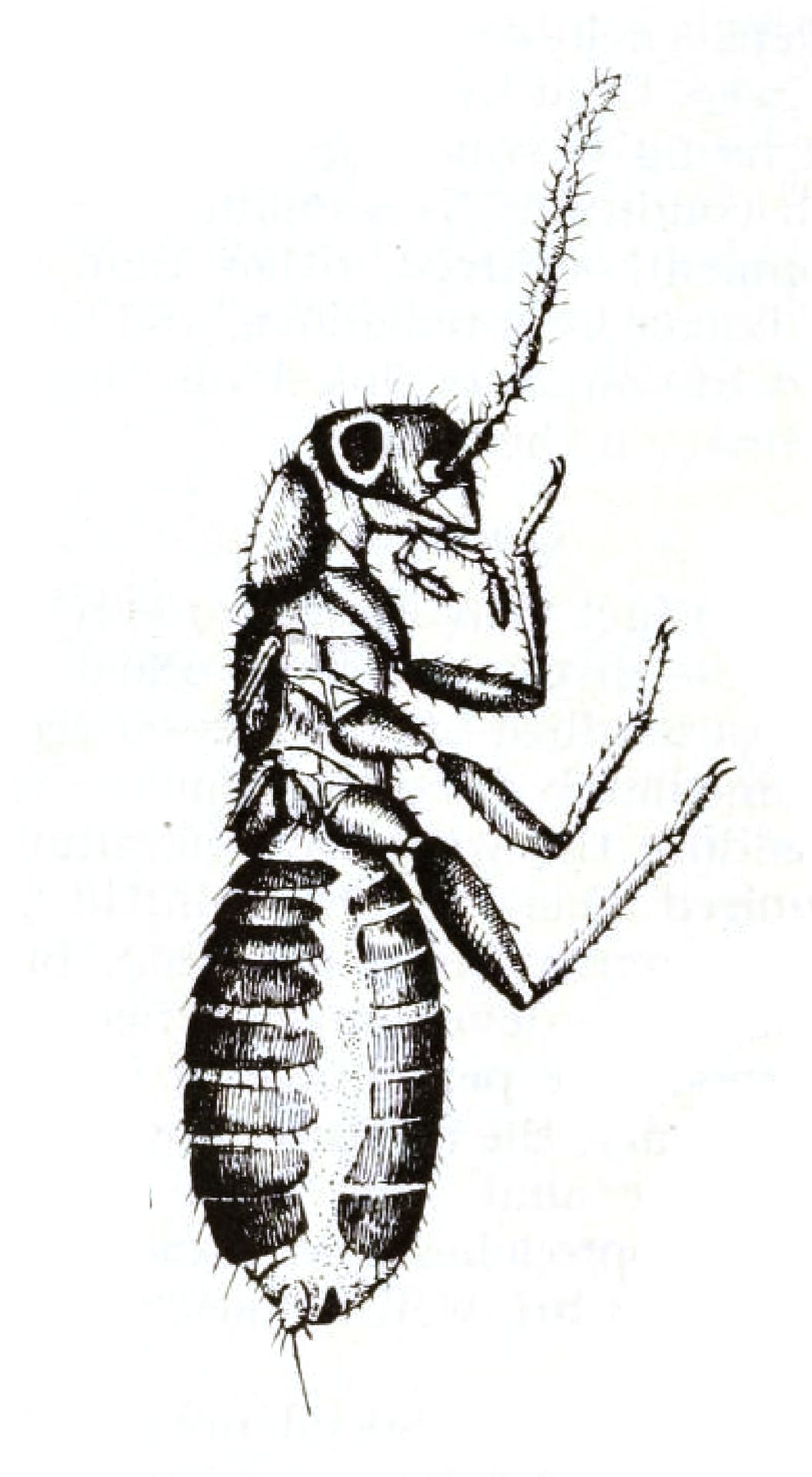
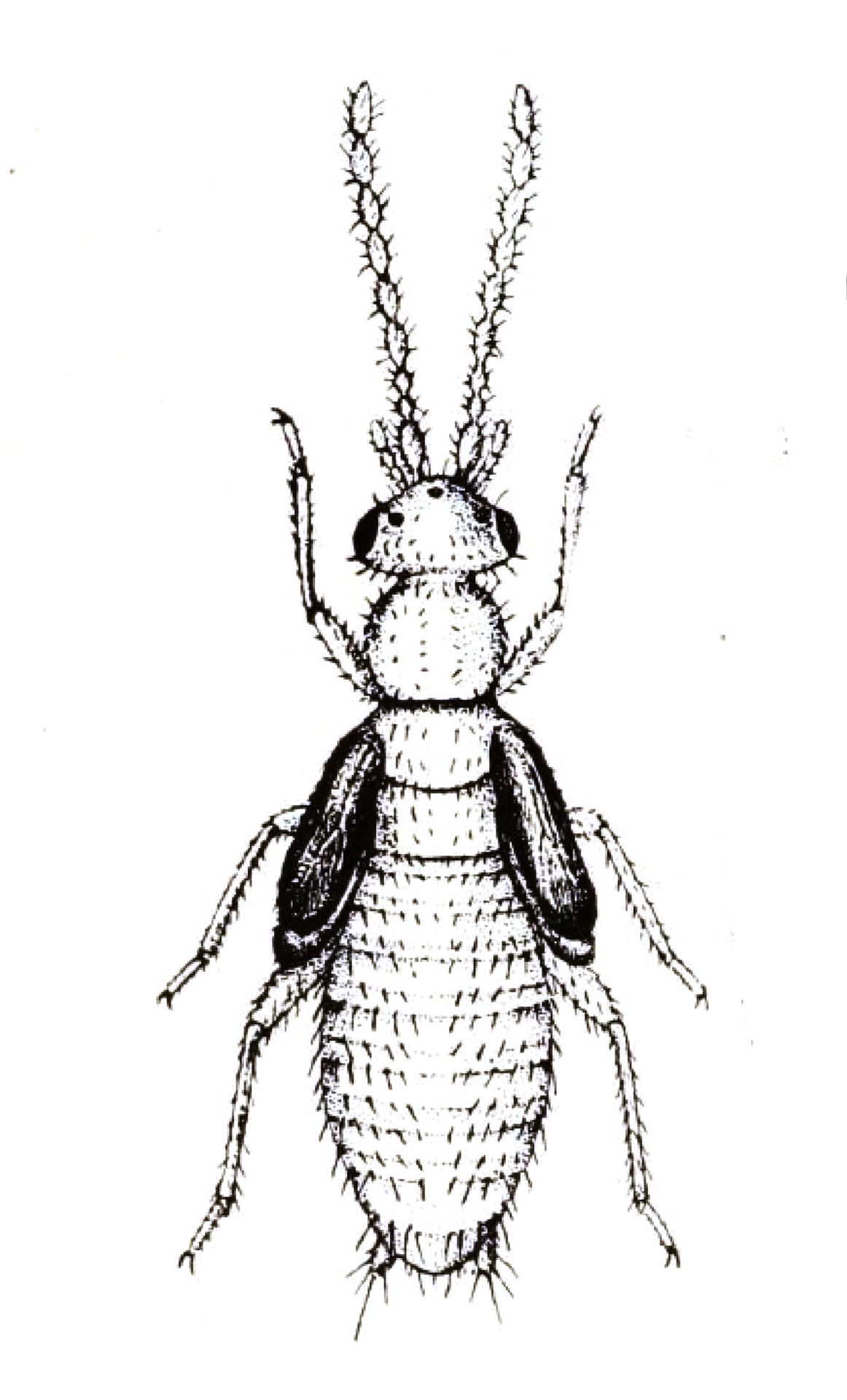
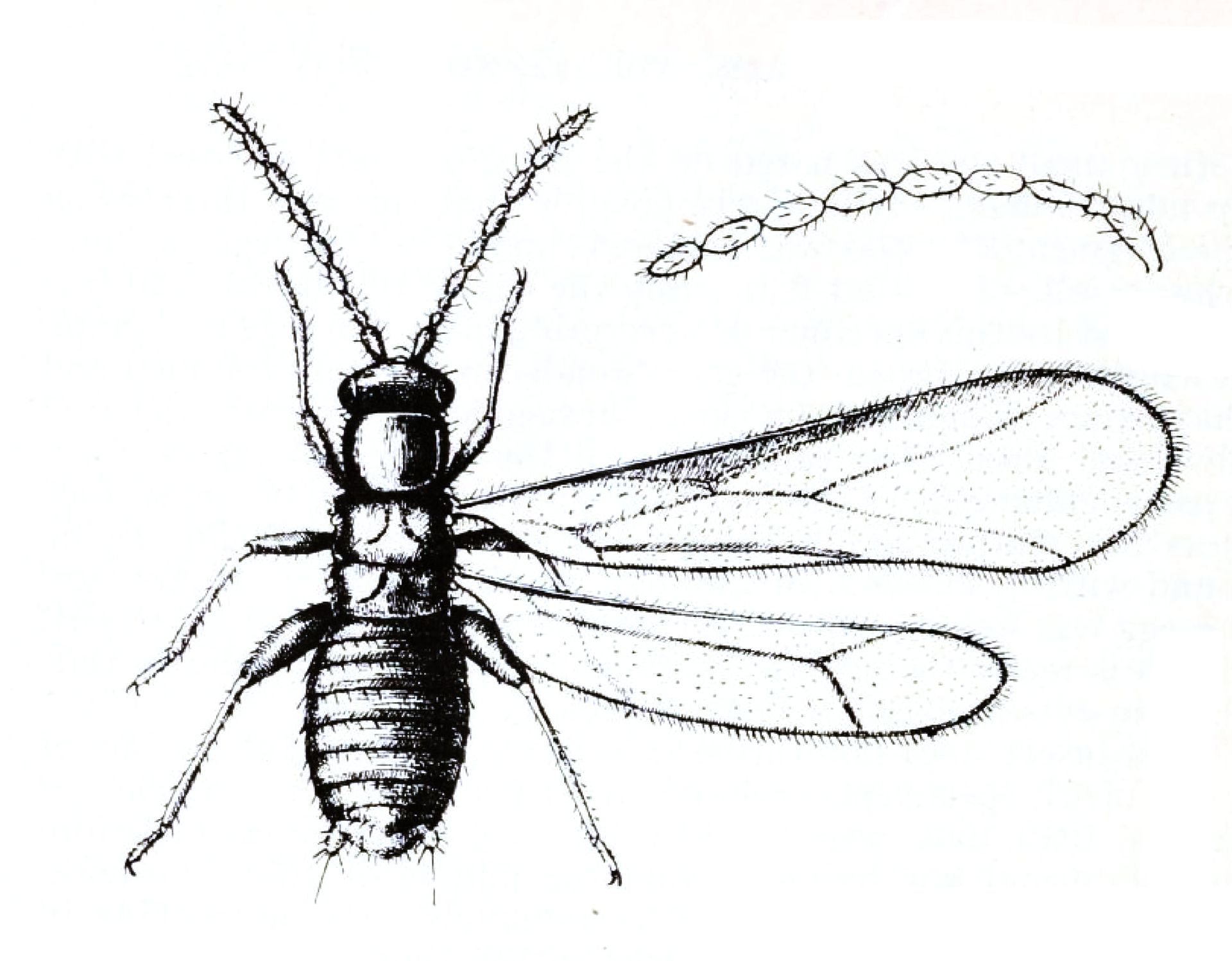
1Zorotypus is the sole extant of the order Zoraptera, commonly called angel insects. The genus contains approximately 39 extant distributed primarily in tropical and subtropical regions worldwide, with four species occurring north of the Tropic of Cancer. Species exhibit two distinct morphs: winged individuals with , ocelli, and dark pigmentation that can shed their wings; and wingless, pale individuals lacking and ocelli. The genus has an extensive fossil record, with numerous species described from Cretaceous and Miocene amber deposits.
Pronunciation
How to pronounce Zorotypus: /zɔːˈrɒtɪpəs/
These audio files are automatically generated. While they are not always 100% accurate, they are a good starting point.
Identification
Identified by the characteristic nine-segmented beaded and the presence of two morphs within . Winged individuals have , ocelli, and dark coloration with sheddable wings; wingless individuals are pale and lack . Males of some species may be distinguished by distinctive postabdominal projections and genital structures. Subgenus Octozoros tentatively distinguished by eight-segmented antennae.
Images
Habitat
Found under rocks, in leaf litter, and in decaying wood in tropical and subtropical forests. Zorotypus komatsui collected from under a rock approximately 30 cm long, half embedded in soil, in an open relatively dry area with nearby rainforest. Suitable appear to include moist microhabitats in otherwise dry conditions.
Distribution
Primarily tropical and subtropical regions worldwide. Extant occur in Africa (Ghana, Guinea, Ivory Coast, Cameroon, Kenya, Madagascar, Mauritius), South America (Brazil—Amazonas, Pará, Mato Grosso), and Asia (China—Yunnan, Myanmar, Malaysia). Four species occur north of the Tropic of Cancer: two in the Americas and others in Asia and Africa. Fossil species known from Dominican amber (Miocene), Burmese amber (Cretaceous), and Jordanian amber (Cretaceous).
Behavior
Winged individuals can shed their wings, a convergent with . Some males possess large postabdominal projections on tergites X and XI that superficially resemble asymmetric genitalia; these projections are fork-like (tergite X) and triangular with a horn (tergite XI). External sperm transfer has been observed in related and may occur in some Zorotypus species, though this remains unconfirmed for most.
Ecological Role
Decomposer in forest floor ; specific ecological functions not well documented.
Human Relevance
Of limited direct economic importance. Scientific interest due to their phylogenetic position as a small, enigmatic insect order. Fossil provide important data for understanding the evolutionary history and of the order.
Similar Taxa
- SpermozorosSome Zorotypus (e.g., Z. komatsui) share male genitalia and well-developed postabdominal projections with Spermozoros impolitus, apparently due to rather than close relationship.
More Details
Reproductive Biology
Parthenogenetic occurs in some or within Zoraptera. Males of some species have highly reduced genitalia with six inconspicuous , one globular less sclerotized structure, and two membranous projections. Giant spermatozoa and large spermathecae are present in related species.
Fossil Record
Extensive fossil record from mid-Cretaceous Burmese amber (Myanmar), Miocene Dominican amber, and Cretaceous Jordanian amber. Fossil have contributed to hypotheses of a Gondwanan origin for the order.
Taxonomic Diversity
Afrotropical diversity is considered very fragmentary based on collecting effort; more likely remain undescribed, particularly in suitable along tropical and subtropical borders.
Sources and further reading
- BugGuide
- Wikipedia
- iNaturalist taxon
- NCBI Taxonomy
- Catalogue of Life
- The Distribution of Zorotypus hubbardi (Zoraptera)
- A new species of Zoraptera, Zorotypus komatsui sp. nov. from Cameroon and a redescription of Zorotypus vinsoni Paulian, 1951 (Polyneoptera, Zoraptera)
- Zorotypus huangi sp. nov. (Zoraptera: Zorotypidae) from Yunnan, southern China
- Zorotypus pecten, a new species of Zoraptera (Insecta) from mid-Cretaceous Burmese amber