
Zorotypidae
Silvestri, 1913
Angel Insects
Genus Guides
1- Zorotypus(angel insects)
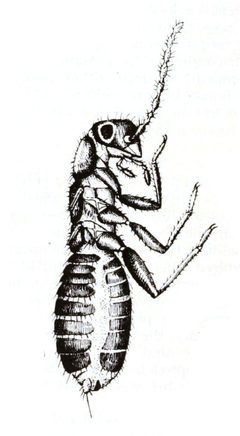
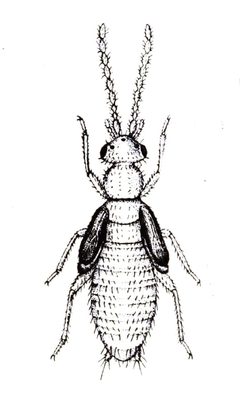
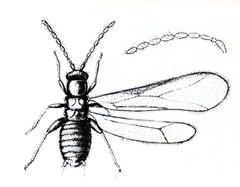
is the sole extant of the insect order Zoraptera, commonly called angel insects. The family contains one extant , Zorotypus, with approximately 39 described living and 9 extinct species known from amber deposits. These minute, soft-bodied insects exhibit a striking : winged individuals possess dark coloration, , ocelli, and sheddable wings similar to , while wingless individuals are pale, lack and ocelli, and are generally more common. The family has a sparse but widespread distribution across tropical and subtropical regions.
Pronunciation
How to pronounce Zorotypidae: /zɔːrəˈtɪpɪdiː/
These audio files are automatically generated. While they are not always 100% accurate, they are a good starting point.
Identification
are minute (typically under 3 mm), soft-bodied insects with a distinctive nine-segmented, (bead-like) . Two distinct morphs occur: winged forms are dark brown to black with functional , ocelli, and wings that can be shed; wingless forms are pale, lack entirely, and are more frequently encountered. The varies among and serves as a primary diagnostic character for distinguishing .
Images
Habitat
Tropical and subtropical forest environments, particularly in decaying wood, leaf litter, and under bark. Collection records indicate association with rotting wood substrates.
Distribution
Disjunct distribution across tropical and subtropical regions including southern China (Yunnan), Southeast Asia (Borneo, Myanmar), and the Neotropics (Mexico, Brazil, Bolivia). Fossil are known from Cretaceous amber deposits in northern Myanmar.
Behavior
Winged individuals can shed their wings, a trait convergent with . The earliest known record of mating in the order has been observed in fossil specimens from mid-Cretaceous amber.
Similar Taxa
- Termitidae (termites)Convergent wing-shedding and small, soft-bodied appearance; distinguished by beaded , polymorphic winged/wingless forms in same , and lack of eusocial organization
- Psocoptera (barklice/booklice)Similar small size and soft bodies found in similar ; distinguished by with exactly nine segments and the unique wing within
Sources and further reading
- BugGuide
- GBIF taxonomy match
- iNaturalist taxon
- NCBI Taxonomy
- Catalogue of Life
- Zorotypus huangi sp. nov. (Zoraptera: Zorotypidae) from Yunnan, southern China
- A new species ofZorotypus(Insecta, Zoraptera, Zorotypidae) and the earliest known suspicious mating behavior of Zorapterans from the mid‐cretaceous amber of northern Myanmar