
Himalopsyche phryganea
(Ross, 1941)
Himalopsyche phryganea is a free-living caddisfly in the Rhyacophilidae, first described by Ross in 1941. Molecular phylogenetic studies have established it as the sole member of the phryganea species group within the . The species is known from North America, though the genus Himalopsyche is predominantly distributed in alpine to montane regions of Central and East Asia.
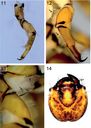
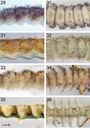
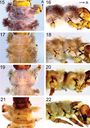
Pronunciation
How to pronounce Himalopsyche phryganea: /hɪˌmæl.oʊˈsaɪ.ki frɪˈɡæ.niə/
These audio files are automatically generated. While they are not always 100% accurate, they are a good starting point.
Identification
Himalopsyche phryganea constitutes its own group (phryganea group) based on molecular and morphological evidence, distinguishing it from other Himalopsyche species which cluster into the kuldschensis, lepcha, navasi, or tibetana groups. Specific diagnostic morphological characters for males have been used to define this group, though detailed external appearance is not documented in available sources.
Images
Habitat
Alpine to montane environments, consistent with -level associations for Himalopsyche.
Distribution
North America (Nearctic region). The represents a disjunct North American occurrence within a otherwise concentrated in the Himalayas and surrounding mountain ranges of Central and East Asia.
Behavior
Free-living larval habit (-level trait of Rhyacophilidae); larvae do not construct portable cases.
Similar Taxa
- Himalopsyche lepchaAlso placed in a group (lepcha group) based on molecular ; both species represent distinct lineages separate from the larger kuldschensis, navasi, and tibetana groups within the .
- Other Himalopsyche species in kuldschensis, navasi, or tibetana groupsH. phryganea is distinguished by its placement in the phryganea group, whereas these cluster into multi-species groups with different biogeographic patterns centered on Asian mountain ranges.
More Details
Phylogenetic significance
H. phryganea's placement in a group highlights its evolutionary distinctiveness within Himalopsyche. The molecular that established this grouping used six gene fragments and three inference methods, representing the first molecular systematic treatment of the .
Biogeographic note
The North American distribution of H. phryganea is notable given that Himalopsyche diversity is concentrated in the Himalayas. This pattern suggests either a relict distribution or historical event separating this from its Asian .