
Agrypnia vestita
(Walker, 1852)
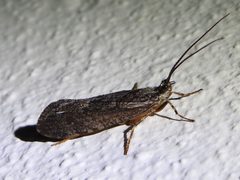
Agrypnia vestita is a of giant caddisfly in the Phryganeidae. It is native to North America and has been recorded in the northeastern United States, including Vermont. As a member of the Phryganeidae, it is among the larger caddisfly species. The Agrypnia comprises several species of case-making whose larvae construct portable cases from plant material.


Pronunciation
How to pronounce Agrypnia vestita: //əˈɡrɪp.ni.ə vɛˈstiː.tə//
These audio files are automatically generated. While they are not always 100% accurate, they are a good starting point.
Identification
of Agrypnia vestita can be distinguished from other Phryganeidae by specific wing patterning and genitalic characters, though precise diagnostic features require examination. The Agrypnia is characterized by adults with relatively broad wings and robust bodies compared to many other caddisfly . -level identification within Agrypnia typically requires examination of male genitalia or detailed wing venation patterns.
Images
Habitat
Larvae of Phryganeidae, including Agrypnia , inhabit lentic (still water) environments such as ponds, marshes, and slow-moving sections of streams and rivers. They are generally associated with aquatic vegetation and detritus-rich substrates.
Distribution
North America. Documented records include the northeastern United States, specifically Vermont. GBIF records indicate presence in the Nearctic region.
Life Cycle
As with other Phryganeidae, Agrypnia vestita has a holometabolous with , larval, pupal, and stages. Larvae are aquatic and construct portable cases from plant materials. The larval stage is typically the longest, with adults emerging to mate and oviposit in or near aquatic .
Ecological Role
Larvae function as and in freshwater , processing decaying plant material and contributing to nutrient cycling. They serve as prey for fish and other aquatic . may provide food for aerial .
Similar Taxa
- Other Agrypnia speciesCongeneric share similar overall and preferences; accurate identification requires examination of genitalic structures or detailed wing characteristics.
- Other Phryganeidae (e.g., Phryganea, Oligostomis)Giant caddisflies in related overlap in size and general appearance; wing pattern, body proportions, and antennal structure help distinguish genera.
More Details
Taxonomic Authority
The was described by Francis Walker in 1852. Walker was a prolific British entomologist who described numerous insect species, though some of his descriptions have required subsequent revision.
Observation Records
iNaturalist documents 101 observations of this , indicating it is encountered with moderate frequency by naturalists, though it remains relatively obscure to the general public.