
Micrasema
McLachlan, 1876
humpless casemaker caddisflies
Species Guides
4- Micrasema bactro(humpless casemaker caddisfly)
- Micrasema charonis(humbless casemaker caddisfly)
- Micrasema rusticum(humpless casemaker caddisfly)
- Micrasema wataga(humpless casemaker caddisfly)
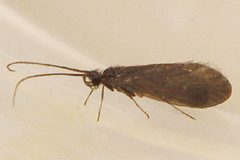
Micrasema is a of caddisflies (order Trichoptera) in the Brachycentridae, commonly referred to as humpless casemaker caddisflies. The genus contains more than 70 described . Larvae are aquatic and construct portable cases from plant material. At least one species, Micrasema quadriloba, has been studied as a grazing insect in stream .
Pronunciation
How to pronounce Micrasema: /mɪˈkræsiˌmə/
These audio files are automatically generated. While they are not always 100% accurate, they are a good starting point.
Identification
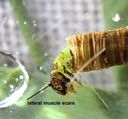
Distinguished from other Brachycentridae by the absence of a prominent mesonotal hump; the 'humpless casemaker' reflects this trait. Larval cases are typically constructed from plant material rather than mineral grains. Specific identification requires examination of genitalia and other fine morphological characters.
Images
Appearance
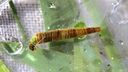
are small caddisflies lacking the pronounced hump on the characteristic of some related in Brachycentridae. Larvae construct cylindrical or tapered portable cases from plant materials such as leaf pieces or stems.
Habitat
Aquatic environments, specifically streams and flowing water systems. Larvae inhabit the benthic zone where they attach to substrates and graze.
Distribution
Recorded from northern Europe (Denmark, Norway, Sweden) and North America (Vermont, United States). The likely has a broader Holarctic distribution given the number of described .
Diet
Periphyton (grazing on attached and biofilm). This has been directly observed in Micrasema quadriloba; broader -level dietary patterns are not well documented.
Life Cycle
Complete with aquatic larval and pupal stages and terrestrial stage. Specific developmental details for the are not well documented.
Behavior
Larvae are benthic grazers that move along substrates while feeding. Distribution within stream reaches has been observed to correlate with current velocity and food availability.
Ecological Role
Grazer in stream , contributing to periphyton control and nutrient cycling. Serves as prey for fish and other aquatic .
Human Relevance
Used as a research organism in stream studies examining the relationship between insect distribution and environmental factors such as current velocity and periphyton abundance. Otherwise not of direct economic or medical importance.
Similar Taxa
- BrachycentrusAlso in Brachycentridae, but distinguished by the presence of a prominent mesonotal hump in ; larvae construct similar plant-material cases.
More Details
Research significance
Micrasema quadriloba has been used as a model organism in studies of reach- distribution dynamics in streams, demonstrating how current velocity and periphyton abundance influence distribution patterns.