
Micrasema charonis
Banks, 1914
humbless casemaker caddisfly
Micrasema charonis is a of caddisfly in the Brachycentridae, described by Banks in 1914. It belongs to the group commonly known as humpless casemaker caddisflies, distinguishing it from other caddisfly families by its case construction . The species is documented from North America.
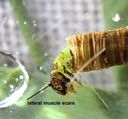
Pronunciation
How to pronounce Micrasema charonis: /ˌmaɪkrəˈsiːmə kəˈroʊnɪs/
These audio files are automatically generated. While they are not always 100% accurate, they are a good starting point.
Identification
As a member of Brachycentridae, this can be distinguished from other caddisfly by its case-making : larvae construct portable cases using silk to bind together plant material or sand grains, lacking the pronounced humps seen in some other case-making families. are small to medium-sized caddisflies with reduced mouthparts. Specific diagnostic features for M. charonis versus require examination of genitalia and wing venation patterns.
Images
Distribution
North America; Nearctic region. Specific locality records are sparse in available sources.
Life Cycle
As with all Trichoptera, development includes , larval, pupal, and stages. Larvae are aquatic and construct portable cases. occurs within the case or in a pupal cocoon attached to substrate. Adults are terrestrial and short-lived.
Behavior
Larvae are case-makers, constructing portable shelters from silk-bound materials.
Ecological Role
Larvae function as or collector-gatherers in freshwater , processing plant detritus and contributing to nutrient cycling.
Similar Taxa
- Other Brachycentridae speciesSimilar case-making and general ; requires detailed examination to distinguish.
- Limnephilidae (northern cased caddisflies)Also case-makers, but typically construct cases with more prominent humps or different material arrangement.
More Details
Taxonomic history
Described by Nathan Banks in 1914. The Micrasema contains multiple North American , many of which are poorly documented in recent literature.
Data limitations
No iNaturalist observations and limited published biological data exist for this . Most information is inferred from -level characteristics.