
Hesperophylax
Banks, 1916
Species Guides
2- Hesperophylax designatus(silver-striped sedge)
- Hesperophylax magnus(northern caddisfly)
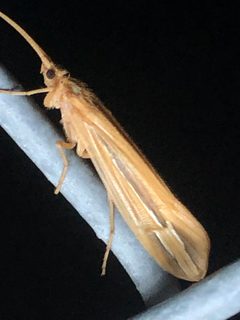
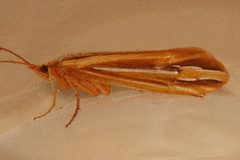
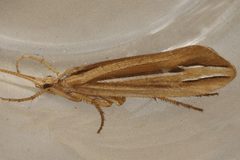
Hesperophylax is a of northern caddisflies (Trichoptera: Limnephilidae) comprising seven described distributed across western North America. The genus is characterized by morphological plasticity and broad compared to other Trichoptera. Larvae construct portable protective cases and exhibit chemically-mediated antipredator . All species appear to be with extended periods.
Pronunciation
How to pronounce Hesperophylax: //ˌhɛspəˈrɒfɪlæks//
These audio files are automatically generated. While they are not always 100% accurate, they are a good starting point.
Identification
-level identification requires examination of genitalia; keys exist for males, females, and larvae. within Hesperophylax are morphologically similar and show unusually broad intraspecific variation, making species-level identification challenging without detailed morphological analysis.
Images
Habitat
Aquatic environments including springs, streams, and rivers. occur across diverse types including scrub oak, mixed conifer forest, and grassland-associated waterways. Larvae inhabit benthic zones of lotic and lentic systems.
Distribution
Western North America; occur from Alaska (H. alaskensis) through western Canada to Colorado and Mexico (H. mexico). Documented from the Piceance Basin in Colorado and Blodgett Peak Open Space in Colorado Springs.
Seasonality
Extended periods with ; active across multiple months rather than restricted seasonal peaks.
Diet
Larvae are opportunistic omnivores; H. magnus is more than other in the . Specific dietary items not documented.
Life Cycle
. Larvae construct portable cases carried throughout the aquatic life stage. Development occurs in spring and stream with documented patterns. Case construction is a consistent larval trait.
Behavior
Larvae exhibit behavioral avoidance of chemical stimuli from injured conspecifics and , indicating chemically-mediated antipredator responses. Extended latency to move following predator exposure demonstrates predator recognition via chemical cues alone. Larvae carry protective cases throughout aquatic life.
Human Relevance
Documented in citizen science bioblitz events (e.g., Blodgett Peak Open Space, Colorado Springs). H. designatus is known as the 'silver-striped sedge' in angling contexts. Larvae serve as indicators of freshwater health.
Similar Taxa
- PsychoroniaHesperophylax oreades was synonymized with Psychoronia costalis, indicating historical taxonomic confusion between these limnephilid
- Other LimnephilidaeHesperophylax show less specialization and greater morphological plasticity than most other Trichoptera, requiring careful examination for differentiation
More Details
Taxonomic History
H. alaskensis was reestablished as valid distinct from H. occidentalis; H. incisus synonymized with H. designatus; H. oreades transferred to Psychoronia. Phylogenetic hypothesis places H. consimilis as sister to all other , with H. magnus and H. mexico as sister species.
Morphological Plasticity
The exhibits unusually broad morphological limits within , potentially representing genetic plasticity selected for generalized adaptability rather than specialization.
Sources and further reading
- BugGuide
- Wikipedia
- GBIF taxonomy match
- iNaturalist taxon
- NCBI Taxonomy
- Catalogue of Life
- Bug Eric: Blodgett Peak Bioblitz Report
- The Nearctic caddisfly genus Hesperophylax Banks (Trichoptera: Limnephilidae)
- Behavioral avoidance of injured conspecific and predatory chemical stimuli by larvae of the aquatic caddisfly Hesperophylax occidentalis
- Life History and Ecology of Hesperophylax occidentalis (Banks) (Trichoptera: Limnephilidae) from Three Springs in the Piceance Basin, Colorado