
Frenesia missa
(Milne, 1935)
Failed Northern Caddisfly
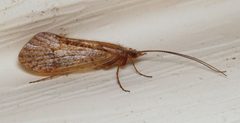
Frenesia missa is a rare of northern caddisfly in the Limnephilidae, first described by Milne in 1935. The species was originally placed in the Chilostigma as Chilostigma missum before being transferred to Frenesia. It is considered vulnerable to anthropogenic stressors and has a restricted distribution in North America.


Pronunciation
How to pronounce Frenesia missa: /frɛnˈeː.si.a ˈmis.sa/
These audio files are automatically generated. While they are not always 100% accurate, they are a good starting point.
Identification
Frenesia missa can be distinguished from other Frenesia by genitalic typical of the . As a member of the tribe Chilostigmini within Limnephilidae, it shares the characteristics of having with hairy wings and larvae that construct portable cases. Specific diagnostic features for this species require examination of adult genitalia.
Images
Distribution
Documented from the Ozark region of Arkansas and Missouri, USA. The has also been recorded from Vermont. The Ozark represent an expansion of the previously known range. The overall distribution in North America appears restricted and patchy.
Life Cycle
As with other Limnephilidae, Frenesia missa has a complete with , larval, pupal, and stages. Larvae are aquatic and construct portable cases from available materials. The larval stage likely lasts one year, with adults emerging in the warmer months, though specific timing for this is undocumented.
Human Relevance
The is considered rare and vulnerable to anthropogenic stressors, making it a potential indicator of aquatic health in the Ozark region. Its restricted distribution warrants conservation attention.
Similar Taxa
- Other Frenesia speciesCongeneric share similar and larval ; require genitalic examination for definitive identification
- Other Chilostigmini generaTribe members share hairy-winged and case-building larvae; distinguished by subtle morphological differences in adult genitalia and larval case structure
More Details
Taxonomic history
Originally described as Chilostigma missum by Milne in 1935, later transferred to the Frenesia. The basionym Chilostigma missum is preserved in nomenclatural databases.
Conservation status
Considered vulnerable to anthropogenic stressors due to its restricted range and apparent rarity. The Ozark are particularly significant as they expand the known distribution of this poorly documented .
Sources and further reading
- BugGuide
- Wikipedia
- GBIF taxonomy match
- iNaturalist taxon
- NCBI Taxonomy
- Catalogue of Life
- biodiversity data | Blog - Part 2
- Could biodiversity data be here to last? | Blog
- Biodiversity data | Blog - Part 2
- Pensoft blog - Part 73
- Additional Distributional Records for a Rare Caddisfly in the Ozarks, Frenesia missa (Milne) (Trichoptera: Limnephilidae)