
Protoptilinae
Ross, 1956
Genus Guides
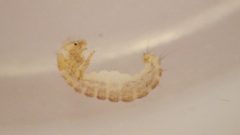
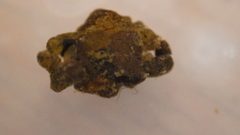
2Protoptilinae is the most diverse of Glossosomatidae, the saddle- or tortoise-case-making . The subfamily contains 18 with a strikingly disjunct global distribution: five genera occur in the East Palaearctic and Oriental regions, while the remaining thirteen genera are restricted to the Nearctic and Neotropical regions. Members construct portable cases from mineral or plant material. The subfamily has undergone extensive taxonomic revision based on and molecular , resulting in several new synonymies and refined generic .
Pronunciation
How to pronounce Protoptilinae: /ˌproʊ.tɒpˈtaɪ.lɪniː/
These audio files are automatically generated. While they are not always 100% accurate, they are a good starting point.
Identification
Protoptilinae can be distinguished from other Glossosomatidae by a combination of morphological characters; the most recent revision provides a key to subfamilies and world . Within Protoptilinae, individual genera are diagnosed by features of the male genitalia, including X processes and phallicata structure. -level identification relies heavily on male genitalic ; females are often difficult or impossible to identify to species.
Images
Distribution
Disjunct distribution: five in the East Palaearctic and Oriental regions; thirteen genera in the Nearctic and Neotropical regions. In South America, documented from Brazil (including southeastern and northern Roraima state), Paraguay, Uruguay, Argentina, and Chile.
Similar Taxa
- AgapetinaeOther of Glossosomatidae; distinguished by morphological characters detailed in published keys to subfamilies
- GlossosomatinaeOther of Glossosomatidae; distinguished by morphological characters detailed in published keys to subfamilies
More Details
Taxonomic history
The was established by Ross in 1956. Recent phylogenetic analyses using and mitochondrial (COI) have supported monophyly of the subfamily and several constituent (Canoptila, Culoptila, Itauara, Mastigoptila, Mortoniella, Protoptila, Tolhuaca). Major revisions include synonymizing Matrioptila, Poeciloptila, Temburongpsyche, and Nepaloptila under Padunia, and synonymizing Campsiophora and Cubanoptila under Cariboptila.
Research gaps
Larval , case construction , and ecological preferences remain poorly documented for most . The genus Mortoniella has received the most taxonomic attention, particularly in southern South America where 22 new were recently described.
Sources and further reading
- BugGuide
- iNaturalist taxon
- NCBI Taxonomy
- Catalogue of Life
- Revision of the austral South American species of Mortoniella (Trichoptera: Glossosomatidae: Protoptilinae)
- Revision and phylogeny of the caddisfly subfamily Protoptilinae (Trichoptera: Glossosomatidae) inferred from adult morphology and mitochondrial DNA
- Protoptilinae (Trichoptera: Glossosomatidae) from Roraima state, northern Brazil: A new species of Itauara Müller 1888 and new distributional records for species of Protoptila Banks 1904