
Glossosomatinae
Wallengren, 1891
Genus Guides
2- Anagapetus(little black caddisflies)
- Glossosoma(little black caddisflies)
Glossosomatinae is a of caddisflies (order Trichoptera) in the Glossosomatidae. Larvae construct distinctive dome-shaped or tortoise-like portable cases from sand grains and small stones, earning them the 'tortoise case makers.' The subfamily is distinguished from the other glossosomatid subfamily, Protoptilinae, primarily by genitalic characters and larval case . Members are found in running waters across multiple continents, with larvae serving as important indicators of stream health due to their sensitivity to pollution and disturbance.
Pronunciation
How to pronounce Glossosomatinae: /ɡlɔsəsˌoʊməˈtaɪniː/
These audio files are automatically generated. While they are not always 100% accurate, they are a good starting point.
Identification
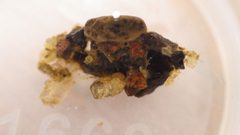
are distinguished from Protoptilinae by genitalic characters: males lack the elongated parameres and have modified inferior appendages; females have distinct sternite modifications. Larvae are identified by the dome-shaped, tortoise-like case with opening and ridge, contrasting with the more cylindrical or flattened cases of other caddisfly . The case is carried with the curved dorsal surface upward, and larvae retreat into the case when disturbed, pulling the ventral opening flush with the substrate.
Images
Habitat
Larvae inhabit running waters including streams, rivers, and springs with rocky or gravelly substrates. They require clean, well-oxygenated water and are most abundant in riffle with moderate to fast current. Larvae attach their cases to stable substrates such as stones, woody debris, or macrophytes. are found near larval habitats, often resting on riparian vegetation.
Distribution
Widespread across the Holarctic region, with records from North America, Europe, and Asia. Present in the Oriental region and extends into the Afrotropical region. Distribution is limited by requirements for clean, flowing water .
Seasonality
is typically spring to summer, varying by latitude and elevation. In temperate regions, most emerge from April through August. Larvae are present year-round, with growth and development continuing through winter in suitable conditions.
Diet
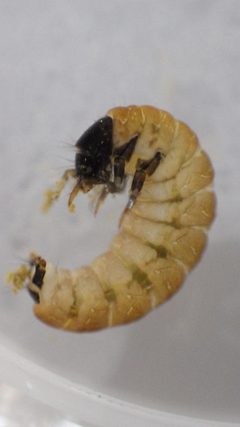
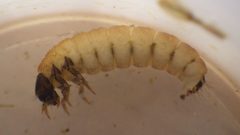
Larvae are scrapers and grazers, feeding on periphyton (, diatoms, and associated microorganisms) and fine organic material from rock surfaces. They use their specialized mouthparts to remove material from substrates while remaining within or adjacent to their portable cases.
Life Cycle
Larvae develop through five instars over one to two years depending on and environmental conditions. Case construction begins in early instars and is expanded or rebuilt as the larva grows. occurs within the sealed larval case, which is attached to substrate in the final instar. emerge through an opening cut in the case with pupal . Most species appear to have a or semivoltine .
Behavior
Larvae are slow-moving and remain close to their cases, retreating inside when disturbed. They drag the heavy case while moving and feeding, which limits their mobility compared to caddisflies with lighter cases. Case-building involves selective collection and cementing of mineral particles using silk from labial glands. are weak fliers, typically active during daylight hours, and often found resting on vegetation near water.
Ecological Role
Larvae function as primary consumers and bioindicators of water quality. Their sensitivity to organic pollution, sedimentation, and alteration makes them valuable indicators of stream health. As scrapers, they contribute to nutrient cycling and energy transfer in stream . Cases provide microhabitat for other small . They serve as prey for fish and other aquatic .
Human Relevance
Used extensively in biomonitoring programs to assess stream water quality and health. Presence and abundance indicate good water quality; absence or decline signals environmental degradation. No direct economic importance as pests or beneficial . Occasionally used as educational examples of caddisfly diversity and case-building .
Similar Taxa
- ProtoptilinaeThe other in Glossosomatidae; distinguished by genitalic characters and larval case —Protoptilinae larvae construct more cylindrical or less distinctly domed cases.
- HelicopsychidaeLarvae also construct coiled, snail-like cases from sand grains, but cases are spiral and fixed to substrate rather than portable and dome-shaped.
- UenoidaeLarvae construct mineral cases but typically with more flattened or irregular shapes and different attachment ; have distinct wing venation patterns.
More Details
Case Construction
The tortoise-like case is a diagnostic feature that has evolved independently in other caddisfly lineages, representing convergent to similar . Case material selection varies by substrate availability, with larvae showing preference for specific particle sizes.
Conservation Status
Many are of conservation concern regionally due to loss, water pollution, and climate change effects on stream hydrology. Several North American and European species are listed as endangered or vulnerable in national red lists.