
Molanna
Curtis, 1834
hood casemakers
Species Guides
4- Molanna blenda(hood casemaker)
- Molanna flavicornis(Yellow-horned Hood Caddisfly)
- Molanna ulmerina(hood casemaker)
- Molanna uniophila
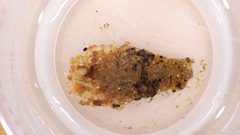
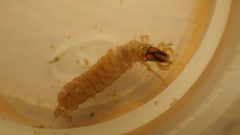
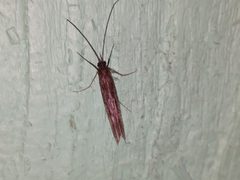
Molanna is a of caddisflies (order Trichoptera) commonly known as hood casemakers, comprising over 20 described . Larvae construct portable cases from sand grains and inhabit shallow freshwater environments including lake margins and spring-fed streams. exhibit sex-specific antennal and chemical communication, with females producing that attract males to mating sites near water.
Pronunciation
How to pronounce Molanna: //moˈlan.na//
These audio files are automatically generated. While they are not always 100% accurate, they are a good starting point.
Identification
males can be distinguished by -specific genital structures, including shapes of superior and inferior appendages. Antennal sensory fields on ventrolateral surfaces of basal flagellomeres show species-dependent morphological features useful for discrimination. The presence of mushroom-like pseudoplacoid and other antennal sensilla types (long serrated trichoids, short curved smooth trichoids, basiconic, coronal) are characteristic of the . Larvae construct hood-shaped cases from sand grains, distinguishing them from other caddisfly .
Images
Habitat
Larvae inhabit shallow freshwater environments with sandy substrates, including lake margins less than 10 cm deep and spring-fed streams. Macrophyte densities in occupied range from 86 to 452 stems/m². are found near water bodies where mating occurs.
Distribution
Records from Denmark, Norway, Sweden, Vermont (USA), and additional USA locations. described from China (Sichuan), Japan (Kyoto), and Michigan (USA).
Diet
Larvae consume amorphous detritus, plant debris, diatoms, filamentous , and microscopic aquatic animals including and cladocerans.
Life Cycle
Larvae exhibit simple linear growth patterns while inhabiting cases. Case-building begins in early larval stages. and details not documented at level.
Behavior
Larvae forage actively during daylight hours, shifting cases forward across sediments up to 4 times per minute and traveling up to 2.5 m/hour. Foraging movement increases with water temperature and peaks during midafternoon. Larvae do not use macrophyte beds as refugia. males perform swarming or courtship dances near water when attracted by female .
Ecological Role
Larvae function as grazers on periphyton and processors of organic detritus in , contributing to nutrient cycling in shallow freshwater .
Similar Taxa
- MolannodesShares Molannidae and similar antennal sensory field structure; distinguished by -specific antennal and genital
- Other Trichoptera familiesMolanna larvae distinguished by hood-shaped sand cases and specific foraging on sandy substrates in shallow water margins
Sources and further reading
- BugGuide
- Wikipedia
- GBIF taxonomy match
- iNaturalist taxon
- NCBI Taxonomy
- Catalogue of Life
- Demonstration of Female Sex Pheromones and Adult Behaviour in Molanna angustata (Trichoptera: Molannidae)
- Life history and growth of case-bearing caddis larvae, Molanna moesta Banks, at Mizoro-ike Pond, Kyoto
- Habitats and Foraging Movements of Larvae of Molanna uniophila Vorhies (Trichoptera: Molannidae) in Pratt Lake, Michigan, USA
- New species of the genus Molanna Curtis, 1834 (Trichoptera, Molannidae) in China inferred from morphology and DNA barcodes
- Life History and Case-building Behavior of Molanna Tryphena Betten (Trichoptera: Molannidae) in Two East Texas Spring-fed Streams
- Life History and Case Building Behavior of <I>Molanna tryphena</I> (Trichoptera: Molannidae) in Two East Texas Spring-Fed Streams
- <p class="HeadingRunIn"><strong>Structure of the antennal sensilla in the genera <em>Molanna</em> and <em>Molannodes </em>(Trichoptera, Molannidae)</strong></p>
- The genome sequence of a cased caddisfly, Molanna angustata Curtis, 1834.