
Nectopsyche exquisita
(Walker, 1852)
exquisite long-horned caddisfly
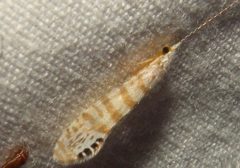
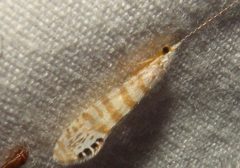
Nectopsyche exquisita is a of long-horned caddisfly in the Leptoceridae, characterized by its distinctive wing patterning and banded . are medium-sized with striking yellow and white hair patterns on the wings. The species is found in eastern North America near slow-moving aquatic . Adults are attracted to light and have been documented in urban settings.
Pronunciation
How to pronounce Nectopsyche exquisita: //nɛkˈtɒpsɪki ɛksˈkwɪzɪtə//
These audio files are automatically generated. While they are not always 100% accurate, they are a good starting point.
Identification
Distinguished from other Nectopsyche and Leptoceridae by the combination of: (1) four discrete black square markings on the wing margin, (2) yellow and white wing hair patterning (not uniform white), and (3) distinctly banded with white and brown segments. The specific epithet 'exquisita' refers to these markings. Similar species in the may lack the contrasting dark wing spots or show different antennal banding patterns.
Images
Appearance
measure 11–17 mm in body length with an elongated, slender form typical of the Leptoceridae. are long and distinctly banded with alternating white and brown segments. Wings bear patterned yellow and white hairs, with four conspicuous black square markings positioned at the margin. The overall coloration is predominantly pale with dark accent markings.
Habitat
Associated with slow-moving freshwater supporting aquatic vegetation. Found near streams, ponds, and with emergent plants. have been observed in urban and suburban environments where suitable aquatic larval habitats exist nearby.
Distribution
Eastern half of the United States and southeastern Canada. Documented from Vermont and other eastern states west to Colorado. Core range appears concentrated in the eastern Nearctic region.
Seasonality
active during summer months. Peak activity has been observed in July. Attraction to ultraviolet and mercury vapor lights indicates adult .
Life Cycle
Complete with aquatic larval stage and terrestrial stage. Larvae are aquatic and inhabit slow-moving waters with vegetation. Adults are short-lived, with observations suggesting adult lifespan of approximately one week. Specific details of larval development and are not documented in available sources.
Behavior
are strongly attracted to artificial light sources including ultraviolet and mercury vapor lights, a documented in both natural and urban settings. activity pattern with peak presence at light traps during nighttime hours. Adults are known to collide with protective netting and other insects at light sources without apparent impairment.
Ecological Role
Larvae function as aquatic consumers in freshwater with vegetation. may serve as prey for . Specific trophic role of larvae (herbivory, detritivory, or ) is not documented.
Human Relevance
Subject of citizen science documentation through bioblitz events and iNaturalist observations. Used as an example in discussions of urban insect biodiversity and light pollution effects on insects. No economic importance documented.
Similar Taxa
- Other Nectopsyche speciesShare -level traits of long and pale coloration, but differ in specific wing pattern details and antennal banding
- Other Leptoceridae members share elongated body form and long , but N. exquisita is distinguished by its specific wing markings and color pattern
More Details
Light Attraction
The has been documented as part of urban insect attracted to blacklighting, with observations noting that wing are lost through repeated collisions at light sources without apparent impairment of ability.
Citizen Science Records
Multiple observations documented through iNaturalist (1542+ records as of source date), indicating this is a relatively well-recorded caddisfly in its range.