
Nectopsyche
Mueller, 1879
White Miller Caddisflies, White Millers
Species Guides
5- Nectopsyche albida(White Miller Caddisfly)
- Nectopsyche candida(Radiant Long-horned Caddisfly)
- Nectopsyche diarina(White Miller Caddisfly)
- Nectopsyche exquisita(exquisite long-horned caddisfly)
- Nectopsyche pavida(white miller caddisfly)
Nectopsyche is a of caddisflies in the Leptoceridae, commonly known as white millers. The genus contains at least 70 described distributed across the Americas, with records from North America through the tropical Andes. Species occupy diverse freshwater ranging from lentic (still-water) environments to lotic (flowing) highland streams. Several species have been studied as bioindicators of aquatic pollution due to their sensitivity to and heavy metals.
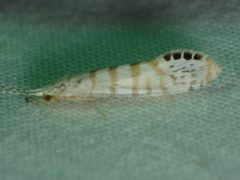
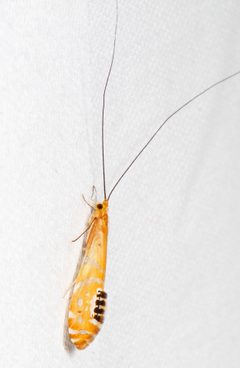
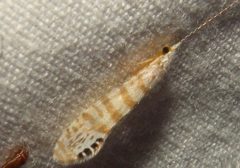
Pronunciation
How to pronounce Nectopsyche: //ˌnɛktoʊˈpsaɪki//
These audio files are automatically generated. While they are not always 100% accurate, they are a good starting point.
Identification
Members of Nectopsyche can be distinguished from other Leptoceridae by their characteristic pale or white coloration, which gives rise to the 'white millers.' The is placed in the tribe Nectopsychini based on morphological features of genitalia and wing venation. Specific identification to level requires examination of male genitalia structures.
Images
Habitat
occupy diverse freshwater including lentic (still-water) environments such as ponds and lakes, as well as lotic systems including highland Andean streams and rivers. Microhabitats include areas with sand, gravel, leaf litter, and rocks. Some species have been documented from elevations exceeding 2800 meters in the tropical Andes.
Distribution
Recorded from North America (United States: Vermont; Colorado), Central America, and South America (Colombia: Antioquia, Boyacá, Chocó, Cundinamarca, Magdalena, Tolima; Ecuador: Alambi River at 2830 m asl). The has broad distribution across the tropical Andes and extends into temperate North America.
Diet
Larvae function as and collectors, feeding on leaf litter and coarse particulate organic matter. In experimental studies, individuals have been observed feeding on Andean alder (Alnus acuminata) leaf litter.
Behavior
are and attracted to ultraviolet and mercury vapor lights. Some , such as Nectopsyche albida, exhibit specific behavioral patterns associated with lentic . Larvae have shown significant mortality under experimental exposure to (Chlorpyrifos at 10 μg L−1) and behavioral changes under chronic mercury exposure, indicating sensitivity to aquatic pollutants.
Ecological Role
Larvae occupy the /collector functional feeding group, contributing to leaf litter decomposition and organic matter processing in freshwater . This role supports nutrient cycling and biogeochemical processes in streams. Due to their sensitivity to contaminants and position in , they may transfer pollutants through aquatic via bioaccumulation.
Human Relevance
Used as bioindicator organisms for assessing aquatic health and pollution impacts. Sensitivity to and heavy metals makes them valuable for environmental monitoring programs. occasionally attracted to porch lights and blacklights, where they may be encountered by naturalists and entomologists.
Similar Taxa
- Other Leptoceridae generaDistinguished by the pale white coloration characteristic of Nectopsyche; other leptocerid caddisflies typically exhibit darker or more patterned coloration.
- Other Trichoptera familiesDifferentiated by -level morphological characters including wing venation patterns and genitalia structure; Leptoceridae have particularly long relative to body size.
More Details
Taxonomic note
The contains at least 70 described according to recent sources, though some references cite lower numbers (50+). The specific epithet for many species remains undescribed, with several in the tropical Andes representing potentially new species awaiting formal description.
Research significance
Multiple recent studies have focused on Nectopsyche as model organisms for understanding impacts of agricultural and mining-related mercury on aquatic macroinvertebrates in the tropical Andes. These studies highlight the 's ecological importance and conservation relevance in regions facing increasing anthropogenic pressure.
Sources and further reading
- BugGuide
- Wikipedia
- GBIF taxonomy match
- iNaturalist taxon
- NCBI Taxonomy
- Catalogue of Life
- Bug Eric: My Kind of Fourth of July
- Bug Eric: July 2019
- Bionomics and Adult Behavior of a Lentic Caddisfly, Nectopsyche albida (Walker)
- Behavioral and biochemical patterns in the Andean highland macroinvertebrate Nectopsyche sp. after chronic mercury exposure
- Effects of Pesticides on the Survival of Shredder Nectopsyche sp. (Trichoptera) and Leaf Decomposition Rates in Tropical Andes: A Microcosm Approach.