
Nectopsyche candida
(Hagen, 1861)
Radiant Long-horned Caddisfly
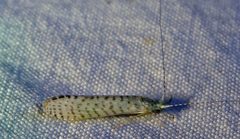
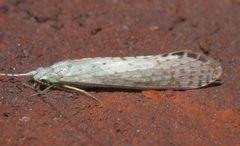
Nectopsyche candida is a of long-horned caddisfly in the Leptoceridae. It is found in North America. The species belongs to a characterized by elongated , a trait reflected in the for this group. Like other caddisflies, it has an aquatic larval stage and terrestrial stage.
Pronunciation
How to pronounce Nectopsyche candida: //nɛkˈtɒp.sɪ.ki ˈkæn.dɪ.də//
These audio files are automatically generated. While they are not always 100% accurate, they are a good starting point.
Identification
Distinguished from other caddisfly by longer than the body. Within Leptoceridae, separation from other Nectopsyche requires examination of genitalia and wing venation patterns; specific diagnostic features for N. candida not detailed in available sources.
Images
Appearance
have extremely long , often exceeding body length, characteristic of the Leptoceridae. The specific epithet "candida" (Latin for "white" or "shining") suggests pale or light-colored wings. Body form is slender and delicate, typical of the Nectopsyche.
Habitat
Aquatic larval and riparian habitats typical of the order Trichoptera; specific microhabitat preferences for this not documented.
Distribution
North America; present in the . Specific range boundaries within North America not detailed in available sources.
Life Cycle
Complete with , larva, pupa, and stages. Larvae are aquatic and construct portable cases from silk and environmental materials. Specific case construction materials and developmental timing for this not documented.
Ecological Role
Larvae function as or collectors in freshwater , processing plant material and organic detritus. are short-lived and do not feed, serving primarily reproductive functions. Specific ecological role of this not differentiated from in available sources.
Human Relevance
No documented direct interactions with humans. May serve as indicator of freshwater health due to sensitivity to water quality, as is common for Trichoptera, though this has not been specifically demonstrated for N. candida.
Similar Taxa
- Other Nectopsyche speciesShare long and general body form; require genital dissection or detailed wing venation analysis for reliable identification.
- Other Leptoceridae generaSimilar elongated ; distinguished by differences in wing venation, tarsal segmentation, and genital .
More Details
Taxonomic Note
The was first described by Hermann August Hagen in 1861, originally placed in the Leptocerus.
Sources and further reading
- BugGuide
- Wikipedia
- GBIF taxonomy match
- iNaturalist taxon
- NCBI Taxonomy
- Catalogue of Life
- UC Davis Doctoral Candidate Brendon Boudinot Shares Expertise on Ants | Bug Squad
- Doctoral Candidate Lindsey Mack: Zeroing in on the Yellow Fever Mosquito | Bug Squad
- Congrats to Outstanding UC Davis Doctoral Candidate Alison Blundell | Bug Squad
- Doctoral Candidate Brendon Boudinot to Discuss Evolution of Insects at Exit Seminar | Bug Squad
- Congrats to Mia Lippey and Ziv Lieberman, UC Davis Entomology Doctoral Candidates | Bug Squad
- A Gathering of Entomologists; UC Davis Graduate Students Are Major Important Part | Bug Squad