
Wormaldia
McLachlan, 1865
Species Guides
2- Wormaldia arizonensis
- Wormaldia moesta(fingernet caddisfly)
Wormaldia is a diverse of fingernet caddisflies ( Philopotamidae), comprising approximately 175 extant globally. It is the second-largest genus in Philopotamidae after Chimarra. Species occur across all biogeographic regions except Australasia, with notable diversification in the Neotropics and Nearctic. The genus includes fossil species from Late Cretaceous Burmese amber, indicating an ancient evolutionary history. Taxonomic revisions have focused heavily on male genitalia for species identification.
Pronunciation
How to pronounce Wormaldia: /wɔːrˈmældiə/
These audio files are automatically generated. While they are not always 100% accurate, they are a good starting point.
Identification
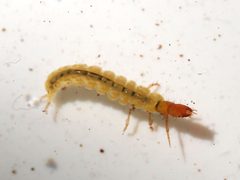
Identification relies heavily on male genitalia examination, particularly structures of X and associated parameters. Wing venation patterns provide supplementary characters. For larvae, diagnostic features include capsule patterns and abdominal gill arrangements; a larval key exists for West Palearctic . Species-level identification requires taxonomic literature; the is distinguished from other Philopotamidae by combinations of genitalic and wing characters detailed in regional revisions.
Images
Habitat
Semi-aquatic; larvae inhabit lotic (flowing water) environments. The W. occipitalis occurs in streams and rivers around the Alps and Central Europe, with postglacial recolonization patterns documented. Specific microhabitat preferences vary by but generally involve cool, flowing waters where larvae construct their characteristic fingernet capture nets.
Distribution
Global distribution spanning all biogeographic regions except Australasia. Nearctic: Canada to southwestern USA and Mexico. Neotropical: Mexico through Central America to northern South America (Colombia, Venezuela, Ecuador, Peru, Bolivia). Palearctic: Europe including Alps, Germany, Greece, and Aegean islands; also Scandinavia. Fossil record: Late Cretaceous Burmese amber (Myanmar). Approximately 175 extant described.
Life Cycle
Complete with aquatic larval and terrestrial stages. Larvae are aquatic filter-feeders. Specific developmental timing and voltinism patterns not documented in available sources.
Behavior
Larvae construct and occupy fingernet capture nets—loose, net-like silk structures positioned in flowing water to capture drifting particulate food. are typically and attracted to light. No other specific documented.
Ecological Role
Larvae function as filter-feeders in lotic , processing fine particulate organic matter. Their fingernet nets represent a distinctive foraging among Trichoptera. Specific ecosystem contributions (nutrient cycling, prey for other organisms) inferred from -level but not quantified for Wormaldia.
Human Relevance
No direct economic or medical significance documented. Of interest to aquatic entomologists, taxonomists, and biogeographers. Used as a model system for studying cryptic and postglacial (W. occipitalis species complex).
Similar Taxa
- ChimarraLargest in Philopotamidae; distinguished from Wormaldia by male genitalic structure, particularly X and associated parameters. Both genera share fingernet larval nets and reduced wing venation.
- DolophilodesNearctic Philopotamidae ; distinguished by genitalic and wing characters. Wormaldia is more -rich and widely distributed.
- FumontaNearctic Philopotamidae ; separated from Wormaldia by male genitalic features and distribution patterns.
- SiskoNearctic Philopotamidae ; distinguished from Wormaldia by specific morphological characters detailed in Nearctic revisions.
More Details
Taxonomic History
established by McLachlan in 1865. Major revisions include Neotropical (50 , 2015) and Nearctic (18 species, 2008) treatments. W. arcopa Denning 1966 synonymized under W. planae. Structural terminology for male X proposed in 2015 revision.
Phylogenetic Research
W. occipitalis studied using COI, CAD, and wingless markers, revealing cryptic divergence (~10% mitochondrial divergence between W. occipitalis and W. subterranea) and complex postglacial range expansion from Alpine refugia.
Larval Knowledge
Larval stages remain unknown for most ; descriptions exist for limited West Palearctic including W. asterusia (described 2016). Larval keys are regionally restricted.
Sources and further reading
- BugGuide
- Wikipedia
- GBIF taxonomy match
- iNaturalist taxon
- NCBI Taxonomy
- Catalogue of Life
- Revision of the Neotropical species of the caddisfly genus Wormaldia McLachlan (Trichoptera: Philopotamidae)
- The larva of Wormaldia asterusia Malicky 1972 (Trichoptera: Philopotamidae) with notes on its ecology and an update on the Wormaldia of Greece with a larval key for species of the genus
- Revision of the Nearctic species of the caddisfly genus Wormaldia McLachlan (Trichoptera: Philopotamidae)
- Multiple old differentiation centres around the Alps and complex range expansion patterns in a semi-aquatic insect: the phylogeny and biogeography of the Wormaldia occipitalis species complex (Trichoptera)