Dolophilodes dorca
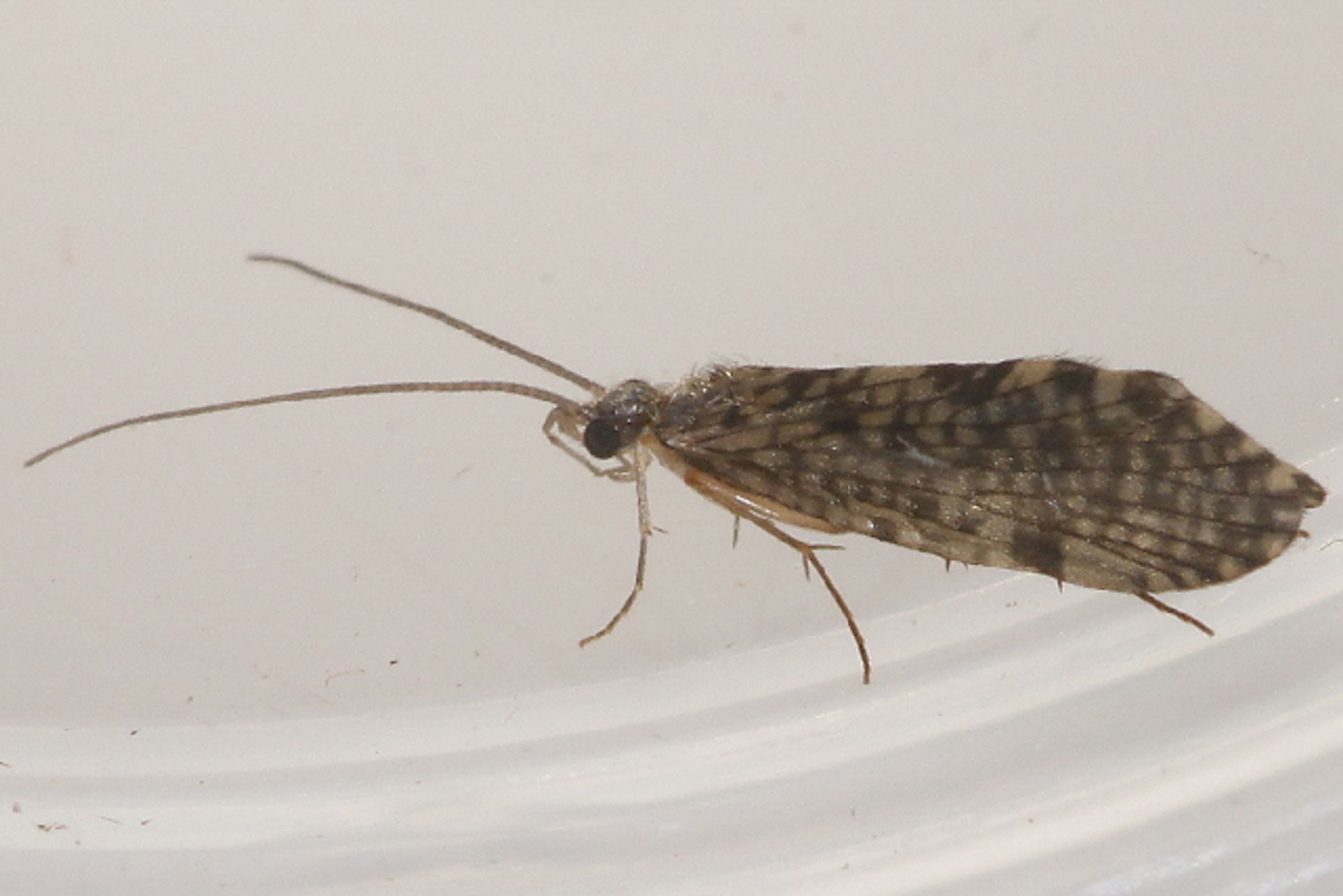
Dolophilodes dorca is a of caddisfly in the Philopotamidae. Members of this are small, slender associated with lotic (flowing water) . The larvae construct silken retreats and capture nets for feeding on fine particulate organic matter. Like other philopotamids, are typically and are attracted to light.
Pronunciation
How to pronounce Dolophilodes dorca: //ˌdoʊloʊˈfaɪloʊˌdiːz ˈdɔːrkə//
These audio files are automatically generated. While they are not always 100% accurate, they are a good starting point.
Identification
Identification to level in Dolophilodes requires examination of male genitalia, particularly the structure of the claspers and . The can be distinguished from other Philopotamidae by wing venation patterns and the arrangement of spurs on the legs. D. dorca specifically is distinguished from by subtle differences in genitalic , though detailed diagnostic features are not widely published in accessible literature.
Images
Habitat
Larvae inhabit cool, clean, flowing streams and rivers where they construct silken retreats on stable substrates such as rocks, woody debris, or aquatic vegetation. are found in riparian zones near larval . The requires well-oxygenated water and is likely sensitive to pollution and habitat degradation.
Distribution
Distribution records for Dolophilodes dorca are sparse. The Dolophilodes is Holarctic in distribution, with occurring across North America, Europe, and Asia. Specific locality data for D. dorca are not available in the provided sources; iNaturalist shows zero observations for this species.
Seasonality
timing is not documented for this . Related philopotamid in temperate regions typically have adult activity periods from late spring through summer, with some species exhibiting or multivoltine .
Diet
Larvae are collector-gatherers and filter-feeders, utilizing silken nets to capture fine particulate organic matter (FPOM), including detritus, , and microorganisms from flowing water. do not feed.
Life Cycle
Complete with , larva, pupa, and stages. Larvae are aquatic and construct fixed silken retreats with capture nets. occurs within a sealed silken case attached to substrate in the aquatic environment. Adults emerge from the pupal case and swim or crawl to the water surface. Specific duration and voltinism for D. dorca are not documented.
Behavior
Larvae are sedentary, remaining in their retreats and using their capture nets to obtain food from the water column. are and are attracted to light. Mating and oviposition are not documented for this .
Ecological Role
Larvae function as primary consumers, processing fine particulate organic matter and contributing to nutrient cycling in stream . They serve as food resources for predatory aquatic insects and fish. may provide food for aerial such as bats and birds.
Human Relevance
Like many , D. dorca has no direct economic importance to humans. The may serve as a bioindicator of water quality due to its association with clean, well-oxygenated streams. No specific conservation status or management concerns are documented.
Similar Taxa
- Dolophilodes distinctusAnother in the same , distinguished by genitalic and subtle differences in wing venation.
- Philopotamus montanusCongeneric in Philopotamidae; differs in wing venation patterns and leg spur arrangement.
- Chimarra spp.Related philopotamid with similar preferences; distinguished by differences in genitalia and larval case structure.
More Details
Taxonomic Note
The Dolophilodes is part of the diverse caddisfly Philopotamidae, which contains over 1000 described globally. Species-level in this group relies heavily on male genitalic characters, making field identification challenging.
Data Deficiency
This has zero observations on iNaturalist and appears to be poorly represented in collections or literature. Basic biological information including distribution, abundance, and ecological requirements remain undocumented.