
Diplectroninae
Ulmer, 1951
Genus Guides
2- Diplectrona(diplectronan caddisflies)
- Homoplectra(homoplectran caddisflies)
Diplectroninae is a of net-spinning caddisflies within the Hydropsychidae. Larvae construct capture nets to filter food particles from flowing water. The subfamily was established by Ulmer in 1951. are small to medium-sized with reduced wing venation compared to other hydropsychids.

Pronunciation
How to pronounce Diplectroninae: /dɪˌplɛktroʊˈnaɪni/
These audio files are automatically generated. While they are not always 100% accurate, they are a good starting point.
Identification
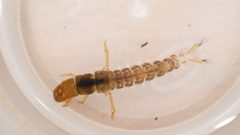
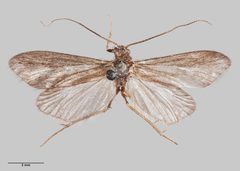
Distinguished from other Hydropsychidae by reduced forewing venation, particularly the simplification or loss of crossveins in the . Male genitalia with distinctive clasper —segmented and often asymmetrical in some . Larvae identified by the arrangement of on the and , and the structure of the and used in net construction. Differs from Hydropsychinae by generally smaller size and less complex wing venation; from Macronematinae by absence of the extremely elongated and large size characteristic of that subfamily.
Images
Habitat
Larvae inhabit lotic environments—streams and rivers with moderate to fast current. Require stable substrates such as rocks, woody debris, or submerged vegetation for net attachment. Optimal conditions include well-oxygenated water with consistent flow to deliver suspended food particles. found near larval , often resting on riparian vegetation or rocks during daylight.
Distribution
Widespread in the Holarctic region, with greatest diversity in North America. Present across temperate and zones of North America, Europe, and Asia. Records extend into the Oriental region and northern Neotropics. Distribution limited by requirements for cool, flowing water with suitable substrate stability.
Seasonality
typically occurs in late spring through summer, varying with latitude and elevation. In temperate North America, peak activity from May to August. Some exhibit or multivoltine with extended emergence periods. Larvae present year-round in suitable , with growth rates slowing in winter.
Life Cycle
deposited on or near water surface, often on submerged substrates. Larval development includes five instars, duration varying with temperature and food availability—typically several months to two years. occurs within silken retreats; pupal stage lasts 2-4 weeks. non-feeding or with limited feeding; lifespan 1-3 weeks. Voltinism varies: , , or semivoltine patterns reported depending on and environmental conditions.
Behavior
Larvae are filter-feeders, constructing fixed retreats and capture nets across current flow. Nets are silken, funnel-shaped or flat sheets with associated retreats. Larvae respond to damage by repairing nets or relocating. net construction and maintenance observed. or nocturnal, weak fliers that remain near water bodies. Males use antennal contact or substrate-borne vibrations for mate location.
Ecological Role
Larvae function as collector-filterers, processing fine particulate organic matter and transferring energy to higher . Net-spinning activity increases heterogeneity in streams. Prey for fish, especially salmonids and cyprinids, and for aquatic including and nymphs. provide food for riparian birds, bats, and spiders. Contribute to nutrient cycling through processing of suspended detritus.
Human Relevance
Used as bioindicators of water quality in stream assessment protocols; presence indicates well-oxygenated, minimally polluted conditions. Larval nets sometimes considered nuisance in water intake structures. Occasionally referenced in fly-fishing literature as members of the 'net-spinning caddis' group, though less commonly imitated than some Hydropsychinae. No significant economic impact as pests or beneficial .
Similar Taxa
- HydropsychinaeAlso net-spinning caddisflies in Hydropsychidae; distinguished by more complex forewing venation with complete crossvein patterns in the , and generally larger size.
- MacronematinaeLarger-bodied net-spinners with extremely elongated (often twice body length) and more robust builds; often brightly patterned.
- PhilopotamidaeNet-spinning caddisflies with similar larval habits; distinguished by wing venation with forks of M and Cu1 separate to wing margin, and larvae with reduced .
More Details
Taxonomic history
Established by Georg Ulmer in 1951 based primarily on wing venation characteristics. Historical treatments varied in inclusion of ; current circumscription includes Diplectrona, Pseudoneureclipsis, and related genera. Molecular has supported monophyly but relationships within Hydropsychidae remain under study.
Net architecture
Larval nets vary among : some construct flat horizontal sheets, others build funnel-shaped or tubular capture structures. Silk composition includes fibroin proteins with variable crystallinity affecting net durability in different current velocities.