
Diplectrona
Westwood, 1840
diplectronan caddisflies
Species Guides
1Diplectrona is a of net-spinning caddisflies in the Hydropsychidae, containing over 100 described distributed across multiple continents. The genus exhibits considerable morphological diversity in both larvae and , with larvae inhabiting various lotic freshwater . Recent studies have revealed cryptic diversity within currently recognized species, particularly in North America, suggesting the genus requires taxonomic revision. Species occur in Asia, Europe, North America, and other regions, with new country records continuing to be documented.

Pronunciation
How to pronounce Diplectrona: /dɪˈplɛktrəna/
These audio files are automatically generated. While they are not always 100% accurate, they are a good starting point.
Identification
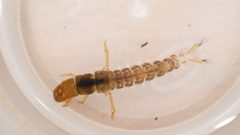
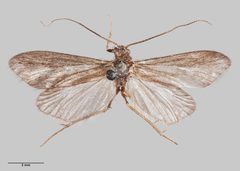
Larvae are morphologically variable within the , with at least three distinct larval forms recognized in eastern North America: one similar to D. modesta, one similar to D. metaqui, and one matching D. marianae. identification requires examination of genitalia; the genus is distinguished from other Hydropsychidae by features of the male claspers and genital armature. using the mitochondrial COI gene and nuclear 28S D2 region has proven useful for associating larvae with adults and revealing cryptic .
Images
Habitat
Larvae inhabit lotic freshwater environments including headwater streams and larger rivers. In Japan, D. aiensis larvae have been documented from Yata Hills in Nara Prefecture. In Thailand, occur in protected areas within the Dong Phayayen–Khao Yai Forest Complex. Eastern North American species occupy diverse stream from small headwaters to larger river systems.
Distribution
The has a wide geographic distribution spanning Asia (China, Japan, Thailand, Vietnam, Indonesia), Europe, and North America. Specific records include: China (D. obscura, D. aiensis), Japan (D. aiensis), Thailand (10 documented including D. erinya and D. extrema), Vietnam (D. erinya type locality), Borneo, Sumatra, Java (D. extrema), and eastern United States (multiple species including D. modesta, D. metaqui, D. marianae).
Life Cycle
Larvae are aquatic and undergo complete . Multiple cohorts may be present simultaneously within , as documented for D. modesta in Tennessee streams. Larval development occurs in freshwater , with emerging to mate and oviposit.
Behavior
Larvae are net-spinning filter-feeders, constructing capture nets to strain food particles from flowing water. are attracted to light and can be collected using black-light traps placed along water streams, as demonstrated in Thailand where this method yielded new country records.
Ecological Role
Larvae contribute to secondary production in benthic stream and serve as prey for aquatic . As filter-feeders, they play a role in processing organic matter and nutrients in lotic systems.
Sources and further reading
- BugGuide
- Wikipedia
- GBIF taxonomy match
- iNaturalist taxon
- NCBI Taxonomy
- Catalogue of Life
- Check List | Blog - Part 3
- biodiversity | Blog - Part 17
- Two newly recorded species join Thailand’s aquatic insect fauna
- New records of the caddisflies Diplectrona erinya Malicky, 2002 and Diplectrona extrema Banks, 1920 (Trichoptera, Hydropsychidae) from Thailand
- Life History and Production Dynamics of Alloperla mediana and Diplectrona modesta in Walker Branch, Tennessee
- The larvae of Chinese Hydropsychidae (Insecta: Trichoptera), Part I: Arctopsyche shimianensis, Parapsyche sp. A, and Diplectrona obscura
- Diversity of mitochondrial and larval morphology characters in the genus Diplectrona (Trichoptera: Hydropsychidae) in the eastern United States
- Description of Diplectrona aiensis Kobayashi, 1987 (Trichoptera: Hydropsychidae) larvae from Yata Hills, Nara Prefecture, Japan, with notes on habitat and ecology