
Macronematinae
Ulmer, 1905
net-spinning caddisflies
Genus Guides
2- Macrostemum(Glossy Wing Sedges)
- Smicridea
Macronematinae is a of net-spinning caddisflies (Trichoptera: Hydropsychidae) established by Ulmer in 1905. Larvae construct silk webs to capture prey drifting in flowing water. The subfamily includes such as Macronema, Macrostemum, Leptonema, Leptopsyche, and the Neotropical Centromacronema. Members occupy diverse freshwater across multiple continents.
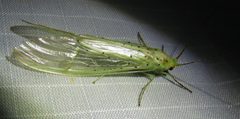
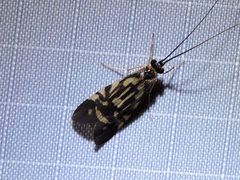
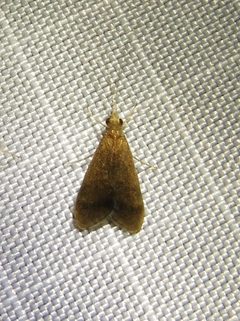
Pronunciation
How to pronounce Macronematinae: /ˈmakroʊnɪˌmætɪni/
These audio files are automatically generated. While they are not always 100% accurate, they are a good starting point.
Identification
Larvae possess prosternal plates with distinctive stridulatory ridge patterns; specific diagnostic characters vary by . distinguished from other Hydropsychidae by genitalic and wing venation patterns.
Images
Habitat
Flowing waterways with current sufficient to transport drifting prey; larvae construct capture webs in lotic environments. Specific associations vary: some occur below spillways with high current velocity during rainy seasons, others in transition zones between savannah and lowland forest, and tropical rainforest streams.
Distribution
Widespread across multiple biogeographic regions. recorded from West Africa (Sudan, Ghana, Ivory Coast, Nigeria), Neotropics (Mexico to southern Brazil including Bahia and Acre states), and other regions. Centromacronema to Neotropics.
Seasonality
Mature larvae collected in December in at least some West African ; seasonal patterns likely vary by region and .
Life Cycle
Larval stage is the primary feeding and growth phase; larvae construct and occupy capture webs. and occur, though specific details of developmental timing and voltinism are not established for the as a whole.
Behavior
Larvae are that construct silk webs across flowing water to intercept drifting prey. Some demonstrate ecological plasticity, occurring across varying vegetation zones from savannah-forest transitions to tropical rainforest.
Ecological Role
Larvae function as in lotic , capturing drifting and organic matter via silk webs. Their filtering activity may influence particle transport in streams.
Similar Taxa
- HydropsychinaeAlso net-spinning caddisflies within Hydropsychidae; distinguished by larval prosternal plate and genitalic characters
- ArctopsychinaeAnother Hydropsychidae with net-spinning larvae; differs in web architecture and morphological details
Sources and further reading
- BugGuide
- Wikipedia
- iNaturalist taxon
- NCBI Taxonomy
- Catalogue of Life
- Two new species of the genus Centromacronema Ulmer 1905 (Hydropsychidae: Macronematinae) from Brazil
- First record of Macrostemum alienum Ulmer 1907 (Trichoptera: Hydropsychidae: Macronematinae) from Ile-Ife, Southwestern Nigeria, West Africa