
Scirtothrips dorsalis
Hood, 1919
chilli thrips, yellow tea thrips, castor thrips, Assam thrips, strawberry thrips
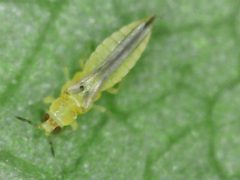
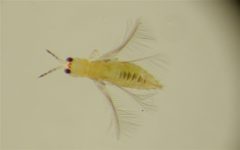
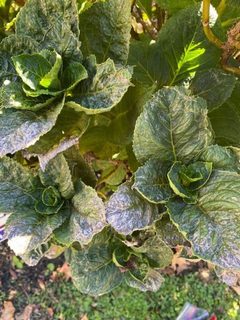
is a highly thrips native to South or Southeast Asia that has achieved global distribution over the past two decades. It is a significant agricultural pest with an exceptionally broad range spanning vegetables, ornamentals, and fruit crops. The species is characterized by rapid growth, with development from to completed in approximately two weeks under optimal conditions. Its feeding causes distinctive damage including leaf curling, brown scarring along leaf , and bronzing to blackening of fruits and flowers. The species has been implicated in transmission of tospoviruses, though its as a remains debated. Genetic evidence indicates S. dorsalis represents a of morphologically similar but genetically distinct lineages.
Pronunciation
How to pronounce Scirtothrips dorsalis: /ˌskɪrtoʊˈθrɪps dɔːrˈsælɪs/
These audio files are automatically generated. While they are not always 100% accurate, they are a good starting point.
Images
Distribution
Native to South or Southeast Asia (India, Southeast Asia). Established in North America (Florida since 2005, Texas, Hawaii), the Caribbean (St. Vincent, Puerto Rico, Barbados, Jamaica, St. Lucia, Trinidad and Tobago), Central and South America (Suriname, Venezuela), Africa (Côte d'Ivoire, Kenya), and Oceania (Australia, Papua New Guinea, Solomon Islands). Rapidly expanding range through international trade.
Diet
Phytophagous, feeding preferentially on new growth and young plant tissue.
Host Associations
- Capsicum spp. (pepper, chilli) - primary pest Historical association; 'Murda ' on chilli
- Solanum melongena (eggplant) - pest
- Mangifera indica (mango) - pest
- Citrus spp. - pest Includes orange, mandarin
- Fragaria × ananassa (strawberry) - pest Emerging significant in Florida
- Vitis spp. (grape) - pest
- Gossypium spp. (cotton) - pest
- Camellia sinensis (tea) - pest Known as 'yellow tea thrips'
- Arachis hypogaea (peanut/groundnut) - pest
- Vaccinium spp. (blueberry) - pest Emerging in southeastern US
- Rosa spp. (rose) - pest Significant ornamental
- Ricinus communis (castor) - speculated original Hypothesized ancestral before agricultural expansion
- Vitis rotundifolia (muscadine grape) - reproductive wild Non-crop season in Florida woodland borders
- Prunus caroliniana (Laurel cherry) - reproductive wild
- Celtis laevigata (sugarberry) - reproductive wild
- Bidens pilosa (Spanish needles) - reproductive wild
- Ludwigia peruviana (Peruvian water primrose) - reproductive wild
- Ambrosia spp. (ragweed) - reproductive wild
- Liquidambar styraciflua (sweetgum) - reproductive wild
- Quercus nigra (water oak) - reproductive wild
Life Cycle
Holometabolous-like development with two larval instars followed by two 'false' pupal stages (prepupal and pupal). inserted into plant tissue, primarily in young leaves and buds; gestation 1-3 weeks depending on temperature. Larval stages last 6-7 days total. Prepupal period approximately 24 hours; pupal period 2-3 days to one week. occurs in soil, leaf litter, or humid crevices low on the plant. Development from egg to completed in 14-20 days under optimal conditions (approximately 25°C). Multiple per year in favorable climates.
Behavior
Exhibits strong preference for feeding on new growth and young plants, aggregating on terminal shoots. Nymphs migrate from older leaves to newer growth after hatching. and nymphs feed in groups. Females demonstrate oviposition site selection, preferring young leaves and buds but expanding to mature leaves as increases. Non-diapausing adults reported to overwinter in soil or apical buds in temperate regions when temperatures fall below critical threshold. occurs through and passive transport via plant material.
Ecological Role
Agricultural pest causing direct feeding damage and potential virus transmission. Implicated as of tospoviruses including tomato spotted wilt virus, yellow spot virus of groundnut, and tobacco streak virus, though transmission is disputed. May function as prey for in natural . can alter plant structure in invaded .
Human Relevance
Major economic pest of global significance affecting diverse crop systems. Feeding damage reduces marketable yield and quality; severe can kill stressed plants. Management is complicated by rapid development of resistance. Control relies on (spinosyn, abamectin), insecticidal soaps, , fungi ( bassiana, Metarhizium spp.), and emerging approaches. Subject of and efforts in newly invaded regions. Research focus for development in specialty crops.
Similar Taxa
- Scirtothrips citri (citrus thrips)Congeneric with similar associations and feeding damage on citrus; distinguished by antennal sense cone structure and abdominal setal patterns
- Thrips palmi (melon thrips)Similar pest thrips with broad range and rapid resistance development; distinguished by body coloration and antennal
- Scirtothrips perseae (avocado thrips)Congeneric pest of similar size and appearance; distinguished by specificity and subtle morphological differences in setal arrangements
Sources and further reading
- BugGuide
- Wikipedia
- GBIF taxonomy match
- iNaturalist taxon
- NCBI Taxonomy
- Catalogue of Life
- How One Entomologist Found Her Calling in Crop Protection
- Scorched locust, courtesy of the Locust leafminer, Odontota dorsalis — Bug of the Week
- Scorched locust - Locust leafminer, Odontota dorsalis — Bug of the Week
- Discovery of wasp species previously unknown in the U.S.
- Mandarin Boom Means Citrus Pest Management Must Evolve
- Early Detection, Collaboration Key to Invasive Fruit Fly Eradication in Florida
- Scirtothrips dorsalis . [Distribution map].
- Scirtothrips dorsalis . [Distribution map].
- Chilli thrips Scirtothrips dorsalis Hood (Insecta: Thysanoptera: Thripidae)
- Expanding Host Range of Invasive Pest Scirtothrips dorsalis Hood in the U.S.A.
- Biology and Life Table Parameters of Scirtothrips dorsalis Hood 1919 (Thysanoptera: Thripidae) on Tea Cultivars
- Potential volatiles emitted from jasmine plants infested by two spotted spider mite and its attraction to predatory Scirtothrips dorsalis
- A new harmful thrips species in orange in Antalya Province: Scirtothrips dorsalis Hood (Thysanoptera: Thripidae) A new harmful thrips species in orange in Antalya Province: Scirtothips dorsalis Hood (Thysanoptera: Thripidae)
- Chilli Thrips (castor thrips, Assam thrips, yellow tea thrips, strawberry thrips), Scirtothrips dorsalis Hood, Provisional Management Guidelines
- An Overview of Chilli Thrips, Scirtothrips dorsalis (Thysanoptera: Thripidae) Biology, Distribution and Management
- Impact of habitat manipulation on mycopathogen, Fusarium semitectum to control Scirtothrips dorsalis and Polyphagotarsonemus latus of chilli
- A Herbivory-Induced Volatile Disrupts Host Selection by Chilli Thrips, Scirtothrips dorsalis, on Strawberry.