
Sericothripinae
Karny, 1921
Genus Guides
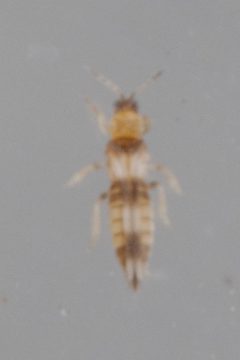
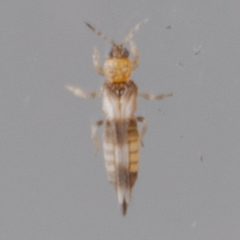
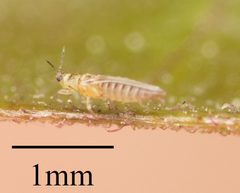
1- Neohydatothrips(soybean thrips (N. variabilis))
Sericothripinae is a largely tropical of thrips (Thysanoptera: Thripidae) comprising approximately 140 . Members are often strikingly bicoloured with complex surface . Currently only three are recognised: Sericothrips (introduced to Australia, with one European species used as weed agent), Hydatothrips (43 species worldwide, including species associated with native vines), and Neohydatothrips (96 species worldwide). The of this group is poorly known.
Pronunciation
How to pronounce Sericothripinae: /ˌsɛrɪkoʊˈθraɪpɪniː/
These audio files are automatically generated. While they are not always 100% accurate, they are a good starting point.
Identification
Sericothripinae can be distinguished from other Thripidae by their often strikingly bicoloured bodies and complex surface . Within the , the three recognised can be separated by morphological characters: Hydatothrips and Neohydatothrips are distinguished by features of the pronotal blotch shape and microtrichia distribution on abdominal segments, while Sericothrips is distinguished by other structural features (exact diagnostic characters require examination of detailed keys).
Images
Distribution
Largely tropical. Australia: Sericothrips (introduced), Hydatothrips (6 , 2 shared with Southeast Asia), Neohydatothrips (9 species, 1 shared with Southeast Asia, 2 presumably introduced from the Americas). Saudi Arabia: first record for , with Hydatothrips and Neohydatothrips present in Al Baha region. China: Neohydatothrips species recorded from Guizhou.
Host Associations
- Parsonsia - native vine in Australia, associated with four Hydatothrips
- Ulex europaeus - gorse (Fabaceae), of Sericothrips staphylinus used as biocontrol agent
- Tagetes - marigolds, referenced in citations
- Gossypium - cotton, referenced in citations
Life Cycle
Male and larval stages have been observed in Neohydatothrips amygdali. The complete mitochondrial of Sericothrips houjii has been characterised, featuring extensive gene rearrangement and duplicated control regions.
Ecological Role
One European of Sericothrips (S. staphylinus) has been deployed as a weed agent for gorse (Ulex europaeus).
Human Relevance
Used in : Sericothrips staphylinus introduced as biocontrol agent for gorse (Ulex europaeus), an weed.
Similar Taxa
- other Thripidae subfamiliesSericothripinae differs in having strikingly bicoloured coloration and complex surface , which are not typical of most other thripid
- Dendrothripinaemay share some morphological features but lacks the characteristic bicoloured pattern and specific surface of Sericothripinae
Sources and further reading
- BugGuide
- iNaturalist taxon
- NCBI Taxonomy
- Catalogue of Life
- A new species of Neohydatothrips (Thysanoptera: Sericothripinae) from China
- Identification and host-plant associations of Australian Sericothripinae (Thysanoptera, Thripidae)
- The Thripidae subfamily Sericothripinae (Thysanoptera) from Saudi Arabia with a new species of Hydatothrips Karny
- Mitogenome characterization and phylogeny of Neohydatothrips gracilipes (Thripidae: Sericothripinae).
- Full-Length Transcriptome Profiling of the Complete Mitochondrial Genome of Sericothrips houjii (Thysanoptera: Thripidae: Sericothripinae) Featuring Extensive Gene Rearrangement and Duplicated Control Regions.