
Lepidopsocidae
Enderlein, 1903
Scaly-winged Barklice
Genus Guides
5- Echmepteryx
- Neolepolepis
- Pteroxanium(scaly-winged barklice)
- Soa
- Thylacella
is a of barklice within the suborder Trogiomorpha, containing over 220 described worldwide. Members are distinguished by dense and setae covering the body and forewings—a unique morphological trait among . The family was established by Gunther Enderlein in 1903 and includes six recognized . Molecular phylogenetic studies support its monophyly based on nuclear 18S rDNA, mitochondrial 16S rDNA, and Histone 3 gene sequences.
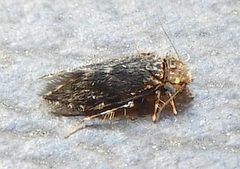
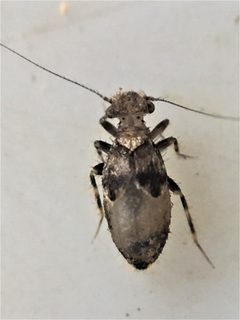
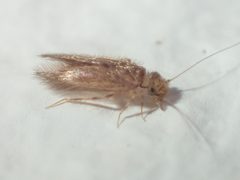
Pronunciation
How to pronounce Lepidopsocidae: //ˌlɛpɪdɒˈsəʊsɪdiː//
These audio files are automatically generated. While they are not always 100% accurate, they are a good starting point.
Identification
Presence of covering the body and forewings distinguishes from other barklice . Scales are absent in sister families Trogiidae and Psoquillidae. The combination of scaled wings and body setation provides a reliable morphological marker for family-level identification.
Images
Distribution
Documented from Bahamas, Chile, Puerto Rico, Queensland (Australia), and Denmark based on occurrence records.
Similar Taxa
- TrogiidaeSister lacking on body and wings
- PsoquillidaeSister lacking on body and wings