Psocini
Hagen, 1865
Genus Guides
3- Atropsocus(common barklice)
- Hyalopsocus(barklice)
- Psocus(barklice)
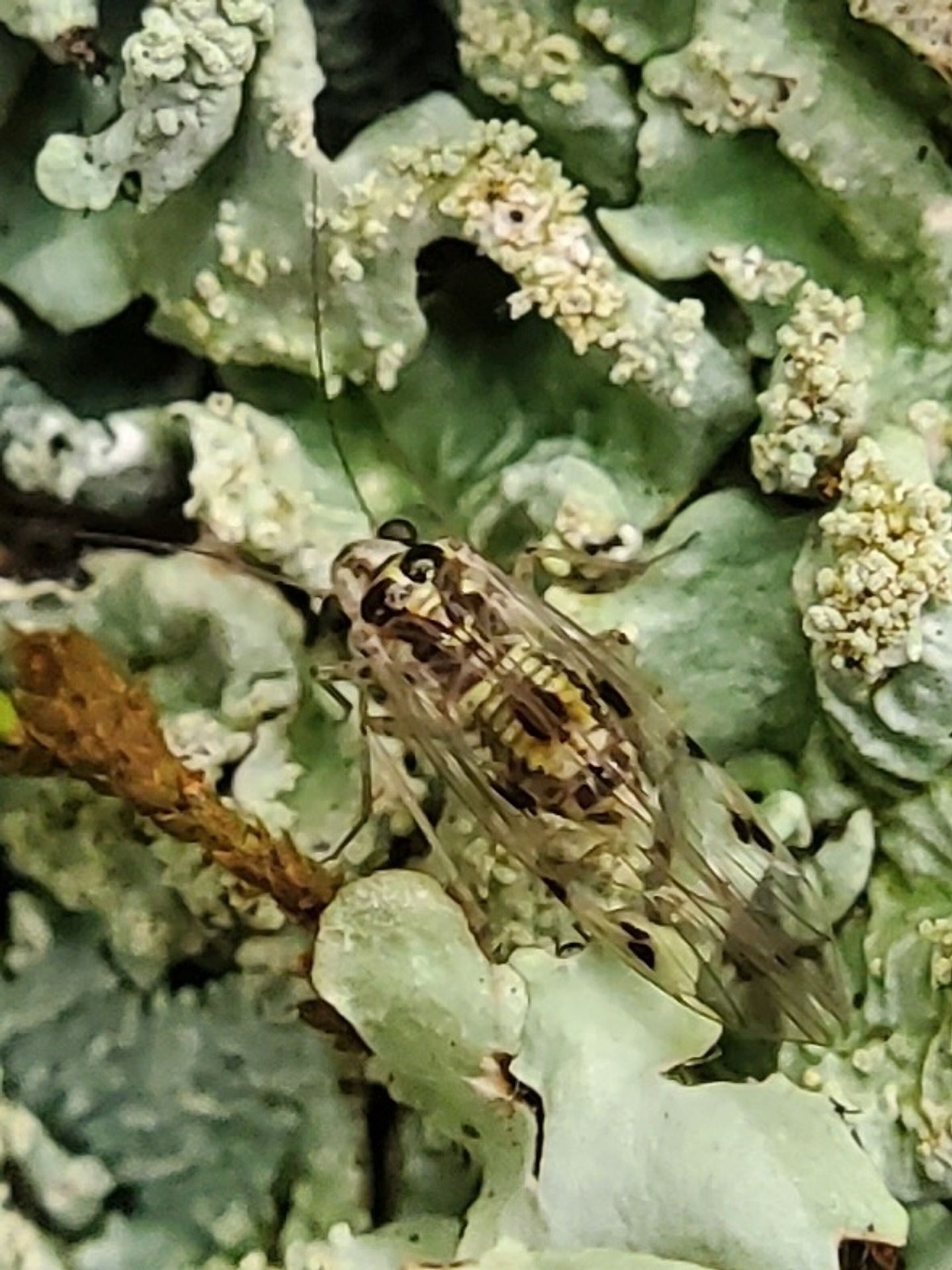
Psocini is a tribe of barklice within the Psocidae, established by Hagen in 1865. Members of this tribe are small, soft-bodied insects commonly found on tree bark, foliage, and other surfaces where they feed on microflora. The tribe contains multiple and is part of the diverse Psocomorpha suborder. Psocini are generally recognized by their wing venation patterns and body proportions, though precise boundaries between related tribes require detailed morphological examination.
Pronunciation
How to pronounce Psocini: //ˈsoʊ.sɨ.ni//
These audio files are automatically generated. While they are not always 100% accurate, they are a good starting point.
Identification
Psocini can be distinguished from related tribes in Psocidae by combinations of wing venation characters, including the arrangement of in the pterostigma and the presence or absence of certain crossveins. The forewing typically shows a well-developed pterostigma with a thickened margin. Body size is generally small to medium for . are long and . identification requires microscopic examination of genitalia and detailed wing venation patterns.
Images
Habitat
Members of Psocini inhabit terrestrial environments where they occur on bark, leaves, and occasionally in leaf litter. They favor humid microhabitats that support growth of their food sources. Many are arboreal, living on the surfaces of living or dead trees.
Distribution
The tribe has a broad distribution with records from multiple continents including North America, Europe, Asia, and other regions. Specific distribution patterns vary by and within the tribe.
Ecological Role
Members of Psocini contribute to nutrient cycling by consuming and processing surface microflora including , lichens, and fungal spores. They serve as prey for various small arthropods and other .
Similar Taxa
- BlasteiniAnother tribe in Psocidae; distinguished by differences in wing venation, particularly the structure of the pterostigma and arrangement of crossveins in the forewing.
- PsococerastiniRelated tribe in Psocidae; separation requires examination of male genitalia and subtle differences in wing venation patterns.