Isogenoides
Klapálek, 1912
springflies
Species Guides
2- Isogenoides frontalis(Hudsonian springfly)
- Isogenoides hansoni(Appalachian springfly)
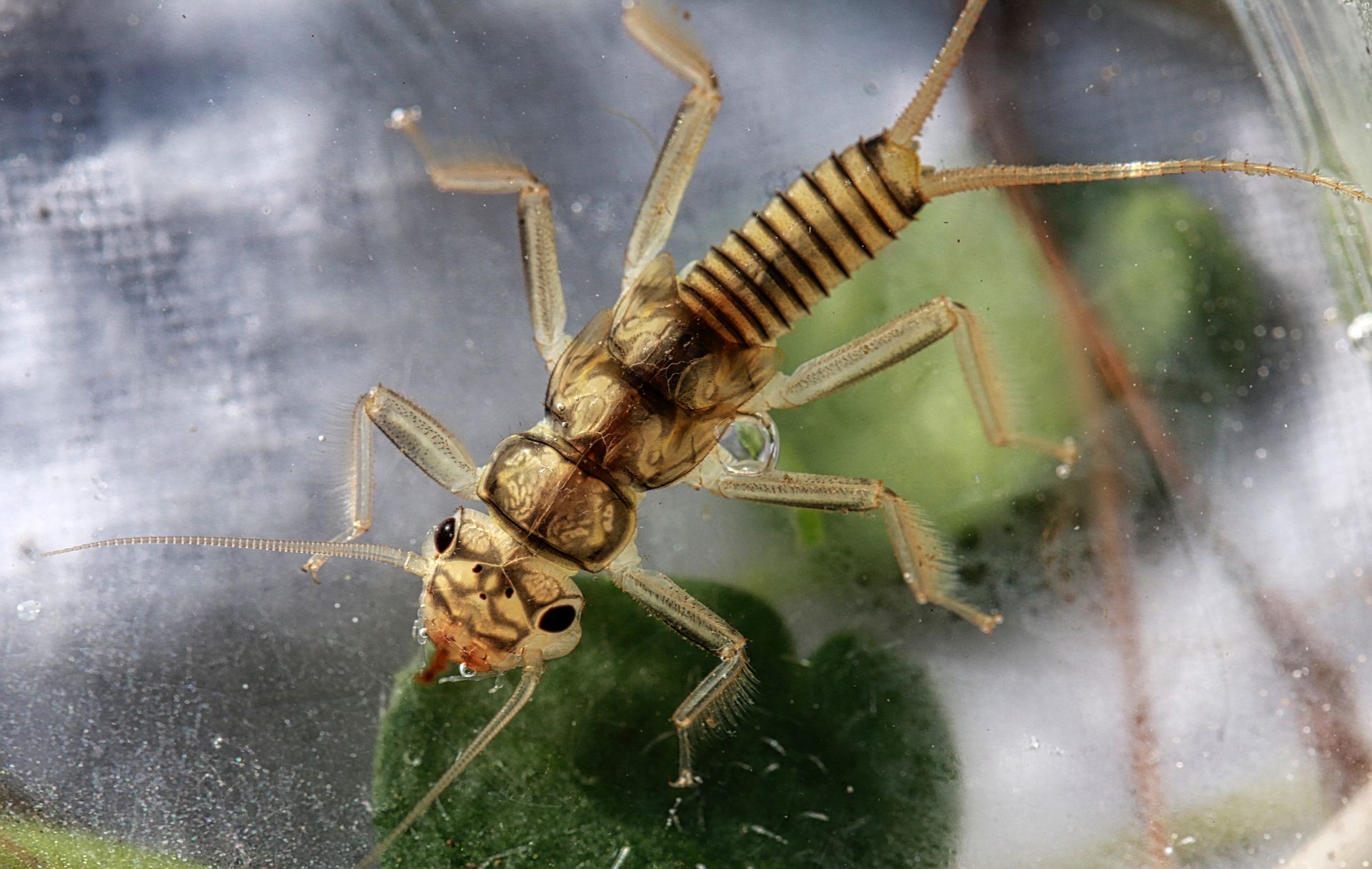
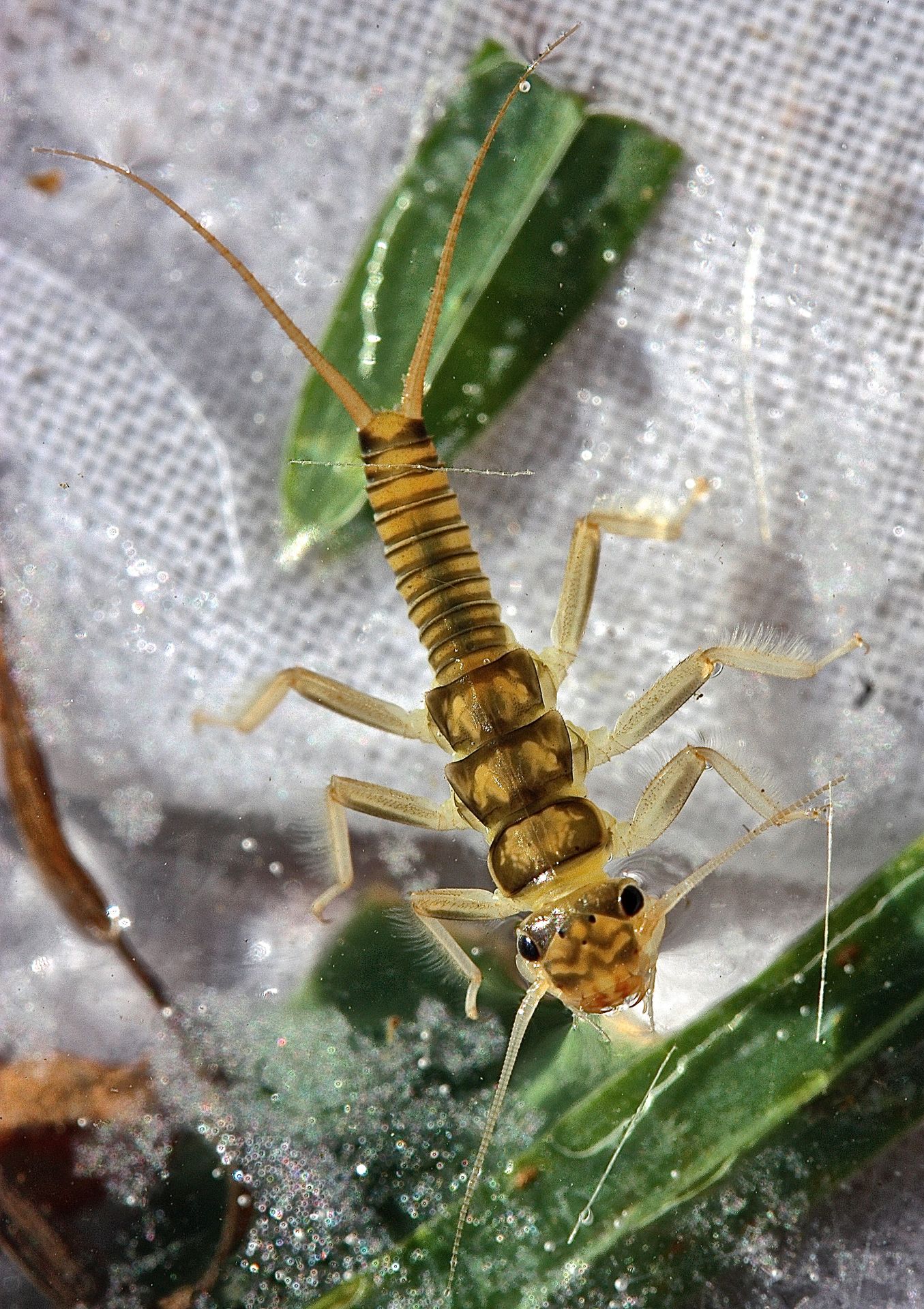
Isogenoides is a of springflies ( Perlodidae) comprising eight described distributed across North America. These stoneflies inhabit cool, lotic freshwater systems and exhibit species-specific through drumming. The genus demonstrates considerable diversity, including extended periods and semivoltine development in some .

Pronunciation
How to pronounce Isogenoides: //ˌaɪ.soʊ.dʒəˈnɔɪ.diːz//
These audio files are automatically generated. While they are not always 100% accurate, they are a good starting point.
Identification
-level identification relies on male genitalia , drumming signal patterns, and nymphal characteristics. Males produce species-specific vibrational signals ranging from simple sequenced duets to complex grouped exchanges; I. olivaceus has mostly sequenced duets while I. zionensis displays the most complex signals with grouped and mixed elements. Keys are available for all life stages including males, females, nymphs, and .
Images
Habitat
Cool, flowing freshwater lotic environments including rivers and streams. Specific records include mesic groundwater rivers in Michigan and streams in Colorado where water temperatures reach 11–17°C during periods.
Distribution
North America. Documented from eastern Canada, Alberta, Alaska, and across the contiguous United States including Alabama and Arizona. show regional variation: I. frontalis (hudsonian springfly) and I. hansoni (Appalachian springfly) have geographically indicative suggesting northeastern and Appalachian distributions respectively.
Seasonality
emerge primarily in June–July when stream temperatures reach approximately 11–17°C. Nymphal growth is exponential from June to December, slows until April, then declines until .
Life Cycle
Development includes extended capacity with variable hatching timing. Isogenoides zionensis exhibits direct hatch within two weeks and semivoltine (two-year) ; I. doratus and I. varians hatch after 3–5 month oversummer diapause; I. colubrinus, I. elongatus, I. frontalis, and I. zionensis show 9–11 month diapause with hatching in spring-summer of years 2–4. Nymphal growth is exponential June–December, slow January–April, then declines. Females deposit up to three batches with mean of 691 eggs per female.
Behavior
Males and females (except one ) engage in through substrate drumming. Signals are species-specific and range from ancestral sequenced duets to derived grouped exchanges. I. olivaceus produces mostly sequenced duets; I. zionensis produces complex exchanges with both sequenced and grouped elements. Oviposition has been observed in the field.
Similar Taxa
- Other Perlodidae generaIsogenoides is distinguished by its -specific drumming communication patterns and extended capacity, traits that have been specifically studied in this but may occur in related perlodids.
More Details
Drumming signal evolution
in Isogenoides shows a gradient of complexity from ancestral to derived forms, with I. olivaceus representing the least specialized condition and I. zionensis the most specialized, suggesting evolutionary diversification within the .
Sources and further reading
- BugGuide
- Wikipedia
- GBIF taxonomy match
- iNaturalist taxon
- NCBI Taxonomy
- Catalogue of Life
- The stonefly genus Isogenoides Klapálek (Plecoptera: Perlodidae) of North America: Systematics, behavior and ecology.
- Body size and sex ratio in emergent stonefly nymphs (Isogenoides olivaceus: Perlodidae): variation between cohorts and populations