
Helopicus
Ricker, 1952
springflies
Species Guides
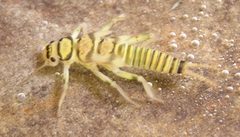
1- Helopicus subvarians(vernal springfly)
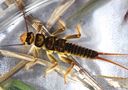
Helopicus is a of springflies (order Plecoptera) in the Perlodidae, established by Ricker in 1952. The genus contains at least four described distributed across eastern North America and parts of Asia. Species in this genus are part of the group Systellognatha, characterized by their predatory or feeding habits as nymphs.

Pronunciation
How to pronounce Helopicus: /hɛloʊˈpɪkʊs/
These audio files are automatically generated. While they are not always 100% accurate, they are a good starting point.
Identification
Helopicus can be distinguished from other Perlodidae by features of the male genitalia, particularly the structure of the and paraprocts. generally have two ocelli and wings with reduced or absent anal gills in the nymphal stage. Specific identification requires examination of terminal abdominal structures.
Images
Habitat
Associated with freshwater lotic environments, particularly cool, well-oxygenated streams and rivers. Nymphs inhabit rocky substrates in running water.
Distribution
Recorded from eastern North America (Alabama, Arkansas, Connecticut, Florida) and southeastern China. Distribution reflects the 's presence in both Nearctic and Palearctic regions.
Seasonality
are active in spring; Helopicus subvarians is specifically known as the "vernal springfly," indicating early-season .
Life Cycle
Hemimetabolous development with aquatic nymphal stages and terrestrial . Nymphs develop in streams, with timing varying by .
Ecological Role
Nymphs function as or in stream , contributing to nutrient cycling and serving as prey for fish and other aquatic organisms.
Human Relevance
Used as bioindicators of water quality due to sensitivity to pollution and degradation. No direct economic importance.
Similar Taxa
- Perlodidae (other genera)Distinguished by male genitalic , particularly aedeagal and paraproct structure; Helopicus shares tribe Perlodini with some but differs in specific character states.
- Other Plecoptera familiesPerlodidae, including Helopicus, are distinguished from Perlidae by the presence of only two ocelli versus three, and from other by wing venation and body form.
More Details
Species diversity
Four are currently recognized: H. bogaloosa (southeastern USA), H. infuscatus (widespread eastern North America), H. nalatus (eastern North America), and H. subvarians (vernal springfly, eastern North America). The disjunct distribution between North America and China suggests potential biogeographic interest.