
Ostrocerca
Ricker, 1952
forestflies
Species Guides
5- Ostrocerca albidipennis(white-tailed forestfly)
- Ostrocerca complexa(Notched Forestfly)
- Ostrocerca dimicki(Hooked Forestfly)
- Ostrocerca prolongata(Bent Forestfly)
- Ostrocerca truncata(Truncate Forestfly)
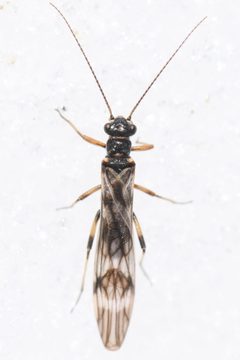
Ostrocerca is a of spring stoneflies (Plecoptera) in the Nemouridae, containing six described distributed in eastern North America. Members are small to medium-sized stoneflies commonly known as forestflies. The genus was established by Ricker in 1952. Species are distinguished by subtle morphological differences in wing venation and genitalia.
Pronunciation
How to pronounce Ostrocerca: /ˌɒstroʊˈsɜrkə/
These audio files are automatically generated. While they are not always 100% accurate, they are a good starting point.
Identification
within Ostrocerca require examination of genital structures for definitive identification. Ostrocerca albidipennis has distinctive white markings on the terminal abdominal segments. Ostrocerca prolongata exhibits a characteristic bent or curved paraproct. Ostrocerca truncata has (shortened or squared-off) . General features include small size, reduced wing venation typical of Nemouridae, and pronotum shape that is roughly quadrate with rounded corners.
Images
Habitat
Associated with forested stream , particularly small to medium-sized cool, clear streams with rocky substrates. Larvae inhabit the benthic zone of streams among stones and leaf litter.
Distribution
Eastern North America. Documented from British Columbia, Connecticut, Delaware, Indiana, and Kentucky. Distribution appears centered in the Appalachian and eastern deciduous forest regions.
Seasonality
emerge in spring (March through May in most of range), consistent with the vernacular name 'spring stoneflies'.
Life Cycle
Hemimetabolous development with aquatic nymphal stages and terrestrial . Nymphs develop in streams over one or more years before emerging as adults.
Behavior
are generally secretive and found near streamside vegetation. Males produce substrate-borne vibrational signals for mate location, a characteristic of Nemouridae.
Ecological Role
Nymphs function as and gatherers in stream , processing coarse and fine particulate organic matter. They serve as prey for fish and other aquatic .
Human Relevance
Used as bioindicators of water quality in stream assessment programs due to sensitivity to pollution and degradation. No direct economic importance.
Similar Taxa
- NemouraLargest in Nemouridae; distinguished from Ostrocerca by differences in male and paraproct , and generally more widespread distribution.
- AmphinemuraAnother nemourid ; differs in details of wing venation and male genital armature, particularly the structure of the .
- ProstoiaSimilar small nemourid stoneflies; separation requires examination of male genitalia, specifically the shape and armature of the paraprocts.
More Details
Etymology
The name Ostrocerca derives from Greek roots, though the specific meaning is not well documented in standard references.
Taxonomic history
Originally described by Ricker in 1952, with most transferred from other based on revised concepts of Nemouridae classification. The genus has remained stable with six recognized species since mid-20th century revisions.