
Timema californicum
Scudder, 1903
California timema
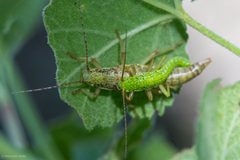
Timema californicum is a sexually dimorphic walkingstick insect to California. Males are smaller than females and possess conspicuous used to grasp females during copulation. The exhibits hemimetabolous development with gradual morphological changes: hatchlings are phenotypically identical between sexes, juveniles show minor differences, and display pronounced . Males complete development with one fewer moult than females.
Pronunciation
How to pronounce Timema californicum: /tɪˈmeɪmə kælɪˈfɔrnɪkəm/
These audio files are automatically generated. While they are not always 100% accurate, they are a good starting point.
Identification
Images
Habitat
California; specifically collected in Saratoga County. Natural requirements not well documented.
Distribution
to California, United States.
Seasonality
hatch in early winter; nymphs develop through spring, reaching maturity in late spring. and hatchling stages do not co-occur temporally.
Life Cycle
Hemimetabolous development with , nymph, and stages. Eggs hatch in early winter. Nymphs undergo several moults before reaching adulthood in late spring. Males have one moult fewer than females. Three developmental stages characterized: hatchling (sexually ), third stage (minor phenotypic differences), and adult (pronounced ).
Similar Taxa
- Other Timema speciesTimema is a small of wingless walkingsticks; identification requires examination of male genitalia and structure
- Winged phasmidsTimema are uniquely wingless among Phasmida, distinguishing them from most other walkingsticks
Sources and further reading
- BugGuide
- Wikipedia
- GBIF taxonomy match
- iNaturalist taxon
- NCBI Taxonomy
- Catalogue of Life
- Bug Eric: Wasp Wednesday: Blue Mud Dauber, Chalybion californicum
- Tents in the Mojave: Western tent caterpillar, Malacosoma californicum — Bug of the Week
- Bug Eric: Wasp Wednesday: Trypoxylon
- Bug Eric: Wasp Wednesday: Chlorion aerarium
- Bug Eric: Tiny Wasp Hero Slays Redback Spiders in Australia
- Bug Eric: Spider Sunday: Spider Enemies
- Dynamics of sex-biased gene expression during development in the stick insect Timema californicum.