
Timematidae
Caudell, 1903
Genus Guides
1- Timema(Timemas)
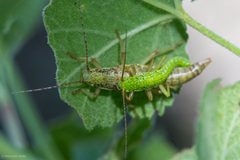
Timematidae is a of small, stout-bodied stick insects comprising the single Timema. These insects are native to western North America and represent one of the earliest-diverging lineages of Phasmida. They are notable for their relatively short, compact bodies compared to the elongated forms typical of most stick insects.
Pronunciation
How to pronounce Timematidae: //tɪˈmɛmətɪdiː//
These audio files are automatically generated. While they are not always 100% accurate, they are a good starting point.
Identification
Distinguished from other Phasmida by the combination of: small size (under 3 cm), stout non-elongated body form, short , and reduced or absent wings. The Timema is the only genus in this family; no other family in western North America shares this compact body plan. is pronounced in some , with females often larger and more robust than males.
Images
Appearance
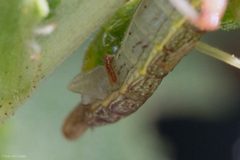
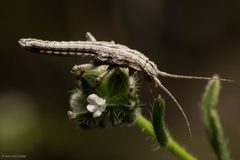
Short-bodied and stout stick insects with compact, somewhat flattened bodies. Body length generally ranges from 1.5 to 3 cm. Coloration includes green, brown, and striped morphs, with some exhibiting in color pattern. are short relative to body length. Wings are absent or highly reduced. Legs are relatively short and thick, adapted for clinging to plants rather than resembling twigs.
Habitat
Chaparral, coastal scrub, and montane shrubland . Associated with specific plant in the Rosaceae (especially Ceanothus) and Pinaceae . Found at elevations from sea level to approximately 2,500 meters. Requires areas with adequate shrub cover for concealment and feeding.
Distribution
Western North America, ranging from southern Oregon through California to Baja California, Mexico. Eastward distribution extends into Nevada and Arizona. Distribution is closely tied to suitable plant availability and Mediterranean-type climate zones.
Seasonality
are present primarily from late winter through early summer, with peak activity in spring. Timing varies with elevation and latitude. Some may exhibit extended activity periods in coastal areas with milder climates.
Diet
Herbivorous, feeding on leaves of specific plants. Documented host associations include Ceanothus (Rhamnaceae) and various conifers including Pseudotsuga and Abies (Pinaceae). Host specificity varies among species.
Host Associations
- Ceanothus - food plantprimary for multiple
- Pseudotsuga - food plantdocumented for some
- Abies - food plantutilized by some
Life Cycle
Hemimetabolous development with , nymph, and stages. Eggs are dropped to the ground and overwinter in soil litter. Nymphs emerge in late winter to early spring. Development to adulthood takes approximately 2-3 months. Adults are relatively short-lived, primarily functioning for . has been documented in several , with some consisting entirely of females.
Behavior
Slow-moving, relying on for defense. When disturbed, may drop from plants and remain motionless. No active defensive such as leg waving or defensive secretion reported. Mating behavior involves males mounting females for extended periods. Some exhibit parthenogenetic in the absence of males.
Ecological Role
Herbivore in shrubland . Consumes foliage of shrub , potentially influencing plant growth dynamics. Serves as prey for birds, lizards, and other . Parthenogenetic may function as model systems for studying evolutionary and ecological consequences of .
Human Relevance
Used extensively in evolutionary research, particularly for studies of speciation, -plant , and the evolution of . The Timema has served as a model system for understanding ecological speciation and reproductive mode evolution. Not considered an agricultural or forestry pest. Rarely encountered by the general public due to small size and cryptic habits.
Similar Taxa
- PhasmatidaeOther in the region have elongated, twig-like bodies and generally larger size; Timematidae are immediately distinguishable by their compact, stout form
- DiapheromeridaeNorth American members are more elongate with longer and legs; Timematidae lack the typical ' stick' silhouette
More Details
Evolutionary significance
Timematidae represents the sister group to all other extant Phasmida, making it critical for understanding the evolutionary origins of stick insects. The retains plesiomorphic traits including the compact body form, suggesting that extreme elongation evolved later in phasmid history.
Reproductive biology
is widespread in Timema, with at least five known to reproduce asexually. This makes the one of the most diverse arrays of parthenogenetic animals studied, providing insights into the maintenance of sex and the genomic consequences of asexuality.
Species diversity
The contains approximately 20-30 described , though cryptic diversity is suspected. Species delineation is complicated by morphological conservatism and variable coloration within species.